The post How Pumpkin Pie Became a Thanksgiving Classic appeared first on bake blog.
]]>And custards and pies,
Our pumpkins and parsnips
are common supplies
We have pumpkins at morning
And pumpkins at noon
If it were not for pumpkins
We should be undoon…
From an American Pilgrim Verse, ca. 1630
…But see, in our open clearings, how golden the melons lie;
Enrich them with sweets and spices, and give us the pumpkin-pie!
From “The First Thanksgiving Day, A.D. 1622,”
a ballad by Margaret J. Preston, 1887
Few foods that make up our traditional holiday fare can claim deeper American roots than the pumpkin (cucurbita pepo). Thought to have been first cultivated in Central America around 5,500 BCE, pumpkins had spread north up the eastern seaboard into Canada by the time Europeans began exploring the North American continent in the 15th century. With its thick shell and solid flesh, pumpkins were a sustaining dietary staple for Native Americans as they could be stored through the winter and preserved by slicing and drying them. They also were baked, boiled, stewed, and roasted over a fire for everyday consumption.

Versatile and easy to cultivate, New World pumpkins were among the first botanical specimens European explorers brought back to Europe. They are mentioned in European works beginning in 1536 and within a few decades were grown regularly in England and France, where they were called “pumpions” and “pompions,” respectively, in reference to their rounded form. By the 17th century, pumpkins, whether baked, fried, mashed, roasted, or stewed, featured prominently in English and French cuisine, with myriad recipes, both sweet and savory, appearing in the most influential English and French cookery books of the day. A favorite preparation was to scoop out their seeds, fill the cavity with sweetened, spiced milk, and cook them near a fire. Pumpkins were also used to make puddings, pancakes, pies, soups, stews, and tarts.

When the Pilgrims set sail for America on the Mayflower in 1620, landing on the shores of Cape Cod, they were most likely already familiar with the pumpkins cultivated by the Wampanoag, the Native Americans who helped them survive their first year at Plymouth Colony. From the Wampanoag, the Pilgrims learned how to grow life-sustaining crops, including pumpkins and corn, and how to weather the brutal climate of coastal Massachusetts. A year later, despite losing nearly half of their group to disease and scarcity brought on by a harsh winter, the Pilgrims, together with the Wampanoag, gave thanks for a bountiful autumn harvest with a three-day celebration feast. On the table would have been local root vegetables, like carrots and onions, dried fruits and nuts, waterfowl, wild turkey, venison, lobster, clams, berries, fruit, and pumpkin and squash. Lacking butter, lard, wheat flour, and a dry oven for pastry crust, the closest the Pilgrims would have come to preparing pumpkin pie at the first Thanksgiving and during the early years of the colony, would have entailed, according to some accounts, hollowing out pumpkins, filling the shells with milk, honey, and spices to make a custard, then roasting the gourds whole in hot ashes.

Meanwhile, back in 17th-century England and France, pumpkin pie continued to evolve, taking a number of forms. François Pierre La Varenne (1615–1678), in his Le Cuisinier François, 1651, the revolutionary cookbook that laid the foundation of classic French cuisine and was translated into English as The French Cook in 1653, instructed cooks when making their “pompion” pie to prepare a simple pudding and bake it in a pastry crust:
…boile it with good milk, pass it through a straining pan very thick, and mix it with sugar, butter, a little salt and if you will, a few stamped almonds; let all be very thin. Put it in your sheet of paste; bake it. After it is baked, besprinkle it with sugar and serve.

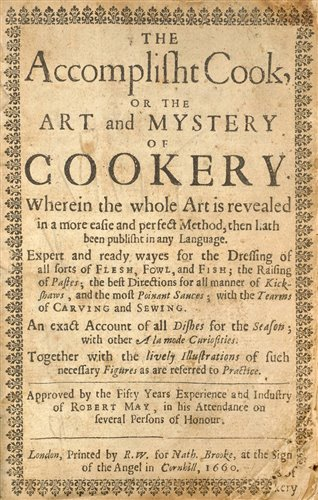
In the influential English compilation, The Accomplisht Cook, 1653, by Robert May (1588-ca. 1664), the recipe for pumpkin pie takes on a completely different character and complexity:
Take a pound of pumpion and slice it, a handful of thyme, a little rosemary, and sweet marjoram stripped off the stalks, chop them small, then take cinnamon, nutmeg, pepper, and a few cloves all beaten, also ten eggs, and beat them, then mix and beat them all together, with as much sugar as you think fit, then fry them like a froise, after it is fried, let it stand till it is cold, then fill your pie after this manner. Take sliced apples sliced thin round ways, and lay a layer of the froise, and a layer of apples, with currants betwixt the layers. While your pie is fitted, put in a good deal of sweet butter before you close it. When the pie is baked, take six yolks of eggs, some white-wine or verjuyce, and make a caudle of this, but not too thick, cut up the lid, put it in, and stir them well together whilst the eggs and pumpion be not perceived, and so serve it up.
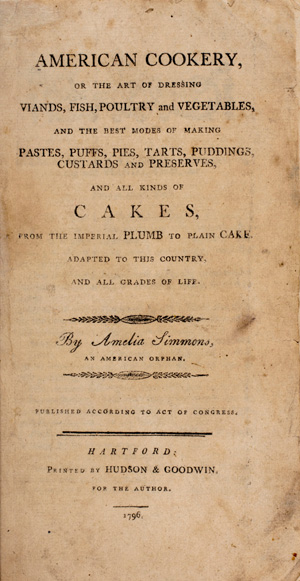
These varying recipes for pumpkin pie, along with the English and French cookbooks that contained them, made their way to colonial America as English settlers continued to colonize New England throughout the 17th and 18th centuries. By the time Amelia Simmons of Connecticut (dates unknown), published her American Cookery in 1796—the first cookbook published in America and the first to meld together Northern European cooking and baking methods with American-sourced ingredients—colonial American cuisine had come a long way since the Pilgrim’s first thanksgiving. Pumpkins were now a dietary staple and a potent symbol of American plenty with American cooks employing them not only in puddings and stews, but also in beer, breads, johnnycakes, porridges, butter, syrups, and last but not least, the bone fide pie in a pastry crust.
Amelia Simmons did not invent the pumpkin pie we now know and love today, but her cookbook contained the earliest American recipe for what has become a Thanksgiving Day classic. Her two recipes for “Pompkin” pie called for similar ingredients to what we use today:
Pompkin
No. 1. One quart stewed and strained, 3 pints cream, 9 beaten eggs, sugar, mace, nutmeg and ginger, laid into paste No. 7 [all butter] or 3 [butter and lard], and with a dough spur, cross and chequer it, and baked in dishes three quarters of an hour.
No. 2. One quart of milk, 1 pint pompkin, 4 eggs, molasses, allspice and ginger in a crust
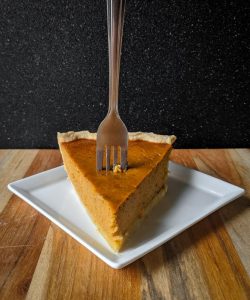
So when did pumpkin pie become the quintessential dessert of the Thanksgiving Day holiday? By the early 18th century, giving thanks for a bountiful autumn harvest with an annual celebratory feast, as the Pilgrims did, had become an important regional holiday in colonial New England and pumpkin pie had earned its iconic place at the table. Indeed, the dish had become so traditional in colonial Connecticut that, in 1705, a temporary shortage of molasses forced the town of Colchester to postpone its Thanksgiving from the first to the second week in November, until the essential ingredient for the pie could be obtained.
The historian Tad Tuleja notes, in his chapter on “Pumpkins,” in Rooted in America: Foodlore of Popular Fruits and Vegtables (1999):
Popular literature of the nineteenth century gives ample evidence that pumpkin pie was considered, in many circles, an indispensable feature of Thanksgiving…Women’s magazines carried recipes for it, and numerous memoirs also attest to an association with the supposedly New England holiday. Sara Josepha Hale, whose tireless promotion of the feast day led to its nationalization by President Lincoln [in 1863], noted in her 1827 novel, Northwood that pumpkin pies were “an indispensable part of a good and true Yankee Thanksgiving.” Without exaggeration, a recent historian of the holiday claims that turkey and cranberry sauce notwithstanding, pumpkin pies constituted “the first culinary Thanksgiving tradition.”
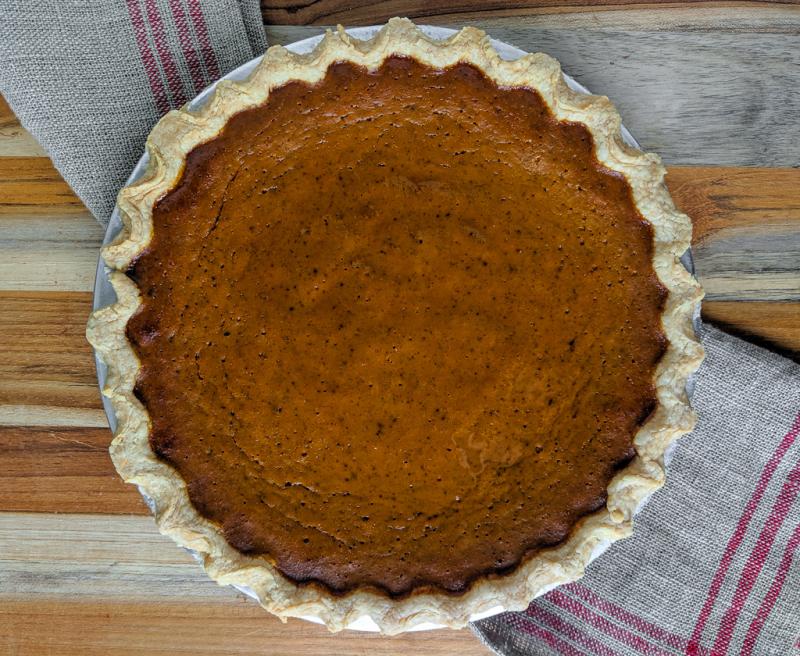
We’re happy to carry on the tradition here at the Bakehouse. Our Classic Pumpkin Pie may look wholly different than the pumpkin stews and custards of yore, but it’s just the thing that adorned our Thanksgiving tables as children. We deck out our pumpkin filling with Indonesian cinnamon, ginger, clove, Michigan honey, Guernsey Dairy cream and a cozy touch of Muscovado brown sugar to round it out. It’s a rich, creamy, and decadent celebration of a very storied gourd!
The post How Pumpkin Pie Became a Thanksgiving Classic appeared first on bake blog.
]]>The post Pie-fessionals appeared first on bake blog.
]]>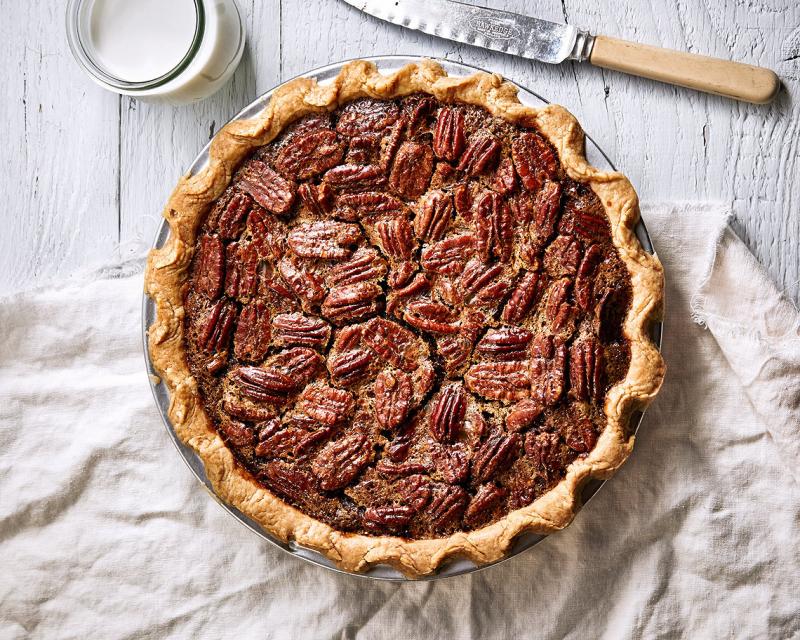
I didn’t make a good pie crust until I came to Zingerman’s. Growing up, I used the Joy of Cooking recipe and a food processor. Inevitably, I always added too much water (“1-3 tablespoons more”) and ended up with a soggy blob of dough. I used the Cook’s Illustrated recipe of vodka in place of some of the water, which allows the dough to roll with more ease and less cracking but lets the vodka evaporate in the oven, which prevents the crust from being brittle (which can happen when you add more water than necessary). I tried all the ingredient combinations; ice-cold water, frozen butter, half butter/half Crisco, a teaspoon of vinegar, a tablespoon of granulated sugar, but I never made a crust I was proud of.
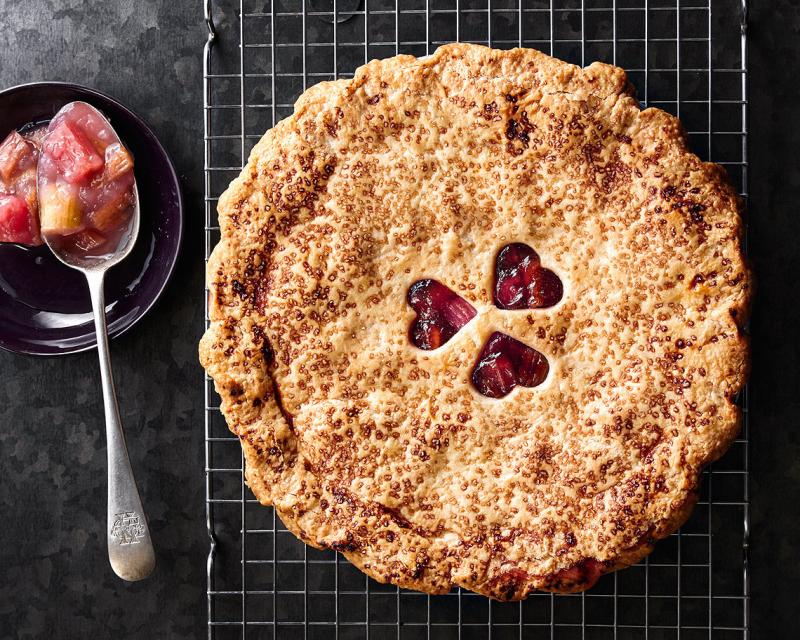
How did something so simple take on such tremendous weight? The way we make our pie crusts so delicious at the Bakehouse comes with 4 ingredients and two techniques: Fat, flour, salt, water, alongside “butter raincoats” and fraissage. In our class, we teach one crust with all butter and one crust with half butter and half lard (lard is the “good fat” as it is non-hydrogenated). The technique is the same regardless of the fats you use: With a pastry blender or your hands, cut and rub most of the cold fat into the flour until the flour takes on a yellow-ish appearance and fat is green pea size or smaller. I have to give Sue credit for her ‘butter raincoat’ analogy but it’s so perfect: by working the fat in this way, you are coating each particle of flour with fat, essentially putting a ‘butter raincoat’ on each one. This gives us a tender crust. With the remaining fat, you leave these pieces larger. When you add the water (always the same amount, never 1 tablespoon more or less!) and mix the dough, there is always a moment of panic. Students say, “Are you sure this is right?” They say, “This looks dry.” They say, “I don’t believe this will work.” I promise them it will. It is time for fraissaging! By schmearing dough across the table, the larger pieces of butter hydrate the dough and leave streaks of butter. This is what gives us a flaky crust. The water in the butter turns to steam which helps to lift our layers up. By hydrating with fat and not water, our crust doesn’t shrink in the oven (which happens when water evaporates from a pie crust).
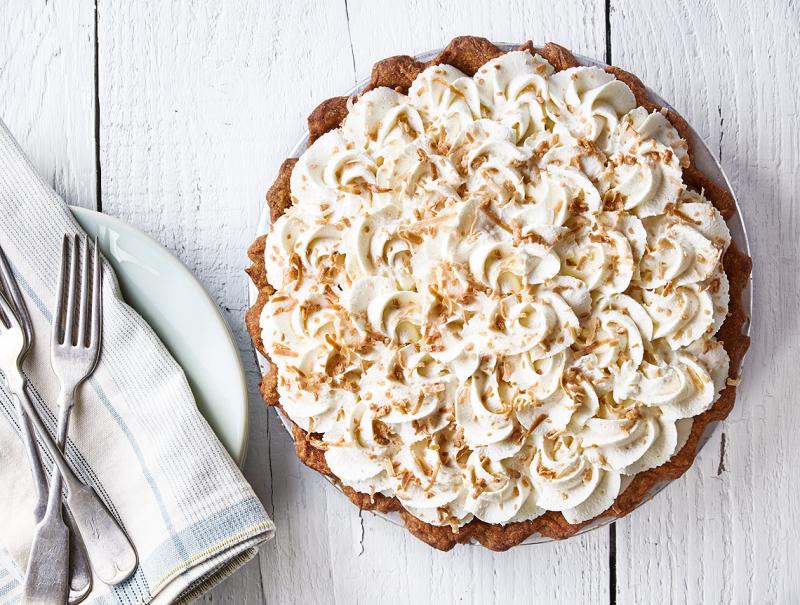
Whenever I teach Baking Pies a Plenty I always start the class by asking people to introduce themselves and share their personal pie history, if they’d like to. The most recent class I taught was a great group and we had a lot of fun and learning—and included an especially touching pie-fessional.
Linda was a first-time student. After the class, I was in the room cleaning up. Linda came up to me and told me a story about how when she was growing up, her mother wouldn’t teach her how to make pies (said Linda made too much of a mess in the kitchen). Linda loved to bake but was always afraid of making pies. Linda said her brother was “the golden child” and when he got married, Linda’s mother taught the brother’s wife to make pies but never Linda, still. The sister/daughter-in-law then started making the pies for all the family gatherings, something which I can tell causes Linda some emotional strife.
As Linda is telling me this story, she starts to cry. She said that she’s never felt like she had the confidence or ability to make pies her whole life and that we’ve given her this gift, this confidence and faith that she was not a mess or a failure when it came to pies. She said she is a nurse and she ‘gives’ all the time and she honestly didn’t have the words to explain what we at BAKE! had given her that morning in class. At this point, I started to get teary myself and gave Linda a big hug.
I believe we all learn from each other all the time at BAKE!. I tell this story not as a testament to the way we make pie crust at Zingerman’s but as a way to show how baking can bring us together and sometimes tear us apart. Every day I value the community of bakers that support one another and appreciate the space that has been created at BAKE! for non-judgmental learning and sharing.
By Sara Molinaro, BAKE! Principal
Photos by Antonis Achilleos
The post Pie-fessionals appeared first on bake blog.
]]>The post State St. Wheat appeared first on bake blog.
]]>Here in the United States, a bread revolution unfolded in small pockets of the country, beginning as early as the late 70s and then more extensively in the 80s and early 90s. People began to relearn the art of baking naturally leavened (sourdough), hearth-baked breads—often round and crusty, very different from grocery store bread.
 Today, a loose collaborative of bakers is trying to start another revolution. We are calling ourselves The Bread Lab Collective. We’re a national group of craft bakers, millers, teachers, students, and wheat breeders inspired by the work of The Bread Lab of Washington State University to work together to make nourishing sandwich bread available nationwide. Together, we’ve set out to create pure and simple whole grain sandwich breads that have broad appeal—familiar flavor, familiar texture, familiar shape—but are healthier than mass-produced, grocery-store bread because of our ingredient choices and artisan baking techniques.
Our goal is to bring nourishing bread to more people in our communities and to inspire other artisan bakers to join us so that Bread Lab Collective sandwich bread is available in every state. We’re excited to be teaming up with more than a dozen other bakeries from across the country, including King Arthur Flour Bakery (Vermont), Barrio Bread (Arizona), Seven Stars Bakery (Rhode Island), Breadfarm (Washington State), Prager Brothers (California), and Elmore Mountain Bread (Vermont), as founding members.
Each bakery in the Collective has made something a little different, in keeping with local tastes and ingredients and with their bakery’s flavor and process preferences. The Collective wants some degree of consistency, so we’ve agreed upon a set of specific criteria to bake by; here they are:
-
The loaves need to be reminiscent of what many of us are used to on the grocery store shelves: bread that is sandwich shaped, soft, sliced and packaged in plastic, with at least a one-week usability, and is good for all the typical things Americans make with sandwich bread (grilled cheese, peanut butter and jelly sandwiches, basic toast).
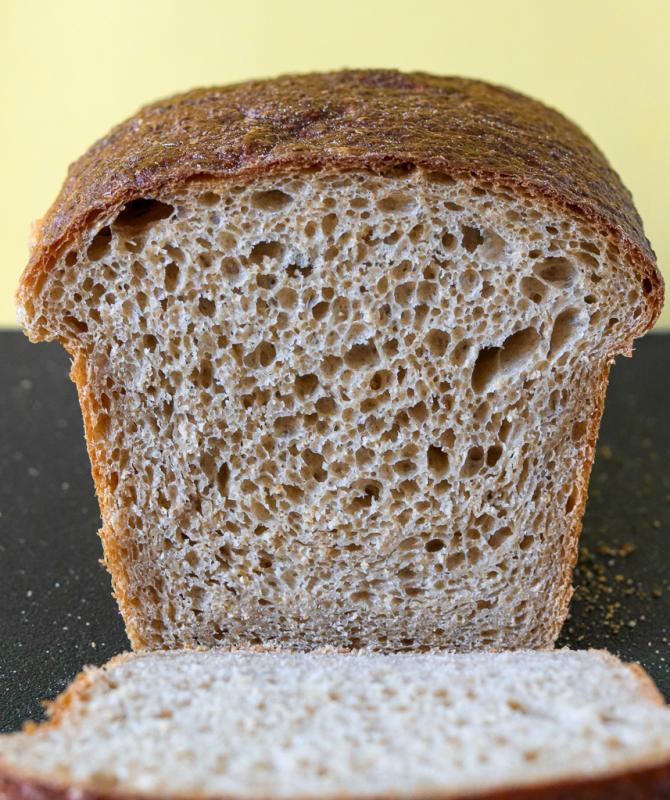 As artisan bakers, we customarily make crusty breads in many different shapes, sold unsliced in paper bags, so this was a significant departure from our typical approach.
-
The Bread Lab Collective loaves boast short and understandable ingredient lists—seven ingredients or fewer is the agreement! This was normal for most of us, so less of a challenge. Check out the label on some highly manufactured breads and you’ll see a much longer list of ingredients, many of which will be unrecognizable as food.
-
Loaves made for the Collective are mostly naturally leavened, meaning that they’re made with a sourdough process, and are good to eat for a full week. Making a naturally leavened bread in a pan and achieving the texture and loft many of us are used to from grocery store bread takes some skill and experimentation. We were all up for it. The naturally leavened process actually lends itself to a longer shelf life so that was to our advantage. Freshly milled whole grain also has longer keeping qualities.
How is our loaf different from typical grocery store bread? Most grocery-store bread is made with a considerable amount of commercial yeast, which allows it to be made quickly and cheaply. Furthermore, typically added fats, sugars, preservatives, and other dough conditioners give grocery-store bread its workability to achieve a lofty look as well as its desired texture and flavor. By keeping our bread naturally leavened (sourdough) and using the right artisan baking techniques, we don’t need to rely on heavy quantities of commercial yeast or multiple additives to create an appealing and nutritious loaf.
-
Finally, at least 50% of the flour used in the loaves must be whole grain. The Bread Lab Collective wants the bread to provide nourishment. Having it taste and look familiar with at least this much whole wheat was also a challenge to our baking skills.
The Bread Lab Collective is passionate about supporting the work of the Bread Lab at Washington State. To this end, we’ve also all agreed that ten cents from each purchase of State St. Wheat will go to the Bread Lab to fund further research designed to make projects like this possible.
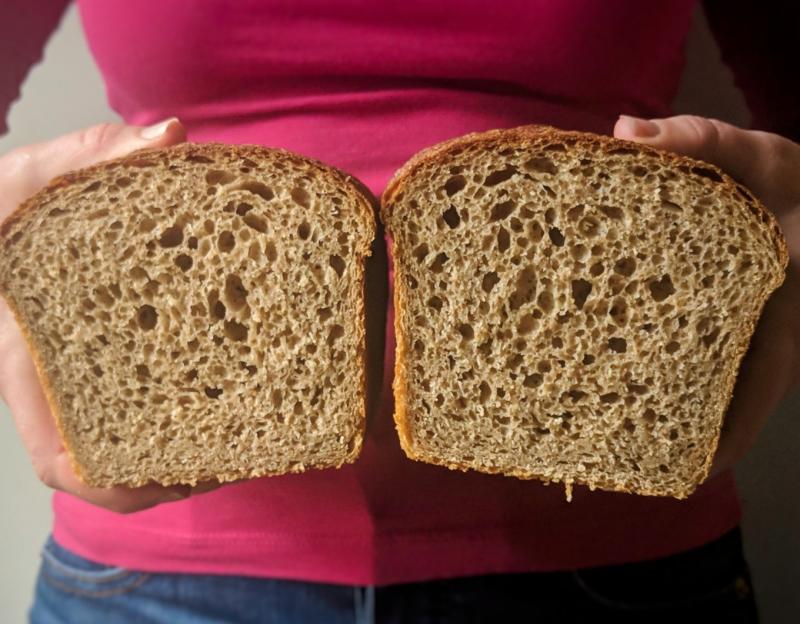
We’re done with our experimenting at the Bakehouse and are ready to introduce State St. Wheat. We’re using just five ingredients in all, including local wheat and rye, along with Michigan honey, olive oil, and sea salt—that’s it! And, of course, we’re also adding in some extra attention to detail.
Hazim Tugun, who works on recipe development and grain milling at the Bakehouse, describes our process, clearly showing the care we take: “Our team freshly mills Michigan-grown, organic soft white wheat and combines it with stone-ground, high-extraction, Michigan-grown hard red spring wheat flour we get from our miller in Traverse City. We take the extra step to lightly cook (scald) a portion of that freshly milled soft white flour for added sweetness and moisture. All of that goes into a naturally leavened dough with a touch of Michigan honey and olive oil for a same-day fermentation to keep the flavors mild. The loaves get a gentle bake in our convection ovens to achieve a thin, relatively light-colored crust. The result is a flavorful sandwich loaf where you can taste the grain, with the added bonus of a tender and moist crumb, and a relatively long shelf-life.”
Ready to taste? Stop by the Bakeshop and ask for a sample of State St. Wheat (or any of our breads!), and watch our bread bakers in action while you’re here. Maybe you’ll even get a little sneak peek of State St. Wheat headed into the ovens! State St. Wheat will also be available at some of the other locations where our breads are sold. It will be the only Zingerman’s Bakehouse bread sliced, in a plastic bag with a bright label, so you won’t be able to miss it.
Our goal is to sell State St. Wheat so that shoppers in many stores will have access to this familiar yet different, more flavorful and nourishing loaf.
By Amy Emberling, Bakehouse managing partner
The post State St. Wheat appeared first on bake blog.
]]>The post Living Bread with Daniel Leader appeared first on bake blog.
]]>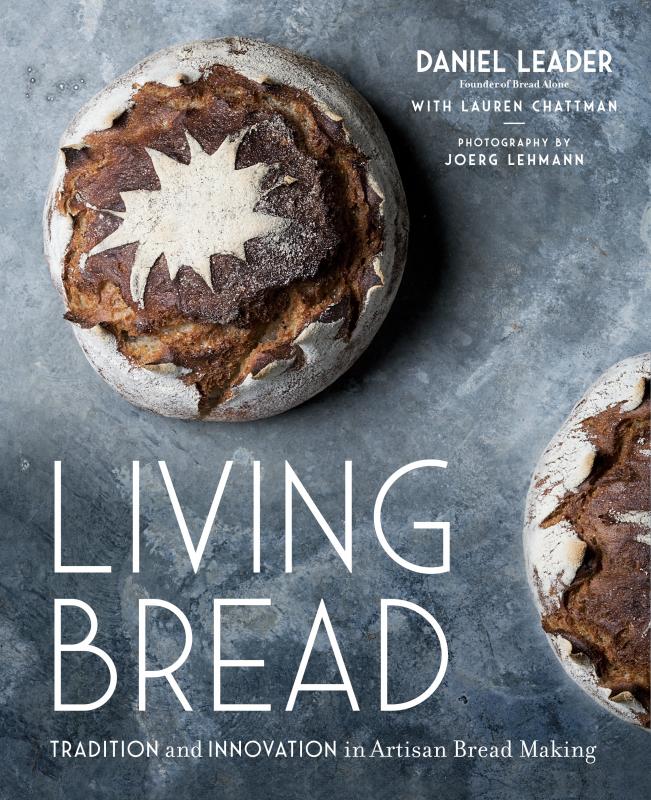 In his just-released groundbreaking book, Living Bread: Tradition and Innovation in Artisan Bread Making, Daniel Leader, owner of the iconic Catskills bakery Bread Alone, offers a comprehensive picture of his sought-after baking philosophy for the enthusiastic home baker. His book, inspired by a community of millers, farmers, bakers, and scientists in New York, provides a fascinating look into the way artisan bread baking has evolved and continues to change—from wheat farming practices and advances in milling, to sourdough starters and the mechanics of mixing dough.
On November 21st, BAKE! at Zingerman’s Bakehouse invites you to meet Dan for over two hours of baking fun. He will demonstrate several recipes from his newest book: 4-hour baguette, Baguette au Charbon vegetal, Domberger rye, and Pane Altamura. He’ll also tell us stories about his life and sign books. We’ll cap it off with a tasting, so you’ll go home with a full belly and a full mind.
We sat down with Daniel ahead of his upcoming visit to talk about his new book, the role of curiosity in preserving traditions, balancing tradition and innovation, today’s baking landscape, and his advice to novice home bakers.
Congratulations on your new book! It looks stunning. Why were you interested in writing such a multi-faceted book?
I’m interested in baking from the wheat field to the table. I love history and people as well. I did, after all, study philosophy in college!
What role do you think curiosity plays in preserving traditions?
The scope of my professional training is two weeks. There wasn’t a baking program at the culinary institute—the baking curriculum only took two weeks. Everything I’ve learned is because I’m curious. In my book, I talk about my backdoor baking education, which involves being polite, nice, and asking for a baker’s time. My whole career is based on curiosity.
Why was it important to you to capture stories from your “backdoor baking” education?
 It’s the people and my experiences that helped me become who I am. It’s the reality of my life.
How do you balance tradition with innovation?
It’s interesting—I’m sure at Zingerman’s you have the same challenge. We’re making a traditional product, honoring traditional techniques, and trying to stay true to tradition, but we don’t live in a traditional society. We have to make bread hip and cool, in a modern way, and in some ways, without the tradition. More people are into the words ‘artisan’ and ‘sourdough.’ People like that it’s a fermented food, people like that it’s a whole grain. People aren’t really tied into the fact that it’s a traditionally healthy food.
How are people responding to your book?
There are whole sections on tradition in the book, and I’m getting emails from people saying they can’t wait to try certain recipes. It’s interesting how people are focused on recipes, the here and now, and things they can do. That’s the opposite of what I expected. I thought people would read the book first and do the recipes second. Even some of the baking blogs that have interviewed me go right to the recipes, and I wasn’t prepared for that.
Because there have been so many bread books the last few years, I asked, “what do I want to say that hasn’t been said?” In addition to baking history and interviews, I included 60 recipes that are new and different; many have never been published before. It’s an eclectic assortment of recipes, including breads like Curry Tomato Ciabatta, Vegan Brioche, and Chocolate Sourdough Babka, as well as traditional recipes.
Why do you think people are attracted to the recipes first?
I’m just guessing that, because we live in a very complicated time, a very controversial time, with economic stress, political stress, environmental stress, educational stress, people want to do simple, fulfilling activities. There’s something so satisfying in putting the world aside for one moment to focus on making delicious bread. The world needs more of that. We’ll have much more productive discussions in life if people do things that are satisfying.
What are you excited about in today’s baking landscape?
That people are excited about bread again! I think we’ve come through the peak of people saying wheat is bad; I think it’s waning now. We’re getting a real push back from people who enjoy good bread, who want to make good bread, who are supporting bakeries, who want to support artisanal bread. It’s an exciting time to be baking bread because people are interested.
To support that, there are a lot of nutritionists and agronomists who are making solid scientific arguments about why wheat is good for us and why we should be eating it. There’s a Cornell scientist in my book who talks about the anti-wheat hype. The truth is, 20 percent of the world has been eating wheat for their primary source of protein for the past 9,000 years.
Whenever we have discussions of wheat and gluten sensitivities, it’s really important we talk about scientific truth and not hip headlines. In the book, there’s a chapter on heirloom grains and wheat sensitivities, where I interview experts in the field on what connects to scientific truth. If we’re going to talk about it, we should be knowledgeable.
 What advice would you give a novice home baker or someone interested in baking?
First of all, people have been baking bread for thousands of years, but yeast was only invented in 1890. Bread over history has mostly been sourdough. Don’t be intimidated by the process. There are great flours readily available. It’s easy, it doesn’t require special equipment, and you’ll make lots of friends in the process.
What about a more serious baker who’s interested in a “backdoor” training in baking?
Luckily, it’s a lot easier now; it doesn’t have to be backdoor. There are a lot of great baking schools… People don’t have to search as far and wide as I did — there are a lot of really nice facilities and great instructors.
Also, there are so many good books! My book is only one of many good books. It’s a great time to learn how to bake.
Who should attend your class at BAKE!?
Food lovers. People who like to have good food in their life. Simple, good food.
I don’t mean this in a disrespectful way, but I’m not a “foo foo” baker. I can do the fancy stuff, but mostly, I want bread to taste good.
Save your spot to learn from Dan at his BAKE! Class, “Parisian Bread Baking Demo with Daniel Leader,” on Nov 21, or get a copy of his book, to enhance your home baking adventures and build your knowledge of the tradition, science and art of baking.
By Nicole Pelto, Communications Specialist for Zingerman’s Community of Businesses
Baguette photo by Joerg Lehmann
The post Living Bread with Daniel Leader appeared first on bake blog.
]]>The post The Importance of Creating Regional Grain Economies appeared first on bake blog.
]]>Amy Halloran, author of The New Bread Basket, teacher, cook, and renowned flour ambassador, shares her knowledge with us on local grain economies and teaches us how to use sourdough starter in simple quick recipes.
You can meet Amy Halloran when she comes to BAKE! for a talk on regional grain economies and a demonstration class making sourdough tortillas and English muffins. We sat down with Amy to get the scoop on her upcoming visit, her first time to Ann Arbor and Zingerman’s.
What was the catalyst for your career in food writing?
I was inspired when I was running a local farmers market in New York. I felt compelled to tell the stories of food—not in mouthwatering words, but in the details that most of us can’t imagine. We live removed from the realities of farming. I want to illustrate the work it takes to eat.
 What is a regional grain economy and why do we need them?
Regional grains are the local food systems of our bread and beer, and for the other animals that eat locally, too—like chickens and cows! Grain growing and processing got centralized as America expanded west and took over grasslands to make the bread baskets we still rely upon.
If we can create markets for farmers to feed people and other animals nearby, farmers have greater control over their economies and choices. Right now, American farmers are very tied to the dominant corn and soy system. Developing regional markets and crops can help growers step out of the constraints of commodity production and into crops and farm plans that are more ecologically diverse, and hopefully, more economically resilient.
How do you create or develop a regional grain economy?
Creating or strengthening your local grain economy all depends on where you are and your conspirators! These projects take the shape of people who want something new to happen, which could be farmers, community members, or an organization that supports regional agriculture. For example, GrowNYC, which has really developed the grain shed in the Northeast because of its mission to support the agriculture surrounding New York City. (More on this at another BAKE! special event with June Russell from GrowNYC.)
Who should attend your local grain economy talk?
Anyone who is curious about flour and bread or local farming should come and listen to my Creating Regional Grain Economies talk. They’ll hear all about the amazing people who are creating change in our most basic foods. It’s important work worth learning about.
Who should attend your tortilla and english muffin class?
My Sourdough Tortillas and English Muffins class is for the sourdough curious, as well as seasoned sourdough bakers. I’ve created this class to help combat the idea that sourdough is tricky and time-consuming; it is really easy to make these things, and a great way to get to know how natural leavening works without trying to figure out how natural leavening works in loaves of bread. These recipes are griddled breads, and they are wicked easy, tasty, and fun.
 What is a Flour Ambassador?
I created a goofy yet serious pledge to draw attention to the importance of small mills. I was noticing a cultural clamoring for new grains, and I knew how difficult it was to trace a loaf of bread all the way back to the ground. I wanted to help people see that if they want another bread, then mills are the tool, like farmers markets, to create connections between eaters and the people who feed us.
Get Inspired
While traveling to share her book, The New Bread Basket, Amy has been spreading inspiration to food lovers and bakers and is inspired by readers’ reactions: “My book has allowed me to broadcast the stories of people who are changing our connections to grains. I never thought I’d be a flour activist! But it’s so wonderful to be spiderwebbed into the energy of this interest in new bread and new grains.”
Catch the inspiration yourself and maybe spark your path to becoming a Flour Ambassador! Check out one of these BAKE! special events or get your copy of The New Bread Basket.
By Sara Hudson, Marketing Coordinator for Zingerman’s Community of Businesses
The post The Importance of Creating Regional Grain Economies appeared first on bake blog.
]]>The post An Interview with Archaeologist and Fermentation Fan, Dr. John Speth appeared first on bake blog.
]]>In anticipation of this BAKE! Special Event, I asked Dr. Speth to share a bit of his perspective on fermentation and a hint of what we can expect during his talk.

Did you always love fermented foods?
Aside from cheese and yogurt (and a beer now and then), fermented foods have never played much of a role in my diet or eating habits. My interest in fermented foods actually came about because of my career as an archaeologist. I have been interested in the evolution of the human diet and foodways, with a focus on the major changes over the last 2 million years in the way our ancestors prepared their foods.
FUN FACTS:
– The control of fire and the beginnings of cooking occurred about 2 million years ago.
– The introduction of boiling technology began sometime between 250,000 and 40,000 years ago,
long before the invention of pottery, and had an impact on making starches more digestible.
– The origins of seed grinding to make flour came about 25,000 years ago,
long before cereals like wheat were domesticated.
– The first earth ovens and pit-baking happened about 10,000 years ago.
I am also very interested in how these changes in food-processing technologies have impacted human health, both positively and negatively (e.g., the nature of our gut flora; our susceptibility to autoimmune and cardiovascular diseases; our access to omega-3 fatty acids and our ability to biosynthesize to DHA; changing rates of tooth decay; etc.).
So why fermentation, in particular?
The development of fermentation is one of these technological introductions, with many interesting consequences. For one thing, most scholars seem to think that it originated with the making of bread and beer some 8,000 years ago or so. I suspect humans were deliberately fermenting foods at least 100,000 years ago and probably as much as 300,000 years ago.
Fermentation, like cooking, provides a way of softening and “pre-digesting” foods before you even put them in your mouth. This means we can extract more calories and nutrients from food at greatly reduced metabolic cost (i.e., digestion is both faster and more efficient).
The successful colonization by humans of the northern latitudes of both the Old and New Worlds may not have been possible without fermentation. As one moves farther north, edible plant foods become less and less available, and humans have to rely increasingly on meat to survive (think of traditional Eskimos or Inuit, whose diet was nearly 100% meat). But muscle meat has very little vitamin C to start with and cooking destroys much of what little there is. Scurvy, therefore, poses a major threat to life in these northerly habitats. Fermentation provided a way to preserve the precious vitamin C content of meat and allowed humans to expand into such environments without fear of scurvy. Even foods like Kimchi may originally have been developed as a way of preserving vitamin C to help stave off scurvy in environments with long cold winters.

Arrgh, scurvy. Did the pirates understand the value of fermentation?
Capt. James Cook, during his voyages of exploration in the Pacific in the late 1700s, carried large quantities of sauerkraut on board his ships, which he made his sailors eat. Most didn’t like it, but Cook got them to eat it by allowing the sailors now and then to eat with the officers if they agreed to eat sauerkraut as part of their rations!
Which foods do you think are the most misunderstood?
Overall, we have a poor understanding of the many potentially negative nutritional consequences of relying on foods made from domesticated plants and animals (livestock that have been grain-fed or grain-fattened). I would also add that we don’t yet fully grasp the negative impact of foods that have been produced under industrial conditions (e.g., mechanically extruded or acellular starches; the heavy use of salt, preservatives, and colorings in processed foods; excessive use of high fructose corn syrup, sugar, and other sweeteners). Many of these processes and additives were introduced on a large scale after WWII, and their negative health impacts are very much with us today.
In the course of your research, are there foods, drinks, or food preparation methods that you’ve come across that you would never eat?
As an anthropologist, when I’ve been in the field, I’ve eaten almost anything. This was often necessitated by the fact that one’s hosts will offer you foods, often special ones because you are their guest, and it would be extremely impolite to refuse (this has included sheep brains, testicles, eyeballs, and innards of all sorts; bread covered with a spread made of a local clay; “agua miel,” the slowly fermenting sap (en route to becoming pulque) of the maguey plant, complete with dead flies afloat in the middle, etc. I have never been in a context where insects were a main course, so it would take some “doing” to coax them down (but I would if I perceived it was important to the hosts). When I’m back in Ann Arbor, my diet is far less eclectic!
A common example of fermentation is the change of cider into vinegar. Apple Cider Vinegar has long been touted as a cure-all. Any thoughts on the beloved ACV?
People are always searching for magic elixirs and  cures. Personally, I don’t believe they exist. I’m sure ACV under some circumstances, for certain people, and used in certain—probably moderate—amounts, may be helpful. But we each have our own unique genetic make-up, and hence we may each have our own unique way of responding to what we put in our mouth, including ACV. Thus, as a blanket prescription, I would be wary. I suspect in the long run, it would be far more healthful for those of us who can to exercise; stay away from industrialized “junk” foods; to the extent that we have any control in the matter, reduce the quantity of chemicals to which we are exposed, both at home and outside the home; and most importantly learn to “get along” with bacteria rather than trying to do everything in our power to kill them. (It is estimated that we each have within us something like 100 trillion bacteria. They are us. We’d better learn to live with them!)
What will your research focus on next?
I have a number of research interests that are still “brewing.” One of them concerns the origin of boiling. We know surprisingly little about it, and yet boiling has had a tremendous impact on our diet and foodways, especially with regard to making starchy foods digestible. Look at any cookbook and you’ll quickly see how many recipes involve heated water at some point in their preparation. We know that humans were boiling at least 35,000 years ago, long before the invention of pottery, but how much further back in time it goes, and how it impacted our diet and health, remain largely unexplored. The same is true of fermentation. Most scholarly writing on the subject seems to stop with the invention of bread and beer, a mere 8,000 to 10,000 years ago. I suspect it goes back to Neanderthals and maybe even further (probably as much as 300,000 years ago).
I am interested in exploring fermentation’s role in human evolution further, both to find ways to determine its antiquity, and to figure out how humans did it while avoiding dangerous pathogens like botulism. For both of these research endeavors, I need to work cooperatively with biochemists and microbiologists.
Join us to learn more from Dr. Speth at the upcoming Bakehouse talk, The Power of Culture in Shaping Human Foodways, Thursday, October 10th, 6-8 pm ($45/person). You’ll enjoy a light meal, including an assortment of naturally leavened Bakehouse breads and Creamery cheese, sausage, sauerkraut, and Hiday grass-fed vanilla yogurt with Nemeth Farms Apple Compote. Sign up at https://www.bakewithzing.com/special-events
By Jenn Hayman, Director of Marketing, Zingerman’s Service Network
Illustrations originally created for our fellow Zingerman’s businesses, Miss Kim and Mail Order
The post An Interview with Archaeologist and Fermentation Fan, Dr. John Speth appeared first on bake blog.
]]>The post Hurray for Holiday Challah! appeared first on bake blog.
]]>The religious roots of challah, a word derived from Hebrew, meaning “portion,” extend as far back as the Bible, where, according to Jewish culinary historians, Phyllis and Miriyam Glazer, in The Essential Book of Jewish Festival Cooking, “it refers to the portion of the dough consecrated as a gift for God, and given to the priests of the Temple in Jerusalem before every Sabbath. To this day, traditional Jews consider it a mitzvah* for women, baking bread in the home, to break off a portion of the ready-to-be baked challah dough and throw it into the oven flames, as a way of both reenacting the ancient Temple rights and acknowledging that the bread—all physical sustenance—is ultimately a gift of the divine.”
*This is an honorable task performed to observe a religious commandment.
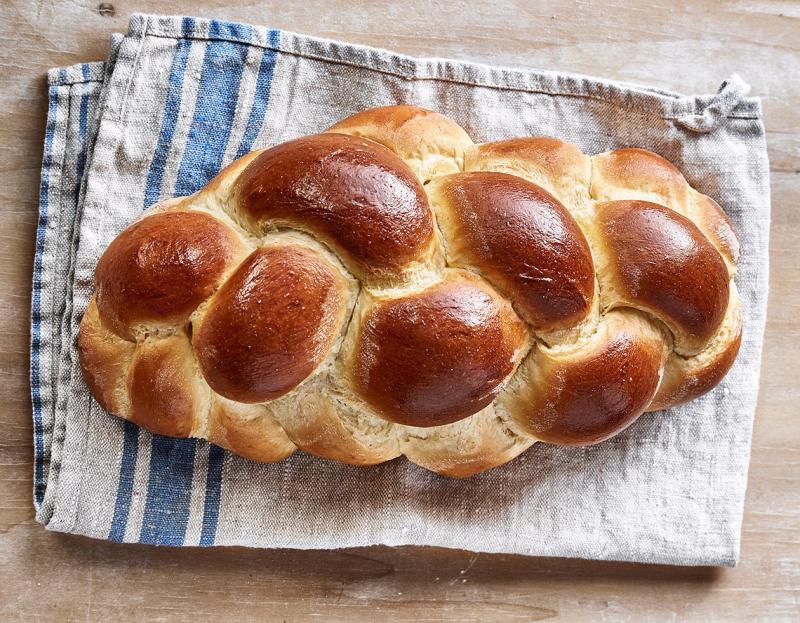
Challah baked for the Jewish Sabbath and holidays are made in various sizes and shapes, all of which have symbolic meaning. Braided loaves, which may have three, four, five, or six strands, are the most common and grace many a Shabbat table. On the night before the Sabbath, at sundown, a blessing is said over two such loaves, symbolizing, notes Claudia Rodin, author of The Book of Jewish Food, “two portions of the manna that was distributed on Fridays to the children of Israel during their Exodus from Egypt,” so they wouldn’t have to forage for food on the Sabbath. The loaves are covered on the table by a white napkin, which, Rodin further notes, “represents the dew that collected on the manna in the morning. Poppy and sesame seeds sprinkled on the bread also symbolize the manna that fell from heaven.”
For Rosh Hashanah, the Jewish New Year and the first of the High Holidays, the celebratory challah takes the traditional shape of a round turban and is often studded with raisins. The spiral shape, where there is no beginning or end, symbolizes continuity and the circularity of life. The loaves are often sweetened with honey, signifying the wish for a sweet year, richness and good living, and a nod to the Biblical references to Israel as the “land of milk and honey.”
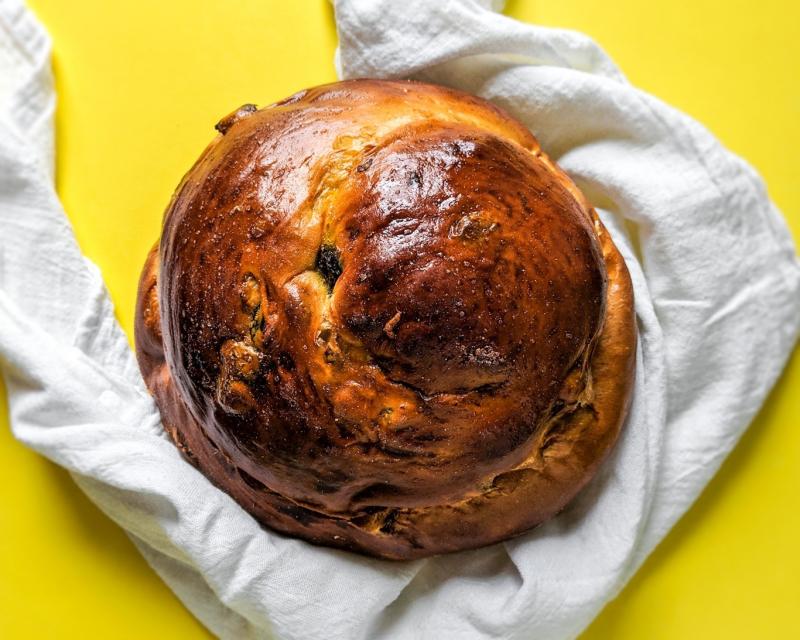
Here at the Bakehouse, we make our challah in the Ashkenazi Jewish tradition with organic wheat flour, fresh cage-free eggs, local Michigan honey from Gearig Apiaries Honey, yeast, and a little corn oil. The flavor is rich, but not too sweet. The texture is soft, but stands up to sandwiches, French toast, and bread pudding. It’s available in gorgeous, toasted saffron-colored braids, per Jewish tradition, or pan loaves we call “squares,” as well as in jumbo sandwich loaves.
During the Jewish High Holidays, starting with Rosh Hashanah, we pull out the stops with two rather fancy celebratory challahs, also rooted in centuries-old Jewish tradition. On order from September 26th through October 8th is our Ashkenazi turban-shaped challah studded with rum-soaked, red flame raisins, together with our more Sephardic-leaning five-strand Moroccan braid, flavored with sesame, poppy, and aromatic anise seeds and brushed with a honey syrup to give it a touch of extra sweetness. Here at the Bakehouse, we often refer to the Jewish High Holidays as “Challah Daze!,” due to all the traditional challahs we make at this time.
By Lee Vedder, Bakehouse Historian
First photo by Antonis Achilleos
The post Hurray for Holiday Challah! appeared first on bake blog.
]]>The post In Search of Naturally Fermented Bread? appeared first on bake blog.
]]>Fermentation is hot! It’s everywhere—in kombucha, kimchi, and miso; in all kinds of alcohol; in cheeses and yogurt; in coffee beans for our favorite morning beverage and cocoa beans for chocolate; in pickles; and of course in naturally leavened (sourdough) bread. There are bookshelves full of cookbooks on how to ferment all sorts of things (look up Sandor Katz, who has led the most recent fermentation revolution). For those of us who prefer to learn by doing in a social setting, there are even weekend festivals about fermentation—check out the 9th annual Fermentation Festival held in Wisconsin. The last two summers we’ve even hosted Amanda Feifer of the website Phickle at BAKE! to teach fermentation classes (they sell out in a matter of hours!).
What’s all the brouhaha about? Fermentation is all the rage because it seems to be great for our bodies and fermented foods taste delicious! Health and flavor together? Can’t beat that! Probiotics, created during fermentation, are purported to improve our gut health, possibly leading to better digestion, stronger immune systems, and a healthier weight. Fermentation may take care of our microbiome, which, when healthy, seems to have a remarkably positive influence on the rest of our body.
As is often the case, the newest fads frequently have long histories. Fermentation is an ancient food preservation technique that humans have been using intentionally for literally thousands of years. It extends the life of food and can make it taste better. It’s a natural process through which microorganisms like yeast and bacteria convert carbohydrates—like starch and sugar—into alcohol or acids that give food a distinctive flavor, ranging from tart to savory. The fermentation process promotes the growth of good bacteria, known as probiotics, and their by-products, such as organic acids, keep the bad microorganisms out, which can otherwise make us sick. Fermentation can occur naturally, no human hands needed, and we can harness it ourselves in an attempt to control the outcome, giving us the level of sour or the spectrum of flavors and textures we prefer.
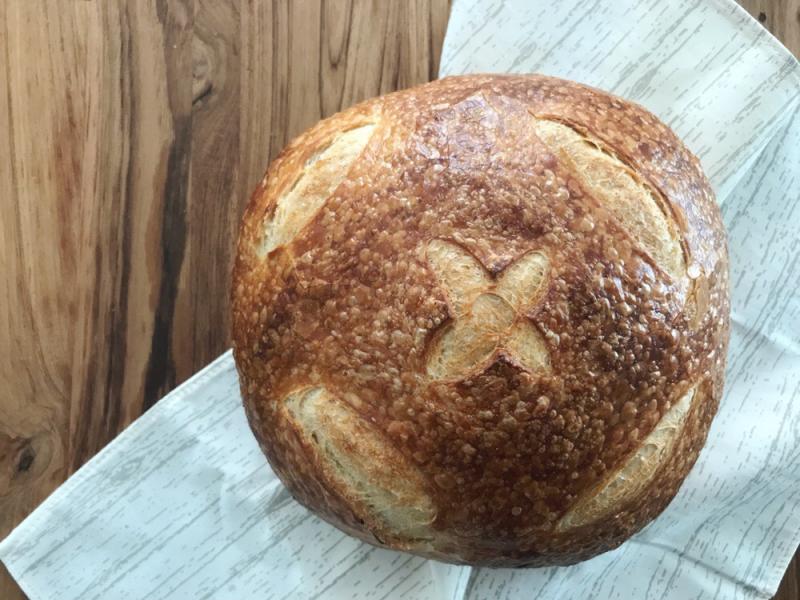
As artisan bakers, we are very happy to tell you that many of the breads we bake are naturally fermented. These breads don’t use any commercial yeast—the sourdough starters are kept alive and fed daily in preparation for addition to the final mix. They start with the fewest ingredients, but thanks to the fermentation time (anywhere from 14 to 18 hours, depending on the type of bread) they have the most complex flavors.

We’ve noticed lately that customers don’t know what to ask for when they want a bread with a long fermentation and sometimes people think the word sourdough must be in the name to be the “right” bread. So what do you ask for if you’d like a naturally fermented bread? At Zingerman’s Bakehouse, we use the terms “sourdough” and “naturally leavened” interchangeably for our naturally fermented breads. I personally prefer to say naturally leavened because sourdough implies that the bread will taste sour, and that is not always the case.
Fermented bread can come in the full range of sweet to very sour depending on how the fermentation process is handled and what kind of ingredients are used. For example, the Italian Christmas bread panettone is traditionally naturally leavened and it is definitely sweet and milky in flavor, not sour. Our Better than San Francisco Sourdough is the tangiest of all of our naturally leavened breads, and our newest bread, State St. Wheat, isn’t sour at all, but they are both fermented breads made with natural starters. Our Cinnamon Raisin and Chocolate Cherry are certainly sweet with a slight background note of tanginess and they are also both naturally leavened. Pecan Raisin is another naturally leavened bread with a not-so-pronounced tang, but just enough to add an unmatched savor to the delicious pecans and raisins. Whether sweet or tangy, or somewhere in between, we as bakers strive for fully fermented breads to give you the best experience in terms of flavors, textures, and aromas as well as nutrition and digestibility.

So if you’re looking for breads made from natural starters, with no commercial yeast, and long fermentation times, we bake almost 20 different choices—with lots of flavor and texture variations whether you want to call them sourdough or naturally leavened. Need a few names to start your personal research? Farm, True North, Pecan Raisin, Cinnamon Raisin, Country Miche, Walnut Sage, Chocolate Cherry, 8 Grain 3 Seed, Vollkornbrot and Freekeh Fougasse are all naturally leavened breads.
Come in and do a tasting to experience the breadth of flavors possible from fermentation in naturally leavened breads. Feel free to ask us for samples and find your personal favorites!
By Amy Emberling, Bakehouse managing partner
Second photo by Antonis Achilleos
The post In Search of Naturally Fermented Bread? appeared first on bake blog.
]]>The post Cream of Wheat appeared first on bake blog.
]]>Delicious and ruddy
With pleasure, I relished
That my hunger has perished.
From Porridge Nursery Rhymes by international poet, Goodness Lanre, 2013
With whole grains at the forefront of our mission, it seems only fitting for the Bakehouse to delve into the world of porridge. And what a fascinating world it is!—with its long culinary history stretching back to the Agricultural Revolution of the Neolithic Era (between 8000 and 5000 BCE), and the countless variations of the hot, whole-grain cereal that people all around the world have been concocting ever since. Throughout history and within every culture, porridge has been a dietary staple. As one historian of early human history, Alistair Moffat, proclaimed a few years back, “The great invention, the greatest revolution in our history was the invention of farming. Farming changed the world because of the invention of porridge.”
For many around the world, porridge (also historically spelled porage, porrgie, parritich), represents nourishment: whole-grain goodness, healthy nutrition, and ultimate comfort, served up in a bowl. An added bonus is that it’s easy to make—simply boil or bake ground, crushed or chopped whole grains in water or milk. As food writer, Mary Luz Mejia, notes, “A big bowl of porridge can rev your internal motor at breakfast, help you unwind after a late night, or ease the previous night’s excesses. It can be made sweet, savory, thin or thick, with toppings or without. The only rules for entry into the ‘porridge club’ are that it needs to be made with a grain and it’s usually a dish best served warm to hot.”
The most humble and universal of dishes, porridge was our first and simplest way of cooking grains to release the arsenal of nutrition and burst of flavor locked inside. Grains, served up as porridge, fed our earliest civilizations and “sustained empires because they were powerhouses of nutrition, relatively quick to plant and harvest (unlike fruit and nut trees), easily stored in cold, drought, or rain, and capable of feeding armies,” so notes Rachel Laudan, author of Cuisine and Empire—a sweeping chronicle of the rise and fall of the world’s great cuisines. “The early Romans built their empire on barley porridge,” she says. In Asia, “the Chinese built theirs on rice porridge, the Indians on rice and lentil porridge.” The list of grain porridges throughout world history is prolific and global: in Scotland and Ireland, barley and oats; in America, oats, wheat, and corn grits; in Asia, rice; in Russia, the pseudograin, buckwheat; in Norway, rye; in Africa, millet, corn, and sorghum; in Italy, corn and millet polenta, to name but a few. Within the rich, diverse histories of food in every culture, almost everyone eats porridge; it has been and continues to be the everyday food of everyday people.
Wheat Porridge in the American Midwest – A Brief History
From babyhood to old age CREAM of WHEAT brings a smile of welcome.
Palatable, wholesome, nourishing, good at all times for all people.
Served in many tempting forms, — dainty breakfasts, delicious desserts.
CREAM of WHEAT CO., Minneapolis, Minn.
Cream of Wheat print advertisement, 1909
…When was the last time you cooked your old friend Cream of Wheat?
…Remember the mornings you woke up to a light new taste that lets the flavor shine through. It’s as good as you remember, Cream of Wheat
Nostalgic Cream of Wheat television commercial jingle, 1970s
Here in the United States, porridge has been a nation-wide breakfast staple since the late 19th century. Among the hot breakfast cereals to take America by storm in this period was farina, a form of milled wheat made from the germ and endosperm of the grain, which is milled to a fine consistency and then sifted. The porridge, branded Cream of Wheat® in 1893, was created by a group of enterprising millers based, initially, in Grand Forks, North Dakota and, eventually, in Minneapolis, Minnesota. Cream of Wheat started in a very small way, but with a sound idea and the vision and determination to build a successful and worthwhile business.
The story goes that Emery Mapes (b. 1853), a former newspaper publisher, printer and editor, decided in 1889, with his partner George Bull, a Grand Forks farm manager, to go into the milling business in Grand Forks by purchasing the milling machinery from the Diamond Flour Mill, after a fire destroyed the company’s milling facility near Mankato, Minnesota. Knowing nothing about the milling craft, the two partners hired Tom Amidon, an experienced miller, to supervise the operation of their facility as head miller.
As the Grand Forks Diamond Flour Mill struggled to find its footing in the dark days leading up to the Economic Panic of 1893, Amidon came up with the idea of producing for profit, a “breakfast porridge,” made from milled farina, the whitest part of the wheat, which he had taken home and cooked into a cereal for his family, much to their liking. The milling partners, Mapes and Bull, loved the porridge’s delicious taste and creamy smooth texture, prompting them to name it, “Cream of Wheat.”
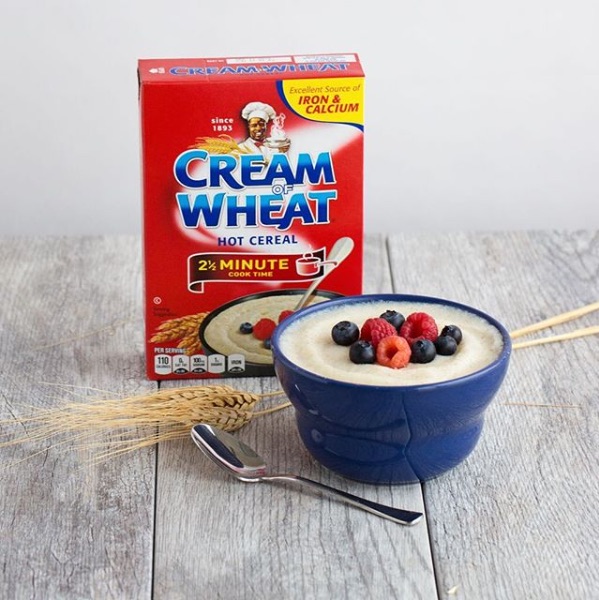
Confident they were on to something, the partners then agreed to let Amidon pack some of the cereal and ship it to their New York brokers, Lamont Corliss & Company. With the milling company barely afloat, financially, at this time, Amidon was left to his own devices in preparing the cereal for shipment; he cut the cardboard for the cartons by hand, labeled the packages himself, and crated them in wooden boxes he made up from waste lumber. With no money to spend on package design, Mapes, a former printer, drew upon his stock of old printing plates for an appealing illustration to brighten up Amidon’s makeshift cereal cartons. The image he settled on, which he ended up creating himself, happened to be a figure of an African American chef holding a saucepan over his shoulder, the precursor to the present-day, widely-known Cream of Wheat trademark personage.
In October 1893, the Diamond Flour Mill sent 360 boxes of Cream of Wheat to New York, along with a carload of milled flour. Within 3 hours of the shipment’s arrival, the New York brokers sent a telegram to the Grand Forks mill stating, “Never mind shipping us your flour. Send us a carload of Cream of Wheat.” To fill this order of nearly 2000 boxes, and even larger shipments in the future, the Mill came up with a strategic plan that entailed renaming their enterprise the Cream of Wheat Factory and packaging the cereal in assembly-like fashion so as to maximize the number of boxes they could churn out daily. They also enlisted Melvin Brannon, a biology professor at the University of North Dakota, in developing an electrolysis treatment to eliminate contaminants and provide longer shelf life for the cereal.
1893 also saw Cream of Wheat making its manufacturing debut, to great popular fanfare, at the World’s Columbian Exposition in Chicago. To generate further national interest in their new cereal, not to mention market share, Mapes began running ads for Cream of Wheat in the Ladies Home Journal in November of 1896, promoting an image of wholesomeness, family, home, and security; this message, published as illustrated print ads in scores of national magazines, went on to become one of the most successful and transformative cereal advertising and marketing campaigns of the early 20th Century. The demand for the new cereal was extraordinary, so much so, that by 1897 it had outgrown the producing capacity of the small plant in Grand Forks. The company thus relocated the Cream of Wheat Factory to Minneapolis, which had become a major grain hub and distribution center for the growing cereal market. Cream of Wheat had arrived, giving oatmeal a run for its money as America’s favorite hot breakfast porridge!
Wheat Porridge – Some Local Michigan History
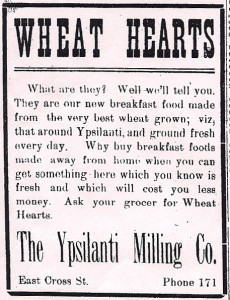
On a more local note, a perusal of the Ypsilanti Daily Press in August 1909 reveals that the Ypsilanti Milling Company, located on Cross Street along the east side of the Huron River, sought to tap into the extraordinary success and popularity of Cream of Wheat with their own take on the creamy wheat porridge, which they branded as Wheat Hearts.
To promote the venture, which ended up being very short-lived, the flour mill ran the following advertisement in daily issues of the paper over the course of a week in August 1909 (August 9-16), never to be seen again:
Around the same time that the Ypsilanti Milling Company was pitching their Wheat Hearts, in the daily paper, George Parker, in Ann Arbor Township, was transforming his father’s 1873 stone grist mill on Fleming Creek, off Geddes Road, from a family farm-based operation into a commercial flour mill. Beginning in 1910, following his father’s death, George milled, packaged, and sold to area grocery stores pancake mix, graham flour, buckwheat flour, cornmeal, and cracked wheat breakfast cereal, similar to Cream of Wheat, all under the brand name, “Parker’s Fleming’s Creek Mills.” The wheat cereal was packaged in 2-pound bags that bore a printed illustration of a couple of sheaves of wheat as the backdrop for the insignia and preparation instructions:
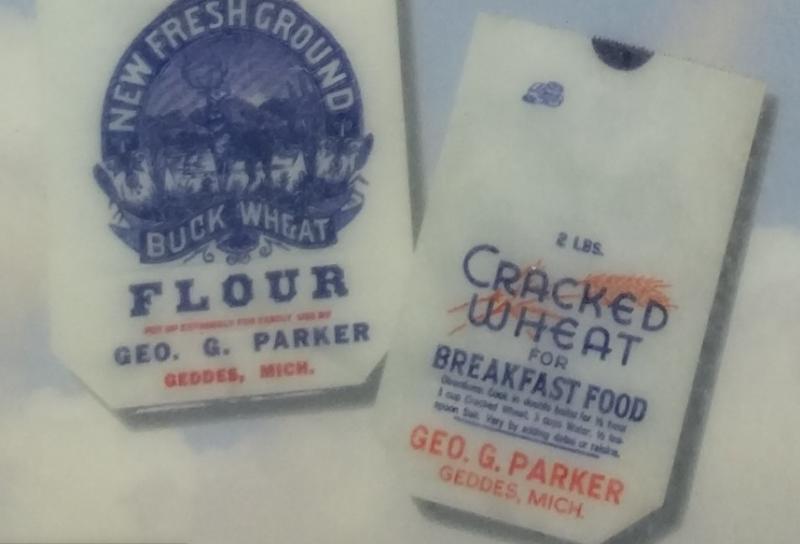
George continued to run the mill as a commercial enterprise until his death in 1956, at which point his son, Fred Parker, and other family members took over, but only for a few more years. By 1960, the mill had ceased operation and was sold, along with the family farm and other buildings on the property to the Frederick Mattael family. In 1983, the Washtenaw County Parks and Recreation Commission purchased the Parker Mill property and restored the mill back into full operation as the primary feature of Parker Mill Park, which opened to the public in 1984 and is still running to this day.
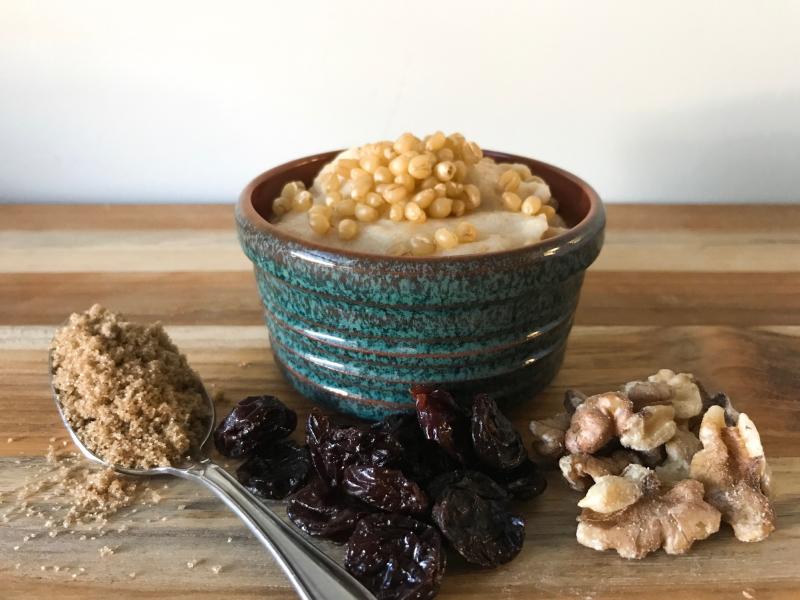
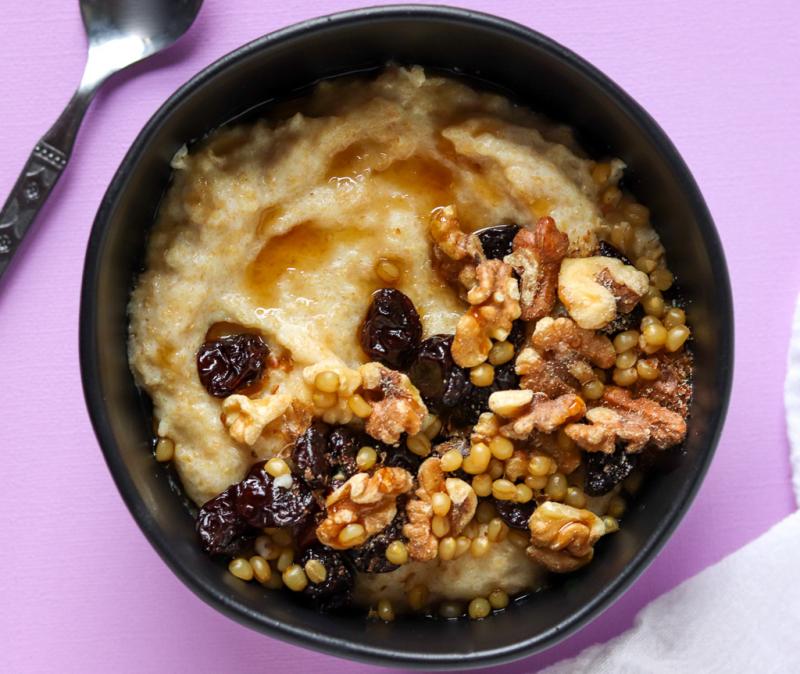
Now that we’re milling some of our own wheat at the Bakehouse on our stone mill, we decided to try freshly milled whole grain (FMWG) cream of wheat. It’s as comforting as the red box version and more flavorful because it contains the entire wheat berry. We are using coarsely milled, soft white wheat from Ferris Organic Farm in Eaton Rapids, MI and cooking it with local Guernsey Dairy milk. Come in and try some—it’s delicious with toppings or just on its own. But if embellishment is your thing, we currently have on hand Michigan dried cherries, California walnuts, Michigan maple syrup, muscovado brown sugar, milk, and cream to top your creamy whole wheat porridge.
Watch for new porridges and more porridge history in the coming months.
By Lee Vedder, Bakehouse Historian
Cream of Wheat photo via their Instagram, Wheat Hearts ad via YpsiNews.com, Geo. G. Parker packaging via HMdb.org
The post Cream of Wheat appeared first on bake blog.
]]>The post Green Olive Focaccia appeared first on bake blog.
]]>Those who’ve tried it know what craveable secrets the humble slice holds. A bounty of fruity Castelvetrano olives crown a crisp-crusted, chewy, bubbly slice of deeply colored whole grain focaccia. A single bite unlocks innumerable layers of flavor. Warm, twangy raw and roasted garlic! Bright, poppy lemon! Fruity, herbaceous coriander! It’s a celebration of simple ingredients inspired by Hazim’s upbringing on the island of Cyprus.
Intrigued by the story behind my new favorite midday snack, I sat down to talk with him about how this savory treat came to be.
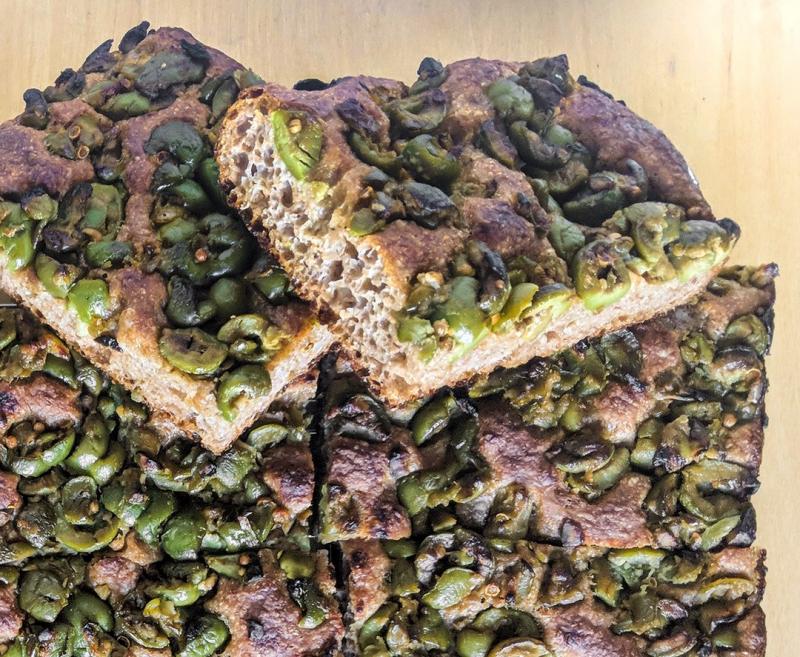
Can you tell me a bit about the process of coming up with this focaccia? It’s really such a unique bread.
We went to the Grain Gathering at Washington State University last year and tasted lots of wonderful stuff, and one thing that stuck out was this whole grain focaccia. It was more like a flatbread, not quite focaccia—it’s kind of a blurry term—but it tasted great. I’d tasted things kind of like that before, but it was a good reminder. Here, we’re always talking about what new breads to work on, and when we came back, Amy (Bakehouse managing partner) said, “I think I want a whole grain focaccia.”
I love working with naturally leavened doughs and freshly milled grain, so this was just perfect. I also tried to base it on what we had in-hand. Hard red spring wheat is strong and very flavorful, and spelt is also very flavorful. It’s an ancient grain, but it also has this extensibility that you don’t get with the hard red spring, meaning it’s great for stretching a dough into a flatbread.
I had the formula in my head: a wet dough that gets fermented overnight with a very little bit of starter in it as the jumping-off point. A bit of olive oil, because that’s what focaccia is typically associated with. But the other part of the equation was the sheet pan, which is what we typically bake our focaccias in. I’d tried that once, but I knew these breads would require a lot of heat and our sheet pans don’t necessarily work that way.
Normally, when you bake in a wood-fired oven, you can use sheet pans to cool down the stone hearth. If you imagine putting something in a sheet pan and then putting it on the deck ovens, it’s not going to get as much heat as if you put it directly on the hearth. I tried that and it didn’t really work. I needed really high heat, not the heat that we have going on in these deck ovens. I’d use my little Rofco oven in Cyprus, and when I was making pizzas, I’d just crank it all the way up to 300°C. As I was thinking about that, it just immediately clicked that I should use Detroit-style pizza pans—they have higher sides than a sheet pan, plus they’re made out of cast-iron so they retain heat more efficiently. So you plop the dough in there, let it relax, stretch it out, proof until it gets super bubbly and light. That’s what I really like—you can really push the proof, so the flavors explode and the texture becomes super-tender. The more you ferment, the softer and more tender it gets. Then, when you bake it in a super-hot oven, they’re ready in 15 minutes.
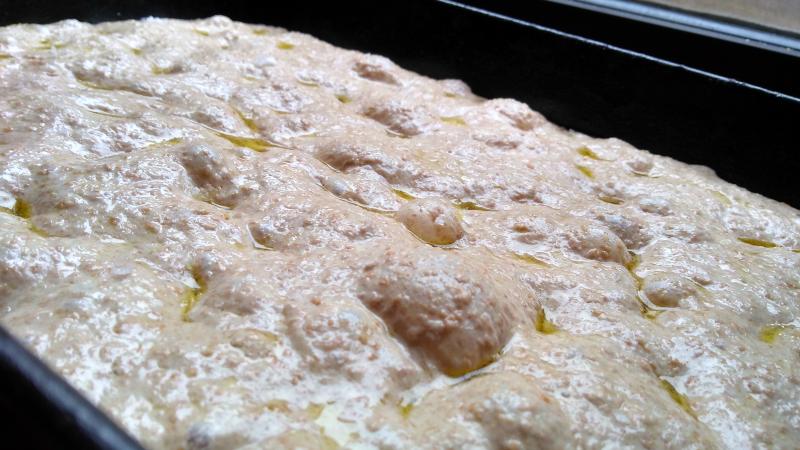
Once we figured out the dough piece, I had to figure out what we were going to top it with. Immediately, the first one in my mind was the combination of halloumi, raw onion, and fresh mint, which we use in Cyprus a lot. Back home, we prepare this dough in round metal pans. It’s not quite focaccia; it’s just a plain dough that’s usually a little yeasted, with a lot of olive oil, and then topped with raw onions, mint, and all that. I had a lot of it when I was growing up. So I ran with that idea, baked it, and we all tasted it and said, “oh… this is GOOD. It’s very good.”
Definitely. I don’t think a lot of people around here are familiar with halloumi or that flavor combination, but it’s really delicious. It’s often only available seasonally though, so how did you land on the winning combination we currently have at the Bakeshop?
Initially, I wasn’t sure what to do. I remember trying a roasted broccoli-sausage thing, and it just didn’t work. But then I thought, “I’m using halloumi, so why don’t I try another thing we make a lot in Cyprus?” Something that’d typically go along the same breakfast table: marinated olives. If you came to our house for breakfast, there’d be a little bowl of cracked green olives with coriander, garlic, and lemon, sitting in olive oil, and you could just nibble. And then you’d take your bread and dip it in all the juices at the bottom of the bowl. We don’t have cracked green olives here, but we do have Castelvetrano olives. I love them; we buy them a lot for my daughter.
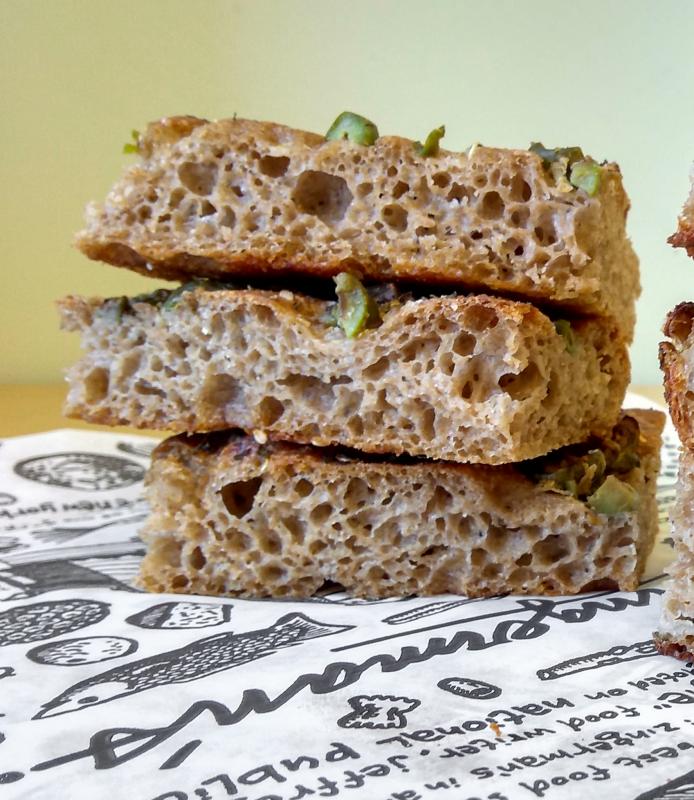
They ARE so delicious. I love olives, though; I’ll eat them like candy.
Right? The cool part of this bread is that even people who don’t like olives think it’s really good. Beyond the olives, raw garlic was a given, but then I remembered we have roasted garlic, too. That’s just another flavor explosion. And then great olive oil, lemon juice, lemon zest, and crushed coriander seeds. We tasted it, and… that was that. When Amy and Frank tasted it, they were both like, “Yep!” I’m used to going back to the drawing board a little bit to rework things, but these two combinations got the thumbs-up right away.
Awesome. So you had mentioned that it would be part of a breakfast spread. Do you envision the focaccia as part of a breakfast spread? What are some other serving ideas?
I think that would be great. You’d have to have super fresh, in-season tomatoes and cucumbers, the focaccia, a little bit of cheese, a little bit of coffee or tea. What more do you need? Or, if you want, you can fry up a sunny side-up egg and put it on top of the green olive focaccia. But I think they can be a snack during the day, too. The cool thing about this focaccia is, even if you take it home and take it out the next day at room temperature, it’s still great on its own. If you warm it up it’s even better, but it’s not like a bread that dries out that much for the first two days. After that, though, it would be better if you warm it up. Just snack on it as-is.
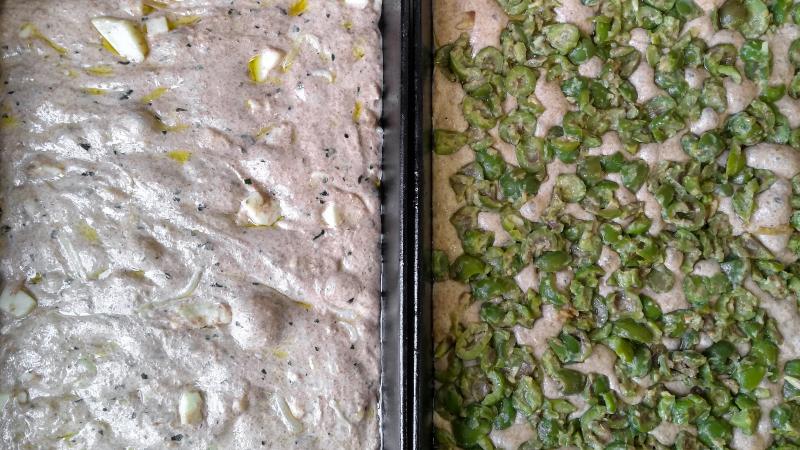
Agreed. I’ve only ever eaten it as-is, and I’ve never wanted for anything. I think that it’s super-satisfying, largely because of the whole grain.
I agree. But even though it’s whole-grain, the crust is very mild-flavored. You can taste the grain, but it’s very subtle and the toppings just sing. Recently I’ve tried making it with a whole-wheat starter that we have in-house, and then the crust flavor is amped up even further. And then you can just eat that on its own! Bread so good you just want to eat it plain!
Hungry to taste our Green Olive Focaccia for yourself? Find it in our Bakeshop Friday-Sunday, or meet us at the Westside Farmers Market on Thursdays!
By Emily Hanka, Bakehouse Marketing Manager
Photos by Emily Hanka & Hazim Tugun
The post Green Olive Focaccia appeared first on bake blog.
]]>