The post How Pumpkin Pie Became a Thanksgiving Classic appeared first on bake blog.
]]>And custards and pies,
Our pumpkins and parsnips
are common supplies
We have pumpkins at morning
And pumpkins at noon
If it were not for pumpkins
We should be undoon…
From an American Pilgrim Verse, ca. 1630
…But see, in our open clearings, how golden the melons lie;
Enrich them with sweets and spices, and give us the pumpkin-pie!
From “The First Thanksgiving Day, A.D. 1622,”
a ballad by Margaret J. Preston, 1887
Few foods that make up our traditional holiday fare can claim deeper American roots than the pumpkin (cucurbita pepo). Thought to have been first cultivated in Central America around 5,500 BCE, pumpkins had spread north up the eastern seaboard into Canada by the time Europeans began exploring the North American continent in the 15th century. With its thick shell and solid flesh, pumpkins were a sustaining dietary staple for Native Americans as they could be stored through the winter and preserved by slicing and drying them. They also were baked, boiled, stewed, and roasted over a fire for everyday consumption.

Versatile and easy to cultivate, New World pumpkins were among the first botanical specimens European explorers brought back to Europe. They are mentioned in European works beginning in 1536 and within a few decades were grown regularly in England and France, where they were called “pumpions” and “pompions,” respectively, in reference to their rounded form. By the 17th century, pumpkins, whether baked, fried, mashed, roasted, or stewed, featured prominently in English and French cuisine, with myriad recipes, both sweet and savory, appearing in the most influential English and French cookery books of the day. A favorite preparation was to scoop out their seeds, fill the cavity with sweetened, spiced milk, and cook them near a fire. Pumpkins were also used to make puddings, pancakes, pies, soups, stews, and tarts.

When the Pilgrims set sail for America on the Mayflower in 1620, landing on the shores of Cape Cod, they were most likely already familiar with the pumpkins cultivated by the Wampanoag, the Native Americans who helped them survive their first year at Plymouth Colony. From the Wampanoag, the Pilgrims learned how to grow life-sustaining crops, including pumpkins and corn, and how to weather the brutal climate of coastal Massachusetts. A year later, despite losing nearly half of their group to disease and scarcity brought on by a harsh winter, the Pilgrims, together with the Wampanoag, gave thanks for a bountiful autumn harvest with a three-day celebration feast. On the table would have been local root vegetables, like carrots and onions, dried fruits and nuts, waterfowl, wild turkey, venison, lobster, clams, berries, fruit, and pumpkin and squash. Lacking butter, lard, wheat flour, and a dry oven for pastry crust, the closest the Pilgrims would have come to preparing pumpkin pie at the first Thanksgiving and during the early years of the colony, would have entailed, according to some accounts, hollowing out pumpkins, filling the shells with milk, honey, and spices to make a custard, then roasting the gourds whole in hot ashes.

Meanwhile, back in 17th-century England and France, pumpkin pie continued to evolve, taking a number of forms. François Pierre La Varenne (1615–1678), in his Le Cuisinier François, 1651, the revolutionary cookbook that laid the foundation of classic French cuisine and was translated into English as The French Cook in 1653, instructed cooks when making their “pompion” pie to prepare a simple pudding and bake it in a pastry crust:
…boile it with good milk, pass it through a straining pan very thick, and mix it with sugar, butter, a little salt and if you will, a few stamped almonds; let all be very thin. Put it in your sheet of paste; bake it. After it is baked, besprinkle it with sugar and serve.

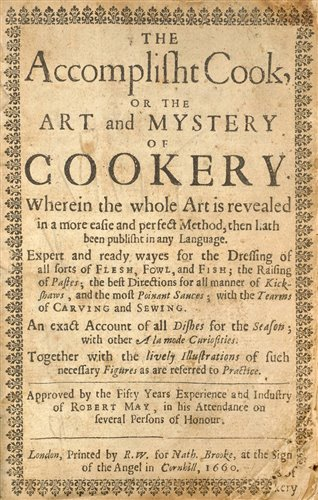
In the influential English compilation, The Accomplisht Cook, 1653, by Robert May (1588-ca. 1664), the recipe for pumpkin pie takes on a completely different character and complexity:
Take a pound of pumpion and slice it, a handful of thyme, a little rosemary, and sweet marjoram stripped off the stalks, chop them small, then take cinnamon, nutmeg, pepper, and a few cloves all beaten, also ten eggs, and beat them, then mix and beat them all together, with as much sugar as you think fit, then fry them like a froise, after it is fried, let it stand till it is cold, then fill your pie after this manner. Take sliced apples sliced thin round ways, and lay a layer of the froise, and a layer of apples, with currants betwixt the layers. While your pie is fitted, put in a good deal of sweet butter before you close it. When the pie is baked, take six yolks of eggs, some white-wine or verjuyce, and make a caudle of this, but not too thick, cut up the lid, put it in, and stir them well together whilst the eggs and pumpion be not perceived, and so serve it up.
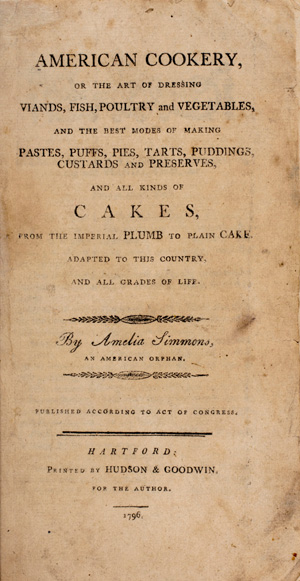
These varying recipes for pumpkin pie, along with the English and French cookbooks that contained them, made their way to colonial America as English settlers continued to colonize New England throughout the 17th and 18th centuries. By the time Amelia Simmons of Connecticut (dates unknown), published her American Cookery in 1796—the first cookbook published in America and the first to meld together Northern European cooking and baking methods with American-sourced ingredients—colonial American cuisine had come a long way since the Pilgrim’s first thanksgiving. Pumpkins were now a dietary staple and a potent symbol of American plenty with American cooks employing them not only in puddings and stews, but also in beer, breads, johnnycakes, porridges, butter, syrups, and last but not least, the bone fide pie in a pastry crust.
Amelia Simmons did not invent the pumpkin pie we now know and love today, but her cookbook contained the earliest American recipe for what has become a Thanksgiving Day classic. Her two recipes for “Pompkin” pie called for similar ingredients to what we use today:
Pompkin
No. 1. One quart stewed and strained, 3 pints cream, 9 beaten eggs, sugar, mace, nutmeg and ginger, laid into paste No. 7 [all butter] or 3 [butter and lard], and with a dough spur, cross and chequer it, and baked in dishes three quarters of an hour.
No. 2. One quart of milk, 1 pint pompkin, 4 eggs, molasses, allspice and ginger in a crust
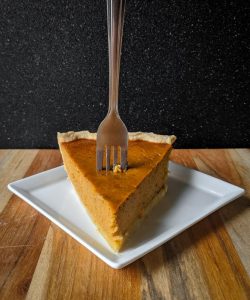
So when did pumpkin pie become the quintessential dessert of the Thanksgiving Day holiday? By the early 18th century, giving thanks for a bountiful autumn harvest with an annual celebratory feast, as the Pilgrims did, had become an important regional holiday in colonial New England and pumpkin pie had earned its iconic place at the table. Indeed, the dish had become so traditional in colonial Connecticut that, in 1705, a temporary shortage of molasses forced the town of Colchester to postpone its Thanksgiving from the first to the second week in November, until the essential ingredient for the pie could be obtained.
The historian Tad Tuleja notes, in his chapter on “Pumpkins,” in Rooted in America: Foodlore of Popular Fruits and Vegtables (1999):
Popular literature of the nineteenth century gives ample evidence that pumpkin pie was considered, in many circles, an indispensable feature of Thanksgiving…Women’s magazines carried recipes for it, and numerous memoirs also attest to an association with the supposedly New England holiday. Sara Josepha Hale, whose tireless promotion of the feast day led to its nationalization by President Lincoln [in 1863], noted in her 1827 novel, Northwood that pumpkin pies were “an indispensable part of a good and true Yankee Thanksgiving.” Without exaggeration, a recent historian of the holiday claims that turkey and cranberry sauce notwithstanding, pumpkin pies constituted “the first culinary Thanksgiving tradition.”
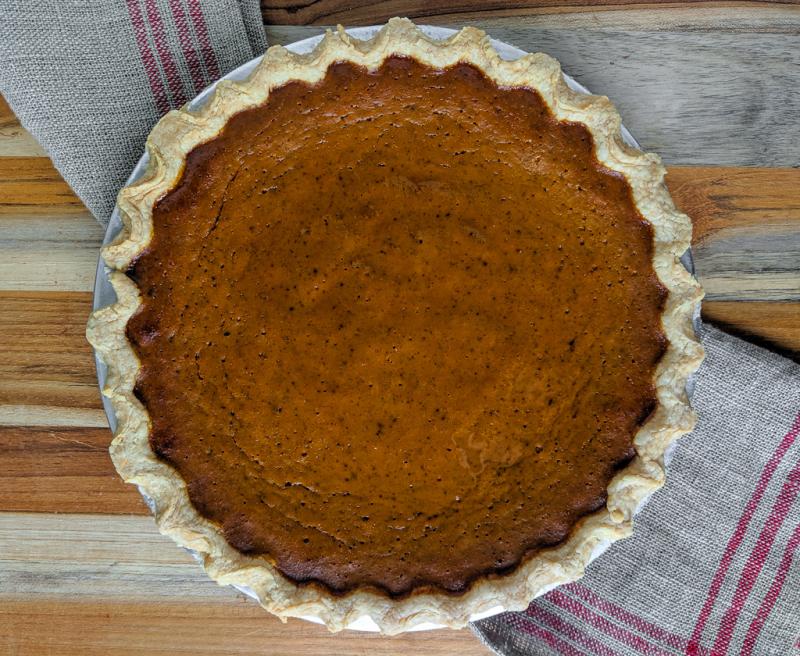
We’re happy to carry on the tradition here at the Bakehouse. Our Classic Pumpkin Pie may look wholly different than the pumpkin stews and custards of yore, but it’s just the thing that adorned our Thanksgiving tables as children. We deck out our pumpkin filling with Indonesian cinnamon, ginger, clove, Michigan honey, Guernsey Dairy cream and a cozy touch of Muscovado brown sugar to round it out. It’s a rich, creamy, and decadent celebration of a very storied gourd!
The post How Pumpkin Pie Became a Thanksgiving Classic appeared first on bake blog.
]]>The post Turkey Urfa Chili appeared first on bake blog.
]]>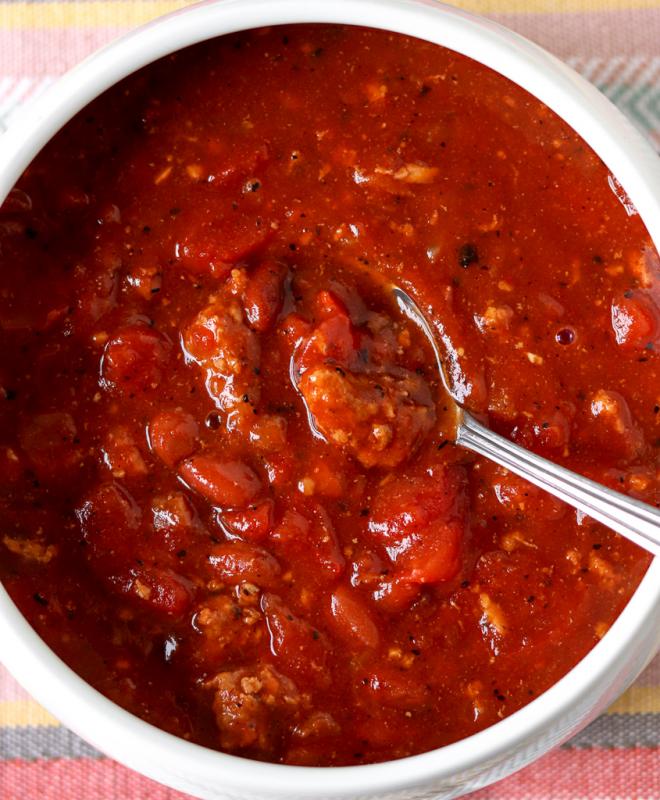 It’s easy, though, to feel disconnected from the little jar of red powder sitting in our spice cabinet when we pick it up at a big-box store. All too often it’s filled with flat-tasting dust from nondescript peppers. It’s there; it’s vaguely reddish; it’s been there to flavor many a pot of chili. But a good chili powder, thoughtfully sourced and artfully blended, is a complex work of art.
Our Turkey Urfa Chili gets its smoky, spicy flavor from Urfa biber, a dried Turkish chili pepper from the Urfa region of Turkey. It’s truly something to behold: a deep burgundy, almost black, with a surprising, unique flavor that strikes a perfect balance between smoky, salty and sweet. It begins with the Isot pepper, a bright red chili that looks a bit like an elongated red bell pepper. After harvest, the pepper is partially dried in the sun, then left under tarps to oxidize and ferment.
Just picture it: rolling hills blanketed with bright white tarps and deep red chilies drying in the low autumn sun. We could wax poetic about this spice all day. We get ours from our friends at Épices de Cru, and we’re smitten with its fruity, chocolatey heat. It’s similar to Aleppo pepper in many ways, with raisin-like notes that start singing upon first sniff.
Maybe we’re biased, but one of our favorite ways to enjoy Urfa biber is in a big, steaming bowl of our Turkey Urfa Chili. We make it with a heaping scoop of those purpley-red chili flakes, plus some green chile powder to add some complexity. We serve it up in our Bakeshop every Thursday, and it’s a guest favorite for good reason. But if you find yourself craving it on any other day of the week, you’re in luck, because we’re sharing the recipe with you! Take one bite of that Urfa-perfumed chili, and you’ll be transported to the hills of Turkey.
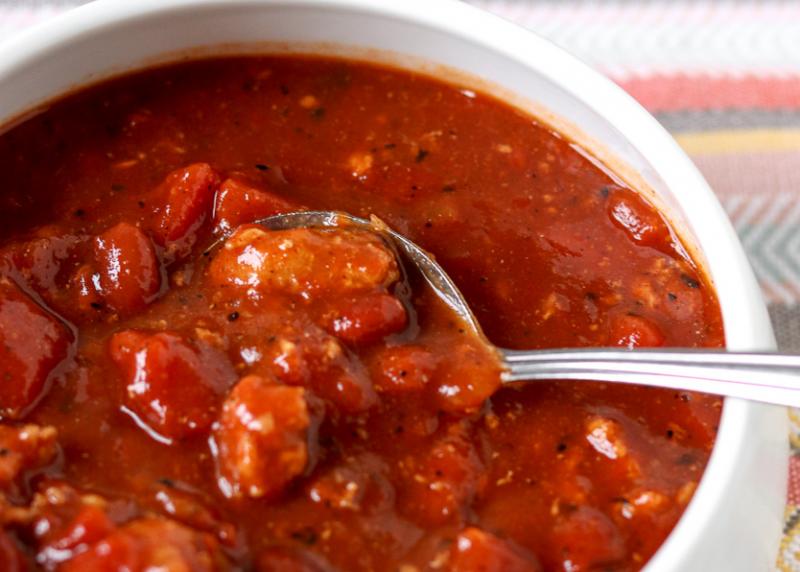
Turkey Urfa Chili
| Canola oil | 2 Tbsp | 25 g |
| Diced onion (1/4 inch [6 mm]) | 1 ½ cups | 170 g |
| Ground turkey | 16 oz | 454 g |
| Minced garlic (3 cloves) | 1 Tbsp | 25 g |
| Ground cumin | 2 ½ tsp | 7 g |
| Green chile powder | 2 ½ tsp | 7 g |
| Urfa pepper flakes | 1 ½ Tbsp | 13 g |
| Sea salt | 1 Tbsp | 13 g |
| Ground black pepper | 1 tsp | 2 g |
| Kidney beans, drained | 3 (15-oz) cans | 1,275 g |
| Diced tomatoes (canned) | 1 (28-oz) can | 795 g |
| Crushed tomatoes (canned) | 1 (28-oz) can | 795 g |
| Sour cream for topping | ||
| Sour cream for topping |
-
In a large stockpot, heat the oil and sauté the onions over medium to low heat until they are translucent. Add the ground turkey and minced garlic. Stir frequently and actively break up the turkey to avoid clumping. Cook the turkey completely. Add the cumin, green chile powder, Urfa pepper, salt, and pepper. Stir to incorporate the spices and cook over low heat for 2 minutes.
-
Add the beans and both kinds of tomatoes. Mix well. Bring to a simmer and cook for 30 minutes. Stir frequently to avoid scorching. Serve hot in bowls with sour cream and chopped green onions as tasty garnishes.
By Emily Hanka, Bakehouse Marketing Manager
Recipe from Zingerman’s Bakehouse by Amy Emberling & Frank Carollo, Chronicle Books (October 3, 2017)
The post Turkey Urfa Chili appeared first on bake blog.
]]>The post State St. Wheat appeared first on bake blog.
]]>Here in the United States, a bread revolution unfolded in small pockets of the country, beginning as early as the late 70s and then more extensively in the 80s and early 90s. People began to relearn the art of baking naturally leavened (sourdough), hearth-baked breads—often round and crusty, very different from grocery store bread.
 Today, a loose collaborative of bakers is trying to start another revolution. We are calling ourselves The Bread Lab Collective. We’re a national group of craft bakers, millers, teachers, students, and wheat breeders inspired by the work of The Bread Lab of Washington State University to work together to make nourishing sandwich bread available nationwide. Together, we’ve set out to create pure and simple whole grain sandwich breads that have broad appeal—familiar flavor, familiar texture, familiar shape—but are healthier than mass-produced, grocery-store bread because of our ingredient choices and artisan baking techniques.
Our goal is to bring nourishing bread to more people in our communities and to inspire other artisan bakers to join us so that Bread Lab Collective sandwich bread is available in every state. We’re excited to be teaming up with more than a dozen other bakeries from across the country, including King Arthur Flour Bakery (Vermont), Barrio Bread (Arizona), Seven Stars Bakery (Rhode Island), Breadfarm (Washington State), Prager Brothers (California), and Elmore Mountain Bread (Vermont), as founding members.
Each bakery in the Collective has made something a little different, in keeping with local tastes and ingredients and with their bakery’s flavor and process preferences. The Collective wants some degree of consistency, so we’ve agreed upon a set of specific criteria to bake by; here they are:
-
The loaves need to be reminiscent of what many of us are used to on the grocery store shelves: bread that is sandwich shaped, soft, sliced and packaged in plastic, with at least a one-week usability, and is good for all the typical things Americans make with sandwich bread (grilled cheese, peanut butter and jelly sandwiches, basic toast).
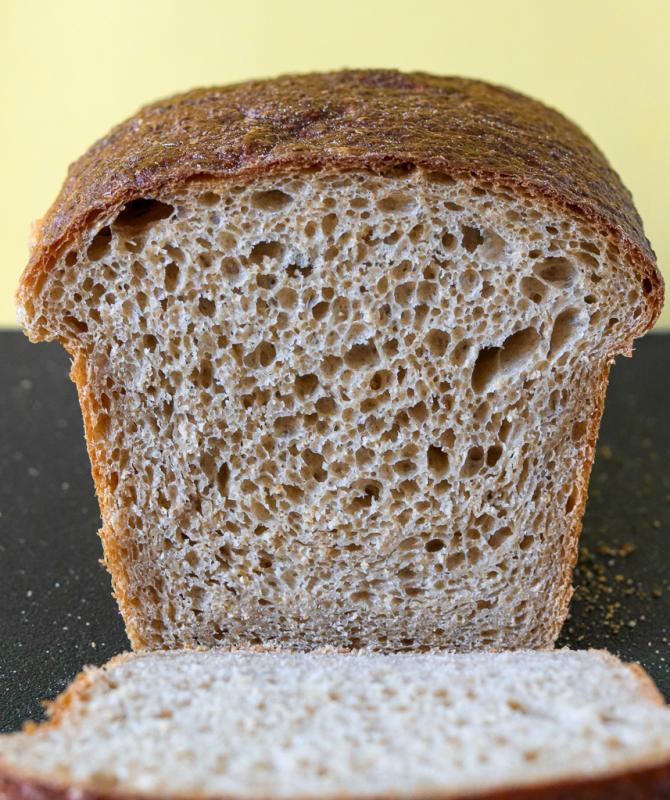 As artisan bakers, we customarily make crusty breads in many different shapes, sold unsliced in paper bags, so this was a significant departure from our typical approach.
-
The Bread Lab Collective loaves boast short and understandable ingredient lists—seven ingredients or fewer is the agreement! This was normal for most of us, so less of a challenge. Check out the label on some highly manufactured breads and you’ll see a much longer list of ingredients, many of which will be unrecognizable as food.
-
Loaves made for the Collective are mostly naturally leavened, meaning that they’re made with a sourdough process, and are good to eat for a full week. Making a naturally leavened bread in a pan and achieving the texture and loft many of us are used to from grocery store bread takes some skill and experimentation. We were all up for it. The naturally leavened process actually lends itself to a longer shelf life so that was to our advantage. Freshly milled whole grain also has longer keeping qualities.
How is our loaf different from typical grocery store bread? Most grocery-store bread is made with a considerable amount of commercial yeast, which allows it to be made quickly and cheaply. Furthermore, typically added fats, sugars, preservatives, and other dough conditioners give grocery-store bread its workability to achieve a lofty look as well as its desired texture and flavor. By keeping our bread naturally leavened (sourdough) and using the right artisan baking techniques, we don’t need to rely on heavy quantities of commercial yeast or multiple additives to create an appealing and nutritious loaf.
-
Finally, at least 50% of the flour used in the loaves must be whole grain. The Bread Lab Collective wants the bread to provide nourishment. Having it taste and look familiar with at least this much whole wheat was also a challenge to our baking skills.
The Bread Lab Collective is passionate about supporting the work of the Bread Lab at Washington State. To this end, we’ve also all agreed that ten cents from each purchase of State St. Wheat will go to the Bread Lab to fund further research designed to make projects like this possible.
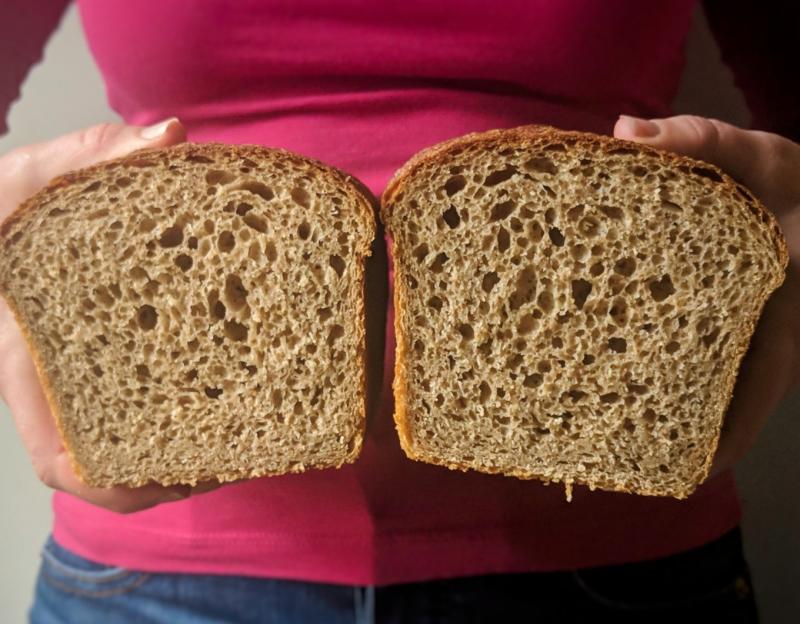
We’re done with our experimenting at the Bakehouse and are ready to introduce State St. Wheat. We’re using just five ingredients in all, including local wheat and rye, along with Michigan honey, olive oil, and sea salt—that’s it! And, of course, we’re also adding in some extra attention to detail.
Hazim Tugun, who works on recipe development and grain milling at the Bakehouse, describes our process, clearly showing the care we take: “Our team freshly mills Michigan-grown, organic soft white wheat and combines it with stone-ground, high-extraction, Michigan-grown hard red spring wheat flour we get from our miller in Traverse City. We take the extra step to lightly cook (scald) a portion of that freshly milled soft white flour for added sweetness and moisture. All of that goes into a naturally leavened dough with a touch of Michigan honey and olive oil for a same-day fermentation to keep the flavors mild. The loaves get a gentle bake in our convection ovens to achieve a thin, relatively light-colored crust. The result is a flavorful sandwich loaf where you can taste the grain, with the added bonus of a tender and moist crumb, and a relatively long shelf-life.”
Ready to taste? Stop by the Bakeshop and ask for a sample of State St. Wheat (or any of our breads!), and watch our bread bakers in action while you’re here. Maybe you’ll even get a little sneak peek of State St. Wheat headed into the ovens! State St. Wheat will also be available at some of the other locations where our breads are sold. It will be the only Zingerman’s Bakehouse bread sliced, in a plastic bag with a bright label, so you won’t be able to miss it.
Our goal is to sell State St. Wheat so that shoppers in many stores will have access to this familiar yet different, more flavorful and nourishing loaf.
By Amy Emberling, Bakehouse managing partner
The post State St. Wheat appeared first on bake blog.
]]>The post Hurray for Holiday Challah! appeared first on bake blog.
]]>The religious roots of challah, a word derived from Hebrew, meaning “portion,” extend as far back as the Bible, where, according to Jewish culinary historians, Phyllis and Miriyam Glazer, in The Essential Book of Jewish Festival Cooking, “it refers to the portion of the dough consecrated as a gift for God, and given to the priests of the Temple in Jerusalem before every Sabbath. To this day, traditional Jews consider it a mitzvah* for women, baking bread in the home, to break off a portion of the ready-to-be baked challah dough and throw it into the oven flames, as a way of both reenacting the ancient Temple rights and acknowledging that the bread—all physical sustenance—is ultimately a gift of the divine.”
*This is an honorable task performed to observe a religious commandment.
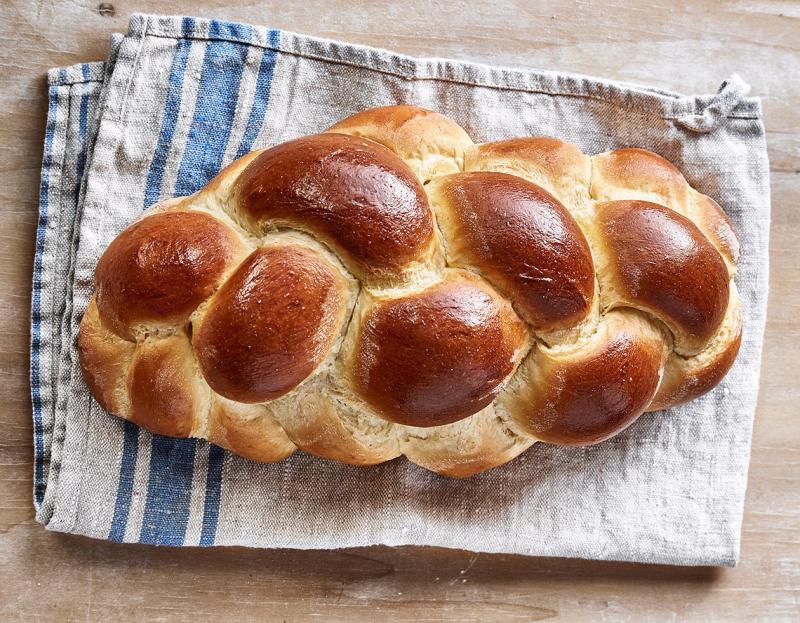
Challah baked for the Jewish Sabbath and holidays are made in various sizes and shapes, all of which have symbolic meaning. Braided loaves, which may have three, four, five, or six strands, are the most common and grace many a Shabbat table. On the night before the Sabbath, at sundown, a blessing is said over two such loaves, symbolizing, notes Claudia Rodin, author of The Book of Jewish Food, “two portions of the manna that was distributed on Fridays to the children of Israel during their Exodus from Egypt,” so they wouldn’t have to forage for food on the Sabbath. The loaves are covered on the table by a white napkin, which, Rodin further notes, “represents the dew that collected on the manna in the morning. Poppy and sesame seeds sprinkled on the bread also symbolize the manna that fell from heaven.”
For Rosh Hashanah, the Jewish New Year and the first of the High Holidays, the celebratory challah takes the traditional shape of a round turban and is often studded with raisins. The spiral shape, where there is no beginning or end, symbolizes continuity and the circularity of life. The loaves are often sweetened with honey, signifying the wish for a sweet year, richness and good living, and a nod to the Biblical references to Israel as the “land of milk and honey.”
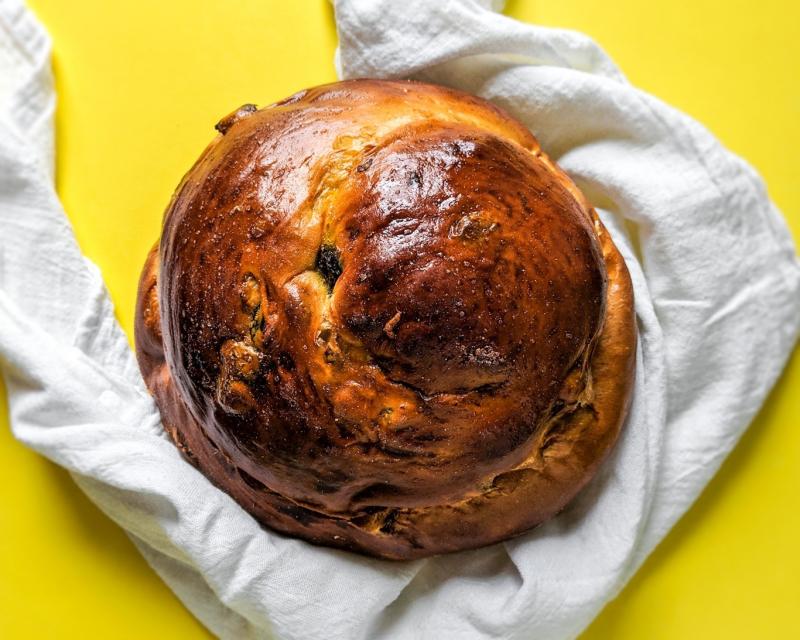
Here at the Bakehouse, we make our challah in the Ashkenazi Jewish tradition with organic wheat flour, fresh cage-free eggs, local Michigan honey from Gearig Apiaries Honey, yeast, and a little corn oil. The flavor is rich, but not too sweet. The texture is soft, but stands up to sandwiches, French toast, and bread pudding. It’s available in gorgeous, toasted saffron-colored braids, per Jewish tradition, or pan loaves we call “squares,” as well as in jumbo sandwich loaves.
During the Jewish High Holidays, starting with Rosh Hashanah, we pull out the stops with two rather fancy celebratory challahs, also rooted in centuries-old Jewish tradition. On order from September 26th through October 8th is our Ashkenazi turban-shaped challah studded with rum-soaked, red flame raisins, together with our more Sephardic-leaning five-strand Moroccan braid, flavored with sesame, poppy, and aromatic anise seeds and brushed with a honey syrup to give it a touch of extra sweetness. Here at the Bakehouse, we often refer to the Jewish High Holidays as “Challah Daze!,” due to all the traditional challahs we make at this time.
By Lee Vedder, Bakehouse Historian
First photo by Antonis Achilleos
The post Hurray for Holiday Challah! appeared first on bake blog.
]]>The post In Search of Naturally Fermented Bread? appeared first on bake blog.
]]>Fermentation is hot! It’s everywhere—in kombucha, kimchi, and miso; in all kinds of alcohol; in cheeses and yogurt; in coffee beans for our favorite morning beverage and cocoa beans for chocolate; in pickles; and of course in naturally leavened (sourdough) bread. There are bookshelves full of cookbooks on how to ferment all sorts of things (look up Sandor Katz, who has led the most recent fermentation revolution). For those of us who prefer to learn by doing in a social setting, there are even weekend festivals about fermentation—check out the 9th annual Fermentation Festival held in Wisconsin. The last two summers we’ve even hosted Amanda Feifer of the website Phickle at BAKE! to teach fermentation classes (they sell out in a matter of hours!).
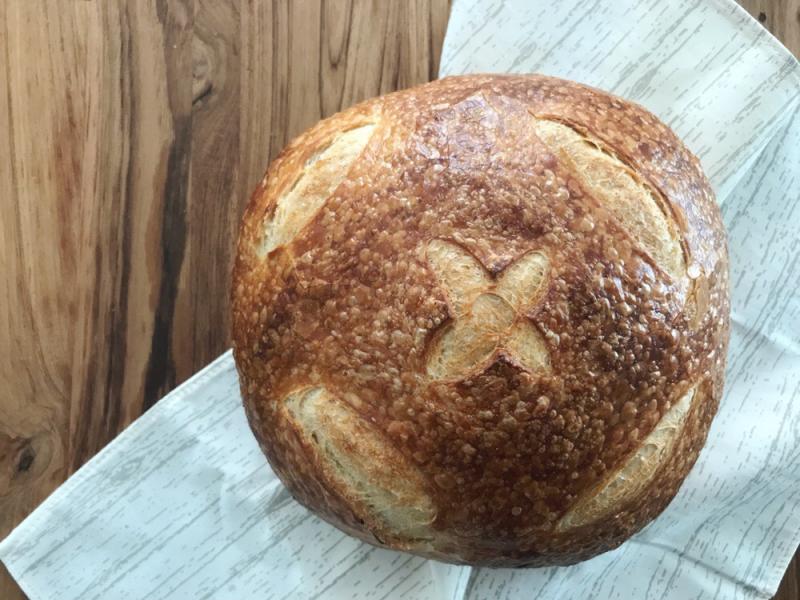
What’s all the brouhaha about? Fermentation is all the rage because it seems to be great for our bodies and fermented foods taste delicious! Health and flavor together? Can’t beat that! Probiotics, created during fermentation, are purported to improve our gut health, possibly leading to better digestion, stronger immune systems, and a healthier weight. Fermentation may take care of our microbiome, which, when healthy, seems to have a remarkably positive influence on the rest of our body.
As is often the case, the newest fads frequently have long histories. Fermentation is an ancient food preservation technique that humans have been using intentionally for literally thousands of years. It extends the life of food and can make it taste better. It’s a natural process through which microorganisms like yeast and bacteria convert carbohydrates—like starch and sugar—into alcohol or acids that give food a distinctive flavor, ranging from tart to savory. The fermentation process promotes the growth of good bacteria, known as probiotics, and their by-products, such as organic acids, keep the bad microorganisms out, which can otherwise make us sick. Fermentation can occur naturally, no human hands needed, and we can harness it ourselves in an attempt to control the outcome, giving us the level of sour or the spectrum of flavors and textures we prefer.
As artisan bakers, we are very happy to tell you that many of the breads we bake are naturally fermented. These breads don’t use any commercial yeast—the sourdough starters are kept alive and fed daily in preparation for addition to the final mix. They start with the fewest ingredients, but thanks to the fermentation time (anywhere from 14 to 18 hours, depending on the type of bread) they have the most complex flavors.

We’ve noticed lately that customers don’t know what to ask for when they want a bread with a long fermentation and sometimes people think the word sourdough must be in the name to be the “right” bread. So what do you ask for if you’d like a naturally fermented bread? At Zingerman’s Bakehouse, we use the terms “sourdough” and “naturally leavened” interchangeably for our naturally fermented breads. I personally prefer to say naturally leavened because sourdough implies that the bread will taste sour, and that is not always the case.
Fermented bread can come in the full range of sweet to very sour depending on how the fermentation process is handled and what kind of ingredients are used. For example, the Italian Christmas bread panettone is traditionally naturally leavened and it is definitely sweet and milky in flavor, not sour. Our Better than San Francisco Sourdough is the tangiest of all of our naturally leavened breads, and our newest bread, State St. Wheat, isn’t sour at all, but they are both fermented breads made with natural starters. Our Cinnamon Raisin and Chocolate Cherry are certainly sweet with a slight background note of tanginess and they are also both naturally leavened. Pecan Raisin is another naturally leavened bread with a not-so-pronounced tang, but just enough to add an unmatched savor to the delicious pecans and raisins. Whether sweet or tangy, or somewhere in between, we as bakers strive for fully fermented breads to give you the best experience in terms of flavors, textures, and aromas as well as nutrition and digestibility.

So if you’re looking for breads made from natural starters, with no commercial yeast, and long fermentation times, we bake almost 20 different choices—with lots of flavor and texture variations whether you want to call them sourdough or naturally leavened. Need a few names to start your personal research? Farm, True North, Pecan Raisin, Cinnamon Raisin, Country Miche, Walnut Sage, Chocolate Cherry, 8 Grain 3 Seed, Vollkornbrot and Freekeh Fougasse are all naturally leavened breads.
Come in and do a tasting to experience the breadth of flavors possible from fermentation in naturally leavened breads. Feel free to ask us for samples and find your personal favorites!
By Amy Emberling, Bakehouse managing partner
Second photo by Antonis Achilleos
The post In Search of Naturally Fermented Bread? appeared first on bake blog.
]]>The post Cream of Wheat appeared first on bake blog.
]]>Delicious and ruddy
With pleasure, I relished
That my hunger has perished.
From Porridge Nursery Rhymes by international poet, Goodness Lanre, 2013
With whole grains at the forefront of our mission, it seems only fitting for the Bakehouse to delve into the world of porridge. And what a fascinating world it is!—with its long culinary history stretching back to the Agricultural Revolution of the Neolithic Era (between 8000 and 5000 BCE), and the countless variations of the hot, whole-grain cereal that people all around the world have been concocting ever since. Throughout history and within every culture, porridge has been a dietary staple. As one historian of early human history, Alistair Moffat, proclaimed a few years back, “The great invention, the greatest revolution in our history was the invention of farming. Farming changed the world because of the invention of porridge.”
For many around the world, porridge (also historically spelled porage, porrgie, parritich), represents nourishment: whole-grain goodness, healthy nutrition, and ultimate comfort, served up in a bowl. An added bonus is that it’s easy to make—simply boil or bake ground, crushed or chopped whole grains in water or milk. As food writer, Mary Luz Mejia, notes, “A big bowl of porridge can rev your internal motor at breakfast, help you unwind after a late night, or ease the previous night’s excesses. It can be made sweet, savory, thin or thick, with toppings or without. The only rules for entry into the ‘porridge club’ are that it needs to be made with a grain and it’s usually a dish best served warm to hot.”
The most humble and universal of dishes, porridge was our first and simplest way of cooking grains to release the arsenal of nutrition and burst of flavor locked inside. Grains, served up as porridge, fed our earliest civilizations and “sustained empires because they were powerhouses of nutrition, relatively quick to plant and harvest (unlike fruit and nut trees), easily stored in cold, drought, or rain, and capable of feeding armies,” so notes Rachel Laudan, author of Cuisine and Empire—a sweeping chronicle of the rise and fall of the world’s great cuisines. “The early Romans built their empire on barley porridge,” she says. In Asia, “the Chinese built theirs on rice porridge, the Indians on rice and lentil porridge.” The list of grain porridges throughout world history is prolific and global: in Scotland and Ireland, barley and oats; in America, oats, wheat, and corn grits; in Asia, rice; in Russia, the pseudograin, buckwheat; in Norway, rye; in Africa, millet, corn, and sorghum; in Italy, corn and millet polenta, to name but a few. Within the rich, diverse histories of food in every culture, almost everyone eats porridge; it has been and continues to be the everyday food of everyday people.
Wheat Porridge in the American Midwest – A Brief History
From babyhood to old age CREAM of WHEAT brings a smile of welcome.
Palatable, wholesome, nourishing, good at all times for all people.
Served in many tempting forms, — dainty breakfasts, delicious desserts.
CREAM of WHEAT CO., Minneapolis, Minn.
Cream of Wheat print advertisement, 1909
…When was the last time you cooked your old friend Cream of Wheat?
…Remember the mornings you woke up to a light new taste that lets the flavor shine through. It’s as good as you remember, Cream of Wheat
Nostalgic Cream of Wheat television commercial jingle, 1970s
Here in the United States, porridge has been a nation-wide breakfast staple since the late 19th century. Among the hot breakfast cereals to take America by storm in this period was farina, a form of milled wheat made from the germ and endosperm of the grain, which is milled to a fine consistency and then sifted. The porridge, branded Cream of Wheat® in 1893, was created by a group of enterprising millers based, initially, in Grand Forks, North Dakota and, eventually, in Minneapolis, Minnesota. Cream of Wheat started in a very small way, but with a sound idea and the vision and determination to build a successful and worthwhile business.
The story goes that Emery Mapes (b. 1853), a former newspaper publisher, printer and editor, decided in 1889, with his partner George Bull, a Grand Forks farm manager, to go into the milling business in Grand Forks by purchasing the milling machinery from the Diamond Flour Mill, after a fire destroyed the company’s milling facility near Mankato, Minnesota. Knowing nothing about the milling craft, the two partners hired Tom Amidon, an experienced miller, to supervise the operation of their facility as head miller.
As the Grand Forks Diamond Flour Mill struggled to find its footing in the dark days leading up to the Economic Panic of 1893, Amidon came up with the idea of producing for profit, a “breakfast porridge,” made from milled farina, the whitest part of the wheat, which he had taken home and cooked into a cereal for his family, much to their liking. The milling partners, Mapes and Bull, loved the porridge’s delicious taste and creamy smooth texture, prompting them to name it, “Cream of Wheat.”
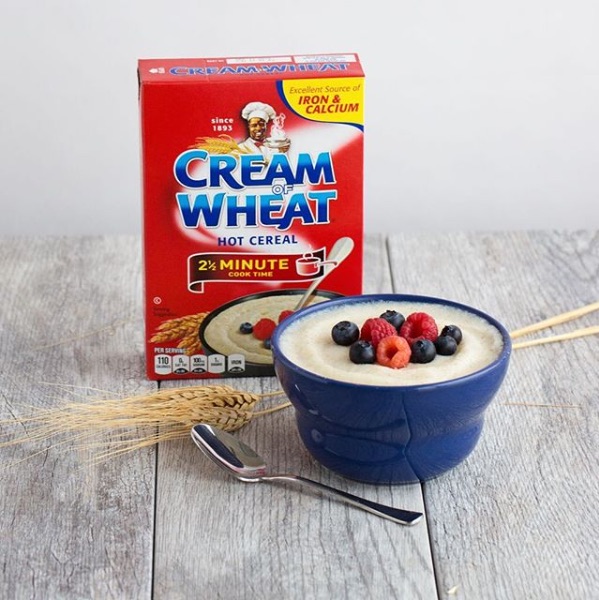
Confident they were on to something, the partners then agreed to let Amidon pack some of the cereal and ship it to their New York brokers, Lamont Corliss & Company. With the milling company barely afloat, financially, at this time, Amidon was left to his own devices in preparing the cereal for shipment; he cut the cardboard for the cartons by hand, labeled the packages himself, and crated them in wooden boxes he made up from waste lumber. With no money to spend on package design, Mapes, a former printer, drew upon his stock of old printing plates for an appealing illustration to brighten up Amidon’s makeshift cereal cartons. The image he settled on, which he ended up creating himself, happened to be a figure of an African American chef holding a saucepan over his shoulder, the precursor to the present-day, widely-known Cream of Wheat trademark personage.
In October 1893, the Diamond Flour Mill sent 360 boxes of Cream of Wheat to New York, along with a carload of milled flour. Within 3 hours of the shipment’s arrival, the New York brokers sent a telegram to the Grand Forks mill stating, “Never mind shipping us your flour. Send us a carload of Cream of Wheat.” To fill this order of nearly 2000 boxes, and even larger shipments in the future, the Mill came up with a strategic plan that entailed renaming their enterprise the Cream of Wheat Factory and packaging the cereal in assembly-like fashion so as to maximize the number of boxes they could churn out daily. They also enlisted Melvin Brannon, a biology professor at the University of North Dakota, in developing an electrolysis treatment to eliminate contaminants and provide longer shelf life for the cereal.
1893 also saw Cream of Wheat making its manufacturing debut, to great popular fanfare, at the World’s Columbian Exposition in Chicago. To generate further national interest in their new cereal, not to mention market share, Mapes began running ads for Cream of Wheat in the Ladies Home Journal in November of 1896, promoting an image of wholesomeness, family, home, and security; this message, published as illustrated print ads in scores of national magazines, went on to become one of the most successful and transformative cereal advertising and marketing campaigns of the early 20th Century. The demand for the new cereal was extraordinary, so much so, that by 1897 it had outgrown the producing capacity of the small plant in Grand Forks. The company thus relocated the Cream of Wheat Factory to Minneapolis, which had become a major grain hub and distribution center for the growing cereal market. Cream of Wheat had arrived, giving oatmeal a run for its money as America’s favorite hot breakfast porridge!
Wheat Porridge – Some Local Michigan History
On a more local note, a perusal of the Ypsilanti Daily Press in August 1909 reveals that the Ypsilanti Milling Company, located on Cross Street along the east side of the Huron River, sought to tap into the extraordinary success and popularity of Cream of Wheat with their own take on the creamy wheat porridge, which they branded as Wheat Hearts.
To promote the venture, which ended up being very short-lived, the flour mill ran the following advertisement in daily issues of the paper over the course of a week in August 1909 (August 9-16), never to be seen again:
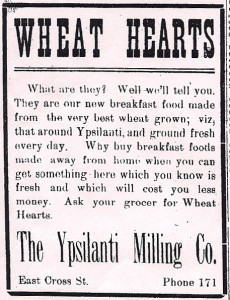
Around the same time that the Ypsilanti Milling Company was pitching their Wheat Hearts, in the daily paper, George Parker, in Ann Arbor Township, was transforming his father’s 1873 stone grist mill on Fleming Creek, off Geddes Road, from a family farm-based operation into a commercial flour mill. Beginning in 1910, following his father’s death, George milled, packaged, and sold to area grocery stores pancake mix, graham flour, buckwheat flour, cornmeal, and cracked wheat breakfast cereal, similar to Cream of Wheat, all under the brand name, “Parker’s Fleming’s Creek Mills.” The wheat cereal was packaged in 2-pound bags that bore a printed illustration of a couple of sheaves of wheat as the backdrop for the insignia and preparation instructions:
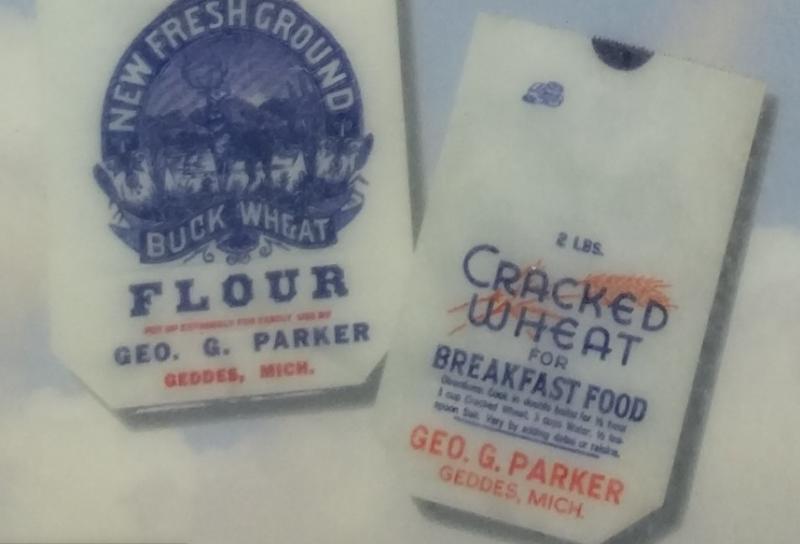
George continued to run the mill as a commercial enterprise until his death in 1956, at which point his son, Fred Parker, and other family members took over, but only for a few more years. By 1960, the mill had ceased operation and was sold, along with the family farm and other buildings on the property to the Frederick Mattael family. In 1983, the Washtenaw County Parks and Recreation Commission purchased the Parker Mill property and restored the mill back into full operation as the primary feature of Parker Mill Park, which opened to the public in 1984 and is still running to this day.
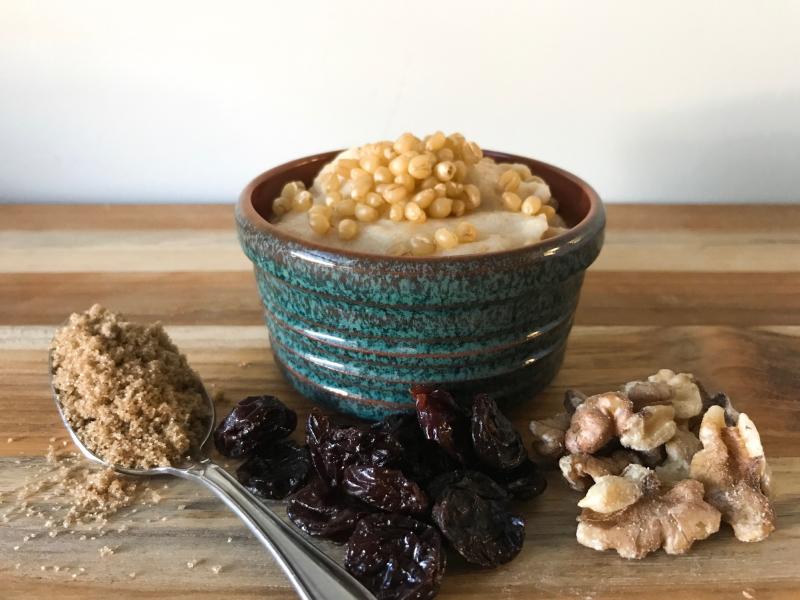
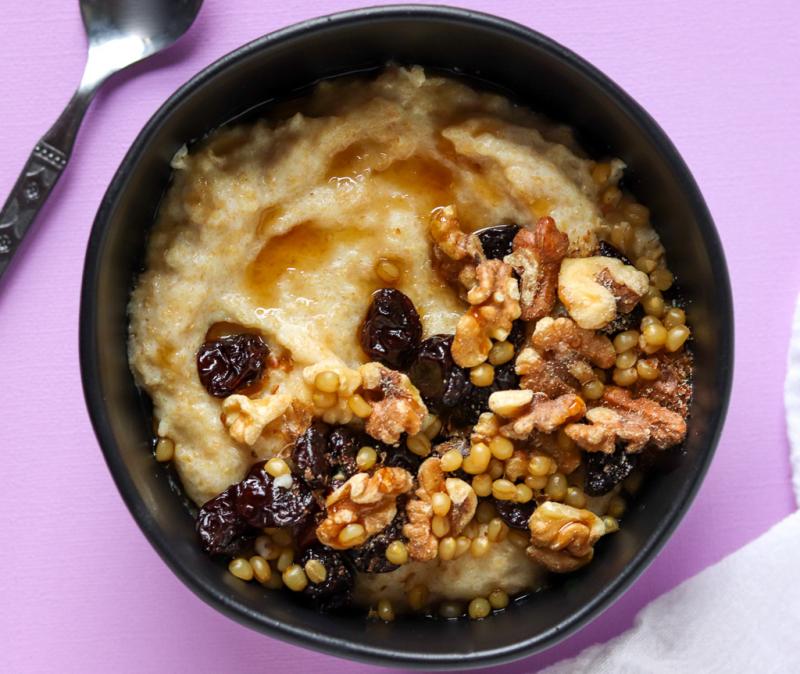
Now that we’re milling some of our own wheat at the Bakehouse on our stone mill, we decided to try freshly milled whole grain (FMWG) cream of wheat. It’s as comforting as the red box version and more flavorful because it contains the entire wheat berry. We are using coarsely milled, soft white wheat from Ferris Organic Farm in Eaton Rapids, MI and cooking it with local Guernsey Dairy milk. Come in and try some—it’s delicious with toppings or just on its own. But if embellishment is your thing, we currently have on hand Michigan dried cherries, California walnuts, Michigan maple syrup, muscovado brown sugar, milk, and cream to top your creamy whole wheat porridge.
Watch for new porridges and more porridge history in the coming months.
By Lee Vedder, Bakehouse Historian
Cream of Wheat photo via their Instagram, Wheat Hearts ad via YpsiNews.com, Geo. G. Parker packaging via HMdb.org
The post Cream of Wheat appeared first on bake blog.
]]>The post Green Olive Focaccia appeared first on bake blog.
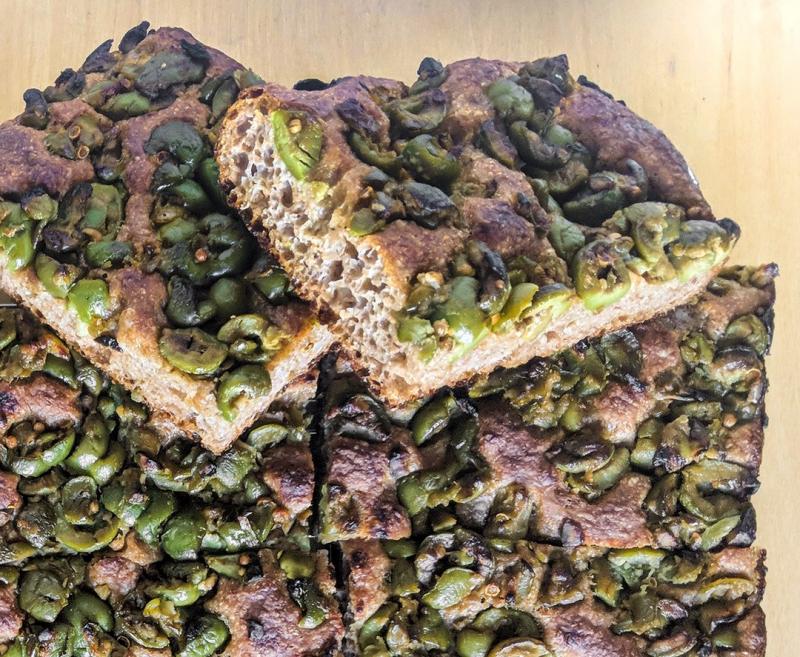
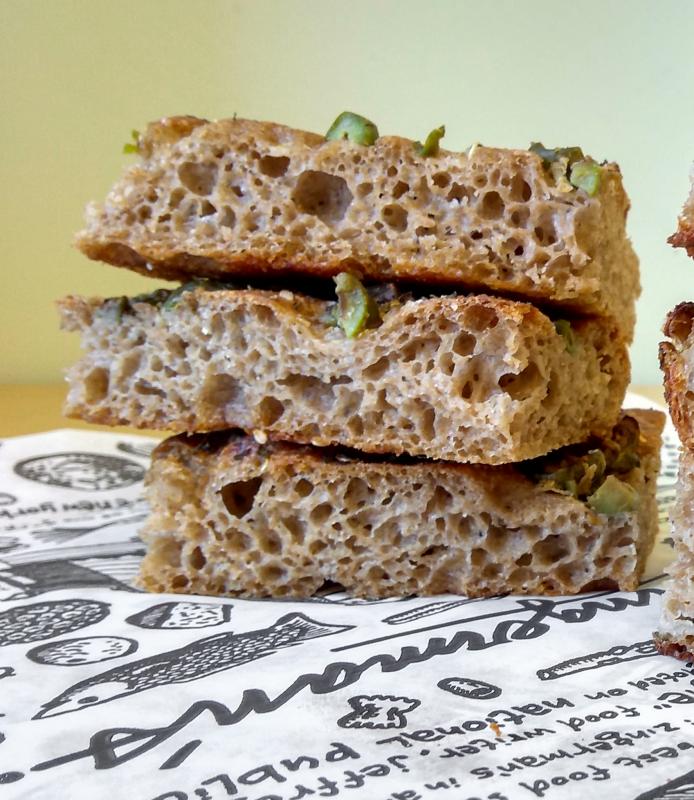
]]>Those who’ve tried it know what craveable secrets the humble slice holds. A bounty of fruity Castelvetrano olives crown a crisp-crusted, chewy, bubbly slice of deeply colored whole grain focaccia. A single bite unlocks innumerable layers of flavor. Warm, twangy raw and roasted garlic! Bright, poppy lemon! Fruity, herbaceous coriander! It’s a celebration of simple ingredients inspired by Hazim’s upbringing on the island of Cyprus.
Intrigued by the story behind my new favorite midday snack, I sat down to talk with him about how this savory treat came to be.
Can you tell me a bit about the process of coming up with this focaccia? It’s really such a unique bread.
We went to the Grain Gathering at Washington State University last year and tasted lots of wonderful stuff, and one thing that stuck out was this whole grain focaccia. It was more like a flatbread, not quite focaccia—it’s kind of a blurry term—but it tasted great. I’d tasted things kind of like that before, but it was a good reminder. Here, we’re always talking about what new breads to work on, and when we came back, Amy (Bakehouse managing partner) said, “I think I want a whole grain focaccia.”
I love working with naturally leavened doughs and freshly milled grain, so this was just perfect. I also tried to base it on what we had in-hand. Hard red spring wheat is strong and very flavorful, and spelt is also very flavorful. It’s an ancient grain, but it also has this extensibility that you don’t get with the hard red spring, meaning it’s great for stretching a dough into a flatbread.
I had the formula in my head: a wet dough that gets fermented overnight with a very little bit of starter in it as the jumping-off point. A bit of olive oil, because that’s what focaccia is typically associated with. But the other part of the equation was the sheet pan, which is what we typically bake our focaccias in. I’d tried that once, but I knew these breads would require a lot of heat and our sheet pans don’t necessarily work that way.
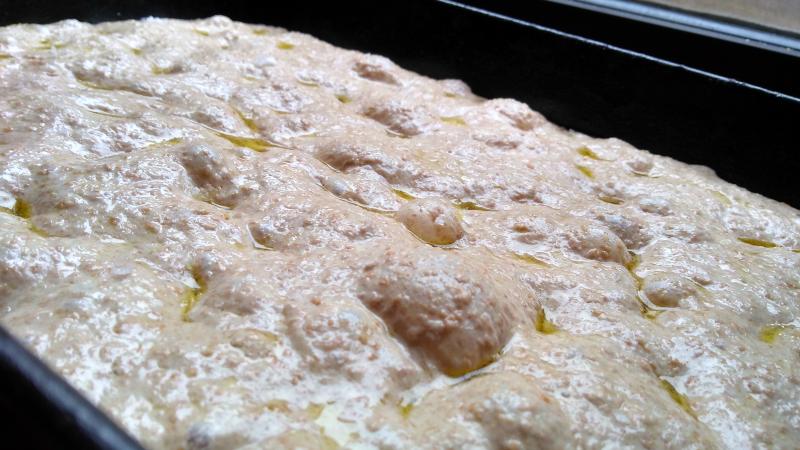
Normally, when you bake in a wood-fired oven, you can use sheet pans to cool down the stone hearth. If you imagine putting something in a sheet pan and then putting it on the deck ovens, it’s not going to get as much heat as if you put it directly on the hearth. I tried that and it didn’t really work. I needed really high heat, not the heat that we have going on in these deck ovens. I’d use my little Rofco oven in Cyprus, and when I was making pizzas, I’d just crank it all the way up to 300°C. As I was thinking about that, it just immediately clicked that I should use Detroit-style pizza pans—they have higher sides than a sheet pan, plus they’re made out of cast-iron so they retain heat more efficiently. So you plop the dough in there, let it relax, stretch it out, proof until it gets super bubbly and light. That’s what I really like—you can really push the proof, so the flavors explode and the texture becomes super-tender. The more you ferment, the softer and more tender it gets. Then, when you bake it in a super-hot oven, they’re ready in 15 minutes.
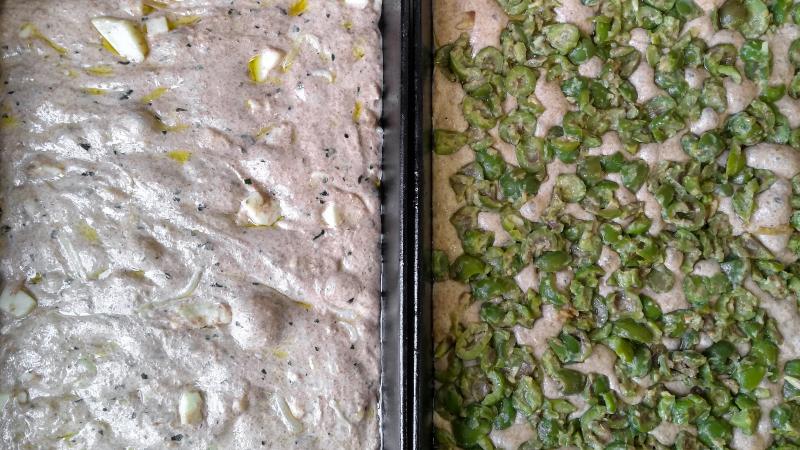
Once we figured out the dough piece, I had to figure out what we were going to top it with. Immediately, the first one in my mind was the combination of halloumi, raw onion, and fresh mint, which we use in Cyprus a lot. Back home, we prepare this dough in round metal pans. It’s not quite focaccia; it’s just a plain dough that’s usually a little yeasted, with a lot of olive oil, and then topped with raw onions, mint, and all that. I had a lot of it when I was growing up. So I ran with that idea, baked it, and we all tasted it and said, “oh… this is GOOD. It’s very good.”
Definitely. I don’t think a lot of people around here are familiar with halloumi or that flavor combination, but it’s really delicious. It’s often only available seasonally though, so how did you land on the winning combination we currently have at the Bakeshop?
Initially, I wasn’t sure what to do. I remember trying a roasted broccoli-sausage thing, and it just didn’t work. But then I thought, “I’m using halloumi, so why don’t I try another thing we make a lot in Cyprus?” Something that’d typically go along the same breakfast table: marinated olives. If you came to our house for breakfast, there’d be a little bowl of cracked green olives with coriander, garlic, and lemon, sitting in olive oil, and you could just nibble. And then you’d take your bread and dip it in all the juices at the bottom of the bowl. We don’t have cracked green olives here, but we do have Castelvetrano olives. I love them; we buy them a lot for my daughter.
They ARE so delicious. I love olives, though; I’ll eat them like candy.
Right? The cool part of this bread is that even people who don’t like olives think it’s really good. Beyond the olives, raw garlic was a given, but then I remembered we have roasted garlic, too. That’s just another flavor explosion. And then great olive oil, lemon juice, lemon zest, and crushed coriander seeds. We tasted it, and… that was that. When Amy and Frank tasted it, they were both like, “Yep!” I’m used to going back to the drawing board a little bit to rework things, but these two combinations got the thumbs-up right away.
Awesome. So you had mentioned that it would be part of a breakfast spread. Do you envision the focaccia as part of a breakfast spread? What are some other serving ideas?
I think that would be great. You’d have to have super fresh, in-season tomatoes and cucumbers, the focaccia, a little bit of cheese, a little bit of coffee or tea. What more do you need? Or, if you want, you can fry up a sunny side-up egg and put it on top of the green olive focaccia. But I think they can be a snack during the day, too. The cool thing about this focaccia is, even if you take it home and take it out the next day at room temperature, it’s still great on its own. If you warm it up it’s even better, but it’s not like a bread that dries out that much for the first two days. After that, though, it would be better if you warm it up. Just snack on it as-is.
Agreed. I’ve only ever eaten it as-is, and I’ve never wanted for anything. I think that it’s super-satisfying, largely because of the whole grain.
I agree. But even though it’s whole-grain, the crust is very mild-flavored. You can taste the grain, but it’s very subtle and the toppings just sing. Recently I’ve tried making it with a whole-wheat starter that we have in-house, and then the crust flavor is amped up even further. And then you can just eat that on its own! Bread so good you just want to eat it plain!
Hungry to taste our Green Olive Focaccia for yourself? Find it in our Bakeshop Friday-Sunday, or meet us at the Westside Farmers Market on Thursdays!
By Emily Hanka, Bakehouse Marketing Manager
Photos by Emily Hanka & Hazim Tugun
The post Green Olive Focaccia appeared first on bake blog.
]]>The post Gateau St. Honoré appeared first on bake blog.
]]>
The torte’s namesake, Honoré, also known as Honoratus, became bishop of Amiens, in the north of France, in 554 AD. According to tradition, a number of miraculous events occurred during his service, which spared farmers, millers, and bakers from natural disasters. After his death, processions in his honor supposedly stopped both droughts and deluges, ensuring good wheat harvests. This won Honoré the admiration of bakers across France. In 1204, a Parisian baker built a chapel (no longer extant) to commemorate him, and in the 17th century, the French baker’s guild anointed him the patron saint of bakers and pastry chefs. In religious and popular imagery, Honoré is often depicted holding a baker’s peel—the flat wooden paddle used to move loaves to and from a hot oven—often with loaves of crusty French bread nearby and with bakers at work, in the background, kneading dough and manning wood-burning ovens.
Fast-forward to the 19th century, when Parisian pastry bakers began bringing glory to the saint’s name in the best way they knew how—with a fabulous show-stopping confection. The Gateau St. Honoré was developed at the legendary Chiboust pastry shop on Paris’ Saint Honoré Street, which, alas, no longer exists. It started out as a ring-shaped brioche filled with pastry cream that Chiboust lightened with an airy Italian meringue, creating a new kind of filling that came to be known as crème Chiboust, which French bakers still use. According to Parisian pastry chef, Pierre Hermé, one of Chiboust’s bakers, August Jullien, came up with his own version, replacing the ring of brioche dough with a ring of little cream puffs.

By the late 19th century, the Gateau St. Honoré had taken its present form, incorporating a disk of puff pastry filled with pastry cream, topped with a crown of cream puffs dressed up even further with a crunchy cap of caramelized sugar, and draped with swags of whipped cream. The plain version of the torte—simply flavored with vanilla and the bittersweet notes of burnt sugar—is most common, but you can find fanciful seasonal variations, showcasing everything from tropical fruits to green tea.
In modern-day France, the Feast of St. Honoré still survives as a time to appreciate all sorts of breads and pastries. French baker Dominique Geulin, who grew up in Normandy and is now based in Portland OR with his bakery St. Honoré Boulangerie, fondly remembers how bakers in France (including his parents) would open their doors on May 16 for community festivals, school field trips, and public demonstrations. The modern-day French baker’s organization, Confédération Nationale de la Boulangerie-Pâtisserie Français, also takes that week as the occasion to hold its annual meeting during a full-on festival of bread.

This fall, in October and November, BAKE!, the Bakehouse’s hands-on teaching bakery, is offering two classes on the Gateau St. Honoré, where you’ll learn all the classic French techniques—pâte feuilletée (puff pastry), pâte á choux (choux pastry), crème pâtissière (pastry cream), whipped cream, and caramelized sugar—that go into making this show-stopping dessert, a six-hour project well worth the effort! (Don’t worry, we provide a great Bakehouse lunch, too.) Any dessert that is built out of other desserts is a winner in our book and the Gateau St. Honoré is sure to impress your guests! (Check out the Bakehouse’s Instagram highlights for more behind-the-scenes shots from this class!)
By Lee Vedder
Bakehouse Historian
The post Gateau St. Honoré appeared first on bake blog.
]]>The post From Kipferl to Croissant appeared first on bake blog.
]]>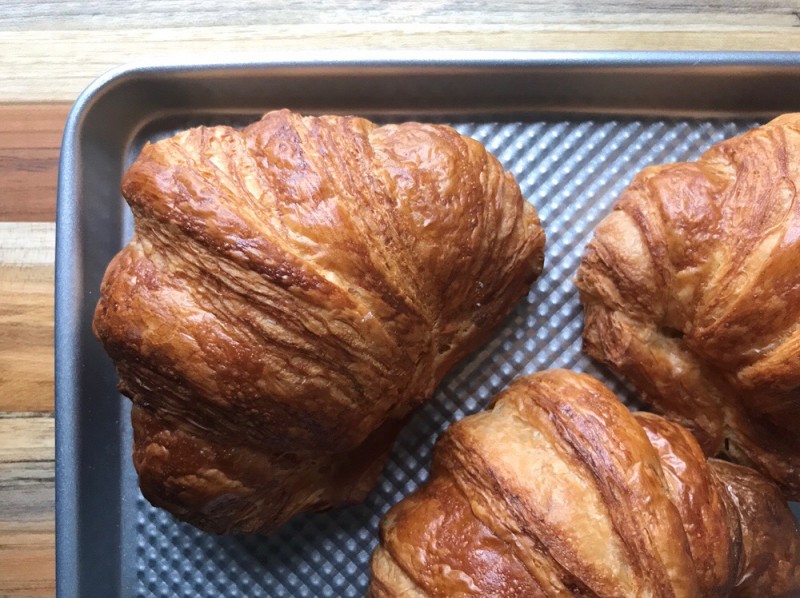
Culinary historians concur that the modern-day croissant was inspired by the Austrian kipferl, a crescent-shaped morning pastry made with brioche-like dough, which is denser and less flaky than the croissant we know today. According to popular lore, the kipferl originated in 1683 as a comestible celebration of Austrian victory over the Ottoman Turks at the siege of Vienna. The story goes that a baker, up early to make bread, saved Vienna when he heard the Turks tunneling underneath the city and sounded an alarm to the Viennese authorities. The kipferl’s curved shape, said to mimic the crescent moon of the Ottoman flag, would then seem to pay poetic tribute to the indomitable spirit of a city that resisted a powerful invading force. But the kipferl existed long before the Ottoman siege of Vienna. A poem mentions it as one of the Christmas treats that Viennese bakers presented to Duke Leopold in 1227. Moreover, crescent-shaped breads in general date back centuries earlier.
So, does the croissant’s Austrian ancestry belie its French fame? “Of course not,” says Jim Chevallier, an independent scholar and author of a book on croissant history, August Zang and the French Croissant: How Viennoiserie Came to France. “The croissant began as the Austrian kipferl, but became French the moment people began to make it with puffed pastry, which is a [17th-century] French innovation,” says Chevallier. “It has fully taken root in its adopted land.” Order a kipferl in Austria or Germany today and you’ll likely be handed a crescent-shaped cookie.
A more romantic tale from the 18th century attributes the origin of the croissant to the French Queen and Austrian Archduchess, Marie Antoinette (1755-1793). Legend has it that the Queen, homesick for the taste of her native Vienna, would often bow out of royal dinners, only to sneak away to indulge in the sweets and coffee of her country. The story thus credits her love of Viennese kipferls and the christening of the kipferl as the “croissant” as having introduced the pastry to French high society.
Legends aside, historical evidence as to the croissant’s evolution in France points instead to August Zang (1807-1888), an Austrian entrepreneur who opened the first Viennese bakery in Paris in 1838. Located at 92 Rue Richelieu on the Right Bank, his upscale Boulangerie Viennoise specialized in bread and pastries from his native Vienna, most notably the kipferl, along with pain viennois (a Viennese-style sandwich bread), both of which became widely popular in the city within ten years. Equipped with his patented steam oven, Zang made his kipferls with noticeably flakier dough than traditional brioche-based versions and the French began referring to the newfangled pastry as a croissant due to its crescent shape.
References to croissants made with true, yeasted pâte feuilletée (puff pastry dough), however, didn’t materialize until the early 20th century. For that development, we have the French baker, Sylvain Claudius Goy, to thank. In 1915, he wrote a recipe that specifically mentions pâte feuilletée, calling for the rolled puff pastry to be yeast-leavened and laminated with butter, a technique that remains at the core of how the modern-day, all butter, homemade croissant (croissant au beurre, fait maison) is made in France.
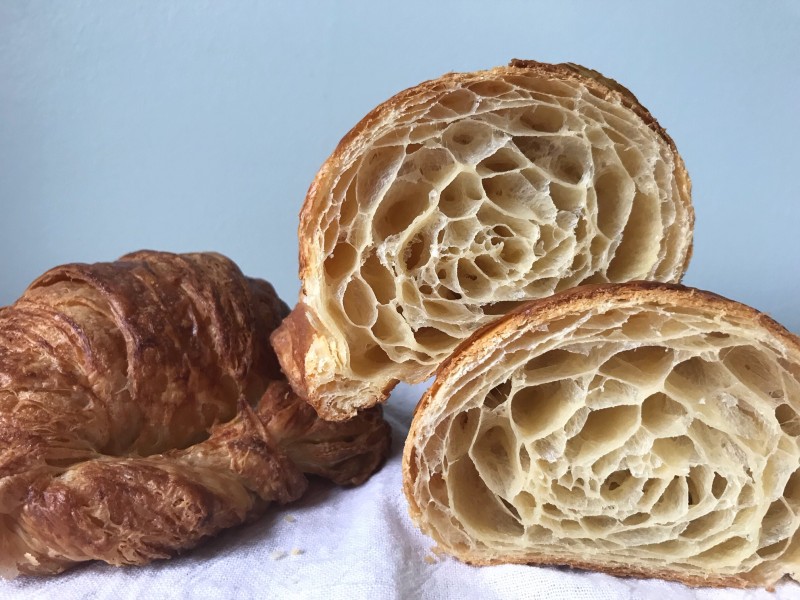
And it is this traditional French croissant we are dedicated to making here at the Bakehouse. Like bread and other baked goods in America, croissants can be made with shortcuts causing them to fall short of the intended texture and flavor. There are very few places in the world outside of France where you can get a truly great, flaky, buttery croissant—Zingerman’s Bakehouse is certainly one of those places. We pride ourselves on their rich flavor, tender honeycombed interior, and crispy exterior that shatters a little when you bite into it. It’s mostly about taking the time to do it right and not using fake ingredients or pre-made frozen doughs. And we think it’s well worth the time and effort to do so. Like we say, you really can taste the difference. Visit the Bakeshop to pick up our 4 variations on the French croissant: classic Butter, Juliette’s Almond, Chocolate, or Parmesan and Prosciutto.
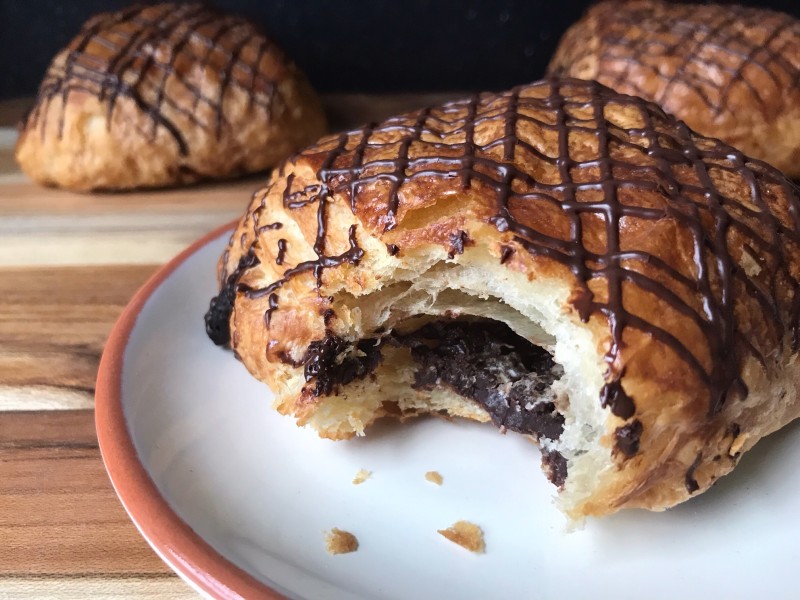
Or, learn to make croissants yourself in one of our most popular hands-on baking classes: Ooh La La Croissant: French Pastry Class. You’ll learn the key techniques for creating a butter-laminated dough (layering the dough with butter and folding it over), filling the croissants, proofing them properly to achieve the right texture, and finally, baking them to a rich golden brown. In class, you’ll make our butter croissant recipe, as well as fill them with both our rich almond frangipane (we’ll give you the recipe for that, too) and bars of intense dark chocolate imported to us in Ann Arbor from renowned French chocolatier Michel Cluizel. There are few more sublime things in our book than enjoying a freshly-baked croissant that is still a little warm. We can’t wait for you to try it. It’s going to be life-changing. Reserve your spot now.
By Lee Vedder
Bakehouse Historian
The post From Kipferl to Croissant appeared first on bake blog.
]]>The post Summer’s Perfect Pair appeared first on bake blog.
]]>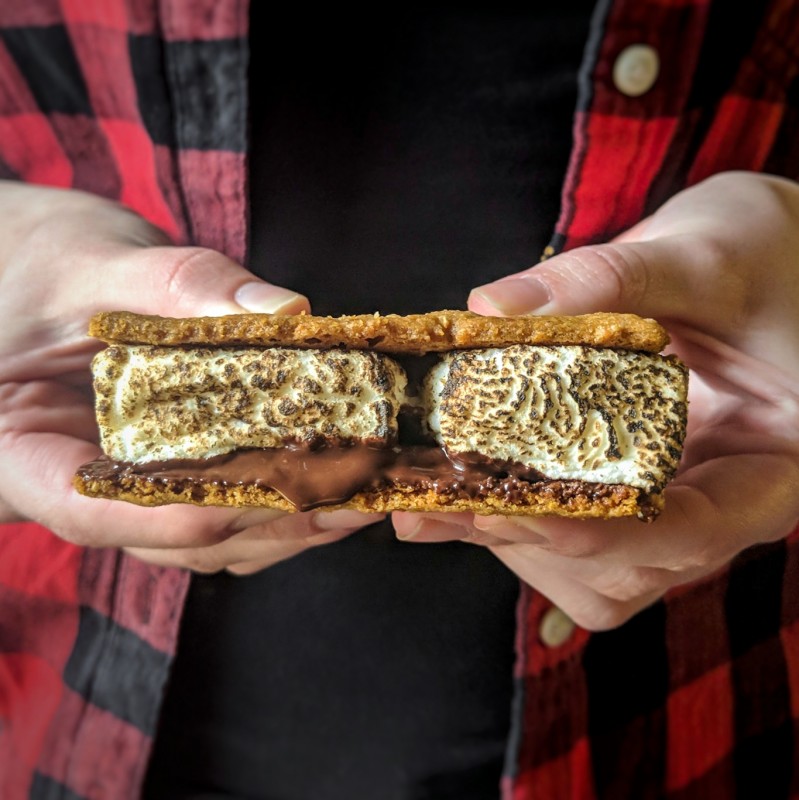
No self-respecting s’more is complete without a perfectly crisp graham, so we’ll deliver the graham cracker your campfire treats deserve. Nostalgic for this American childhood favorite, we wondered what would happen if we changed up the recipe for graham crackers using great ingredients. What we created was an intensely flavored cookie more addictive than what we munched on as kids. In the spirit of constant improvement, we further wondered how we could make these crowd favorites even  tastier. Lo and behold, the flavor boost obtained from milling our own flour from organic soft white wheat grown in Michigan was the easy answer! We love the crackers’ amped up flavors of toasted wheat, honey, and ginger—not to mention their more hearty, crisp texture—and you will, too!
The original “Graham” cracker was not the tasty sweet treat we know and love today; it was a bland, unsweetened biscuit made from finely ground, unbleached wheat flour, wheat bran, and coarsely ground germ, which also came to be known as “Graham bread.” First conceived in the 1830s, the crackers were consumed as part of a strict vegetarian and fiber-rich diet developed by the crackers’ namesake, the Reverend Sylvester Graham (1794-1851), an eccentric Presbyterian minister from Connecticut who became a social reformer and ferocious advocate of healthful living during America’s health craze of the 1820s and 1830s.
Exercising some combination of pseudoscience and faith, Graham believed that physical lust was harmful to the mind, body, and spirit and that a healthy diet, devoid of meat, fat, spices, and refined white flour, would aid in suppressing sinful carnal excess, which he saw as a genuine human affliction and the scourge of his time. His preaching and promotional writings on maintaining a healthy, plant-based, fiber-rich diet for physical, mental, and spiritual well-being won countless converts over the course of the nineteenth century, who came to be known as “Grahamites.”
So, Dr. Graham, thanks for making graham crackers. Now, if ya don’t mind, step aside and let us take them to a new level! Enjoy our crisp, flavorful, and not-too-sweet crackers. They’ll take you right back to those summer campfires.

Pick up our Graham Crackers and Zingerman’s Candy Manufactory’s Marshmallows (Vanilla or Chocolate) in our shop, or take our Graham Crackers and Marshmallows class at BAKE!, our hands-on baking school.
In class, we’ll have fun making chocolate and vanilla marshmallows and learning how to make up our own flavors. Strawberry marshmallows? Mint marshmallows? Birthday cake marshmallows? You betcha. Any marshie you can dream up, you can make. You won’t believe the difference between your homemade marshmallows and the packaged varieties of your childhood. Join us and increase the flavor of your s’mores by 100% and go home with a dozen graham crackers, chocolate and vanilla marshmallows, graham cracker dough to bake later, and great coupons.
Photos by Emily Hanka (1 & 3), and Antonis Achilleos (2)
The post Summer’s Perfect Pair appeared first on bake blog.
]]>