The post Our 8 Most Popular BAKE! Classes appeared first on bake blog.
]]>Our mission at BAKE!, the teaching bakery at Zingerman’s Bakehouse in Ann Arbor, Michigan, has always been to spark a love of baking and keep that tradition alive in our community. We go about it with care, offering one-on-one instruction in a casual and intimate learning environment led by our expert instructors. We’re confident we can teach anyone to bake!

Ready to get baking?
Our original class lineup is still where it’s at. These classes have been around since we first opened BAKE!, and they’re the place to learn the necessary building blocks for baking from scratch. They include recipes and techniques that will give you the foundation you need to start having fun in the kitchen and successfully whipping up delicious breads and treats. You’ll be impressed with what you can do!
Most Popular Baking Classes
Whether you are new to our baking school or have been around the block a few times, we highly recommend these classes. They teach the fundamentals of baking and some of our favorite recipes. A great refresher for some of our more seasoned bakers or a solid way to jump-start your home baking for newer BAKE! students, these classes cannot be missed.
Noodling About Strudelling
Remember when you were little and the gym teacher pulled out a compact plastic bundle and magically unfurled it into a huge parachute that the whole class could fit under? Well, you’ll have that experience all over again when we take a grapefruit-sized piece of strudel dough and stretch it out to cover a 24 sq. ft. table. Then we’ll make sweet and savory fillings to finish it off. This is just about the most fun you can have making food, and there’s nothing like enjoying warm, flaky strudel fresh from the oven.

Baking Pies A Plenty
Learn how to make a perfect pie crust the Zingerman’s way—creating a flaky crust with butter, and another crust using lard and butter (no shortening allowed!). We’ll teach you how to make the dough by hand, successfully roll it out, par-bake the crust, and crimp the edges to make your pies look beautiful. You’ll make a double-crust fruit pie and a single-crust baked custard pie. Roll up your sleeves and join in the fun. These are recipes and skills you’ll use again and again.
Fabulous French Baguettes
One of our best bread classes for new bakers! We teach you to make the traditional French baguette recipe, starting with a flavorful poolish, hand rolling your dough, proofing and baking them just right, and ending up with a crisp crust surrounding a soft, airy interior. Imagine serving your guests and bringing out a perfect baguette that they swear must have been airlifted from Paris—but you made it yourself!

Scones 3 Ways
Learning to make a really good scone will have you ready to host high tea. In this class, we share the secrets to flaky and tender scones and biscuits, such as how to properly cut butter into flour. These are downright simple to make and will surely become a recipe staple at home!
Cinn-ful Cinnamon Rolls
You know that enticing cinnamon-sugar smell you notice every time you walk past the mall food court? After taking this class, you’ll be able to recreate that sumptuous scent in your very own home (and the results will taste a whole lot better). Learn the basic techniques of creating a yeasted sweet dough, including mixing, kneading and rolling, hand-shaping, and properly proofing the dough before baking. We’ll also demonstrate how to make pecan sticky buns, a staff favorite. Wait until you taste these warm from the oven in class!

Ooh La La Croissants
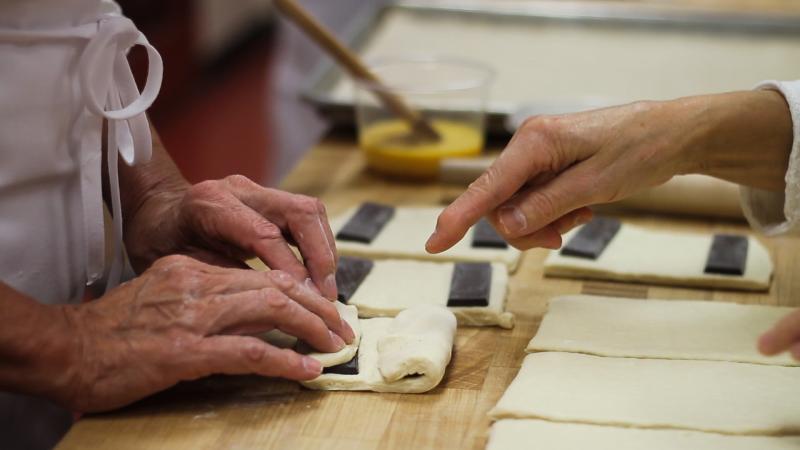
Few foods are more magical than a buttery, flaky, beautifully layered croissant. There are some tricks to baking them perfectly, but it’s mostly about taking the time to do it right. You’ll learn the techniques of creating traditional folded and butter laminated dough, then turn it into plain, almond and chocolate filled croissants! You’ll reach for this recipe at home again and again.
Mambo Italiano—Italian Breads
Take an Italian bread-baking tour and return home with loads of Paesano, Rustic Italian, Focaccia, and Sesame Semolina breads. What’s more, you’ll learn the skills to make them any time you want to satisfy the craving for warm, fresh bread at home. You’ll get plenty of hands-on practice at working with yeasted doughs, including kneading, shaping, and proofing too. While your loaves are rising, we’ll sneak over to Zingerman’s Bakehouse to see the professionals at work.

Bake Me A Cake
Learn to make three cakes, each requiring a different mixing technique: rich, yellow Buttermilk Cake (which we’ll use to make pineapple upside-down cake); fluffy, white angel food cake; and dark, intense flourless chocolate truffle cake. We’ll talk about choosing great ingredients and helpful tips for proper cake baking, plus you’ll get hands-on practice properly mixing your cake batters. These cakes will outshine the box mix versions any day. Add them to your baking bag of tricks!
There you have it! Our most popular classes that will get you well on your way to better baking. We hope to see you in an apron soon!
By Sara Hudson, Marketing Coordinator for the Zingerman’s Community of Businesses
The post Our 8 Most Popular BAKE! Classes appeared first on bake blog.
]]>The post Our 7 Favorite Tools for New Bakers appeared first on bake blog.
]]>Keep in mind that we’re making some assumptions here. We’re guessing that you already have an oven in your kitchen at home and a few cooking basics like a large mixing bowl, a wooden spoon, a wire whisk, a sharp knife, measuring spoons and a couple of sheet pans. If not, start there!
Digital Scale
We are firm believers in measuring by weight rather than volume. (Read about our thoughts on the matter here!) Recipes in our cookbook and at BAKE!, our hands-on baking school, are listed in both weight and volume. To ensure maximum accuracy and consistency in your baking, we recommend ditching the measuring cups and making the switch to a kitchen scale. Look for a simple digital scale in your price range, making sure it has settings for multiple units of weight, including grams, ounces, and pounds.
Mixer
Most recipes can be mixed by hand with a whisk or wooden spoon, but sometimes it’s a workout! So a stand mixer is a solid investment and something you can use nearly every time you bake. Baking on a budget? Pick up a hand mixer to start. Your upper arms will thank you.
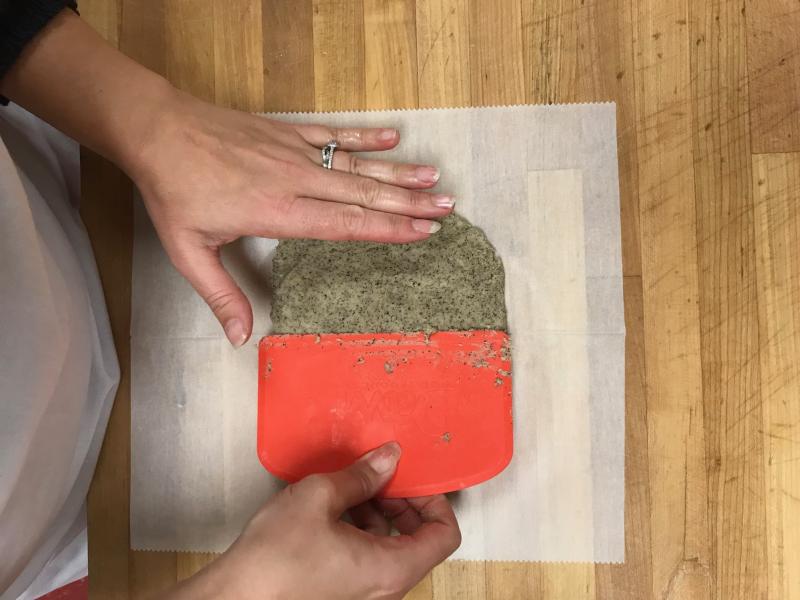
Plastic Scraper
A silicone spatula or bowl scraper is an inexpensive and useful tool when it comes to bowls of batter or dough. This little spatula hugs the curves of the mixing bowl when you are scraping down the sides and bottom in between additions, to ensure your precious ingredients are properly incorporated. No more dry pockets of flour at the bottom of the bowl!
Dough Knife
Like the rounded plastic version mentioned above, a straight-edged metal dough knife or bench scraper is a low cost and high-value tool. Professional bakers use them to easily cut or divide doughs and to clean work surfaces. Use ‘em to scrape up dry dough or batter spills from your countertop.
Parchment Paper
This is a handy convenience that really saves on time and clean up in a baker’s kitchen. Parchment paper is a disposable, nonstick, oven-proof surface for your sheet trays and baking pans that makes clean up a breeze.
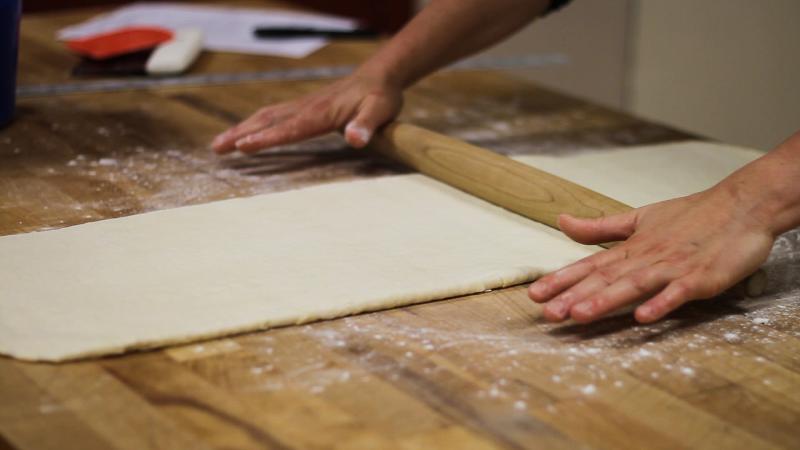
Rolling Pin
A rolling pin is a necessity for rolling out pie dough, cut-out cookies, puff pastry, and more. Our pick is a traditional French wooden rolling pin with tapered ends. They are a lightweight alternative to pins with rotating handles, and easier to control for a beginning baker.
Portion Scoop
Using a scoop to dole out batters and doughs can ensure everything in the batch is the same size, meaning even baking across the board (er, baking sheet). You can certainly eyeball it, but this is a pro tip for uniformity that is easy to add to your toolbox.
By Sara Hudson, Marketing Coordinator for the Zingerman’s Community of Businesses
Since 2006, we’ve shared helpful tips and valuable techniques for successful home baking at BAKE!, the hands-on teaching bakery at Zingerman’s Bakehouse in Ann Arbor.
The post Our 7 Favorite Tools for New Bakers appeared first on bake blog.
]]>The post Pie-fessionals appeared first on bake blog.
]]>
I didn’t make a good pie crust until I came to Zingerman’s. Growing up, I used the Joy of Cooking recipe and a food processor. Inevitably, I always added too much water (“1-3 tablespoons more”) and ended up with a soggy blob of dough. I used the Cook’s Illustrated recipe of vodka in place of some of the water, which allows the dough to roll with more ease and less cracking but lets the vodka evaporate in the oven, which prevents the crust from being brittle (which can happen when you add more water than necessary). I tried all the ingredient combinations; ice-cold water, frozen butter, half butter/half Crisco, a teaspoon of vinegar, a tablespoon of granulated sugar, but I never made a crust I was proud of.
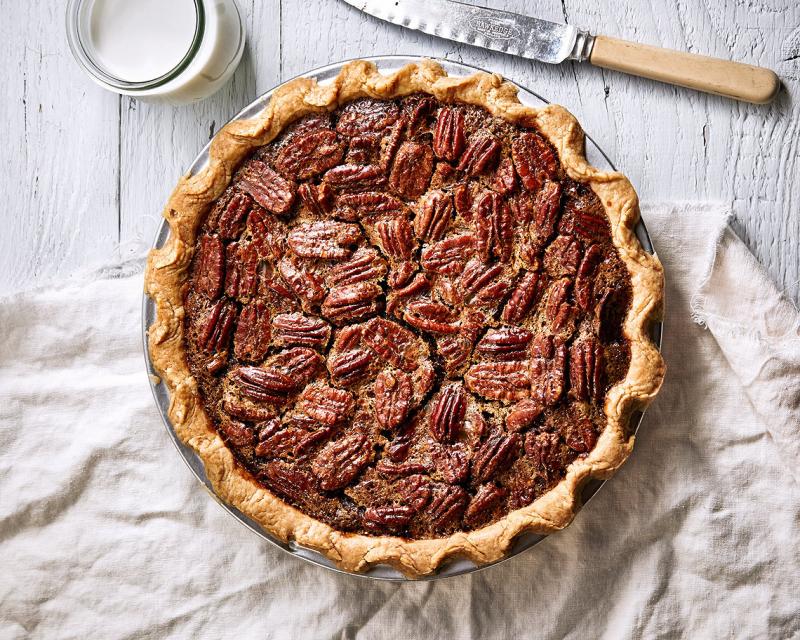
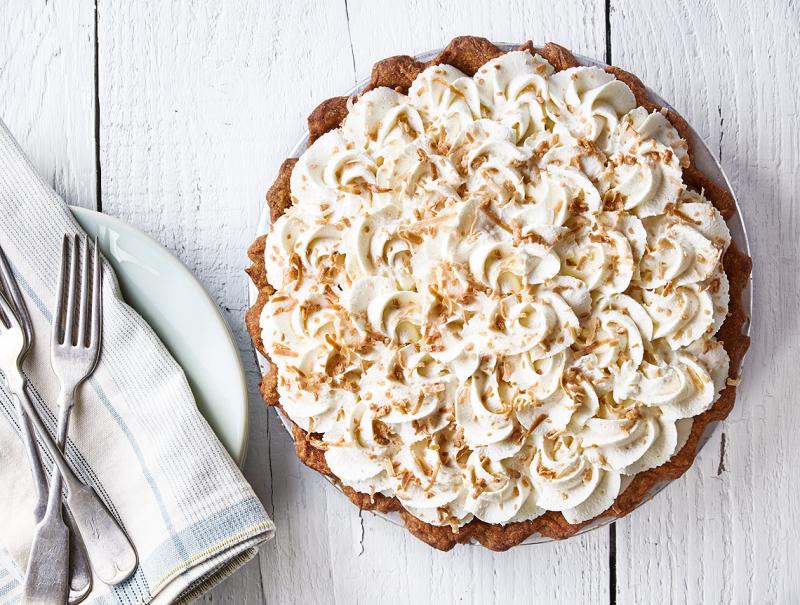
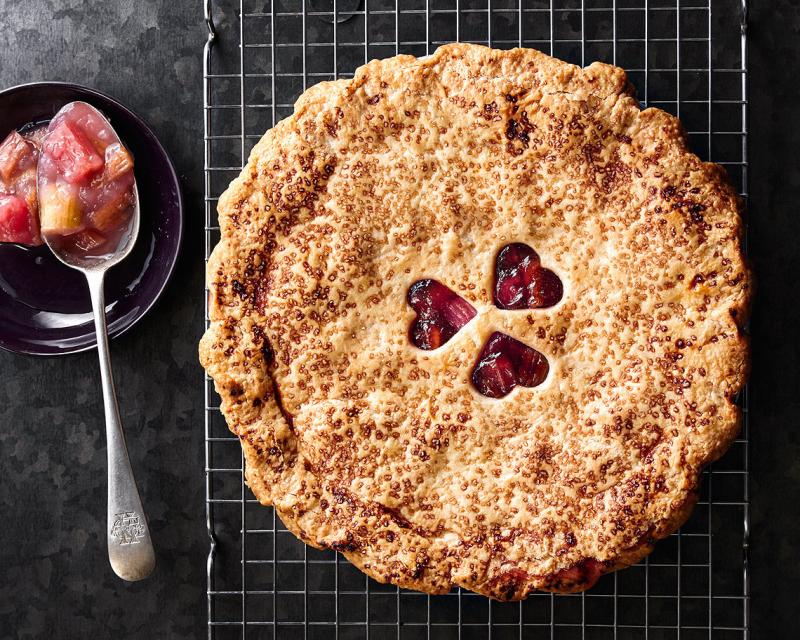
How did something so simple take on such tremendous weight? The way we make our pie crusts so delicious at the Bakehouse comes with 4 ingredients and two techniques: Fat, flour, salt, water, alongside “butter raincoats” and fraissage. In our class, we teach one crust with all butter and one crust with half butter and half lard (lard is the “good fat” as it is non-hydrogenated). The technique is the same regardless of the fats you use: With a pastry blender or your hands, cut and rub most of the cold fat into the flour until the flour takes on a yellow-ish appearance and fat is green pea size or smaller. I have to give Sue credit for her ‘butter raincoat’ analogy but it’s so perfect: by working the fat in this way, you are coating each particle of flour with fat, essentially putting a ‘butter raincoat’ on each one. This gives us a tender crust. With the remaining fat, you leave these pieces larger. When you add the water (always the same amount, never 1 tablespoon more or less!) and mix the dough, there is always a moment of panic. Students say, “Are you sure this is right?” They say, “This looks dry.” They say, “I don’t believe this will work.” I promise them it will. It is time for fraissaging! By schmearing dough across the table, the larger pieces of butter hydrate the dough and leave streaks of butter. This is what gives us a flaky crust. The water in the butter turns to steam which helps to lift our layers up. By hydrating with fat and not water, our crust doesn’t shrink in the oven (which happens when water evaporates from a pie crust).
Whenever I teach Baking Pies a Plenty I always start the class by asking people to introduce themselves and share their personal pie history, if they’d like to. The most recent class I taught was a great group and we had a lot of fun and learning—and included an especially touching pie-fessional.
Linda was a first-time student. After the class, I was in the room cleaning up. Linda came up to me and told me a story about how when she was growing up, her mother wouldn’t teach her how to make pies (said Linda made too much of a mess in the kitchen). Linda loved to bake but was always afraid of making pies. Linda said her brother was “the golden child” and when he got married, Linda’s mother taught the brother’s wife to make pies but never Linda, still. The sister/daughter-in-law then started making the pies for all the family gatherings, something which I can tell causes Linda some emotional strife.
As Linda is telling me this story, she starts to cry. She said that she’s never felt like she had the confidence or ability to make pies her whole life and that we’ve given her this gift, this confidence and faith that she was not a mess or a failure when it came to pies. She said she is a nurse and she ‘gives’ all the time and she honestly didn’t have the words to explain what we at BAKE! had given her that morning in class. At this point, I started to get teary myself and gave Linda a big hug.
I believe we all learn from each other all the time at BAKE!. I tell this story not as a testament to the way we make pie crust at Zingerman’s but as a way to show how baking can bring us together and sometimes tear us apart. Every day I value the community of bakers that support one another and appreciate the space that has been created at BAKE! for non-judgmental learning and sharing.
By Sara Molinaro, BAKE! Principal
Photos by Antonis Achilleos
The post Pie-fessionals appeared first on bake blog.
]]>The post 10 Tips for Baking with Kids appeared first on bake blog.
]]>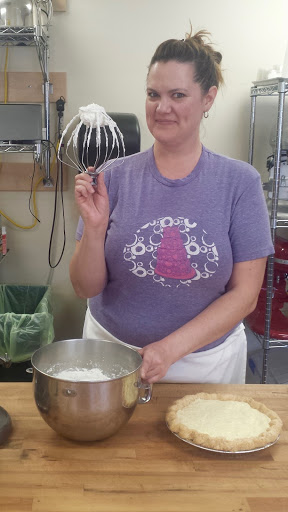 Since I graduated in 2004, I’ve worked in restaurants, convention centers, and universities. But there was always this lingering feeling of “Did I make the right choice?” “Should I have stayed with getting my elementary education degree?” “Why am I working summers in hot kitchens when I could have been off for 3 months?!” I loved sharing my culinary knowledge with the student assistants I had in the bakeshop at Eastern Michigan University, and after years there, I realized that what I really wanted to be was a chef instructor. Having a job that combined both of my passions was a dream.
In the summer of 2011, I saw a job posting for a baking instructor at Zingerman’s BAKE!. I grew up in Ann Arbor and, of course, knew about Zingerman’s. I didn’t even know about BAKE!, but when I looked at the schedule online, I knew I NEEDED to get the job. Luckily, I got the call from Shelby Kibler, former BAKE! Principal, at the end of August, and joined the BAKE! team the following month.
There were so many classes that it was a bit overwhelming, but I was excited to learn them all. What really energized me the most, though, were the family classes. I love getting to work with kids (and their parents) and teach them my favorite subject: baking and cooking! Their excitement for mixing, kneading, shaping, and tasting brings me such joy. Now, I’ve been here so long that kids I taught in family classes in my first few years here are now taking adult classes, and several are even in college now!
In early 2015, the BAKE! staff decided that our next adventure would be kids’ baking and cooking summer camps. With shows like The Great British Baking Show and Food Network’s kids’ cooking challenge shows, along with the rise of YouTube cooking shows and food blogs, many kids in family classes were already pretty accomplished home bakers and wanted to expand their knowledge. We knew that with our extensive recipe collection, our already great reputation, and our passion for teaching, we could create something great.
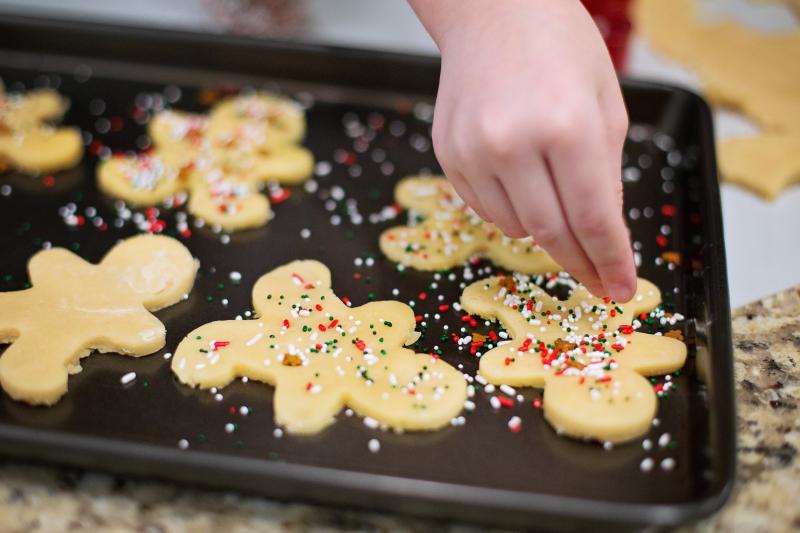
Overall, our kids camps have been amazing and we have so much fun teaching them every summer. Their enthusiasm is infectious, and we laugh all the time at the things kids come up with in class. It’s fun for us to see the same kiddos each year, although I have to admit that when I haven’t seen them for a year and they are suddenly taller than me and looking so grown up, it makes me kind of sad! Still, it’s such a joy to have them come back excited to learn new recipes, meet new friends, and help us engage the brand new students.
We hope that, whether or not your child has already taken a cooking and baking camp with us, they are learning to bake and cook at home, and that they’re engaging with food in a meaningful way. Here are some tips I’ve learned along the way for successful baking and cooking with kids.
10 Tips for Baking & Cooking with Kids:
1. Start introducing kids to working in the kitchen as young as possible. There are many ways even a 2-year-old can get involved in the kitchen. Have them add chopped vegetables to a salad. Let them dump ingredients into the mixing bowl. Let them taste ingredients.
2. Teach them about safety in the kitchen—why washing their hands is important, how to use oven mitts to remove a hot pan from the oven (when they are old enough), how to check the temperature of chicken with a thermometer, what to do if they get a cut or a burn, etc.

3. Involve your child with menu planning for the family. Let them help choose the main dish, side dish, and dessert; and research recipes that they can easily help with.
4. After menu planning, have your child help write the shopping list. At the store, let them help pick out produce, have them read the aisle signs to look for ingredients, or let them pick out a fun, new tool from the kitchen equipment section that they can use to make the next meal.
5. Choose foods to make that kids find appealing and interesting. Since they already like a food, they’ll likely be more interested in helping to make it.
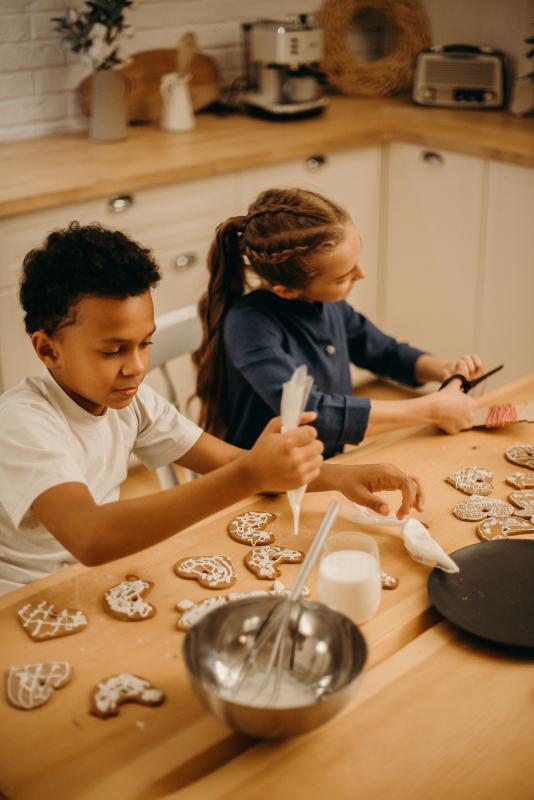 6. Get picky eaters to help make foods that they aren’t a fan of and try new ways to cook them. Your kid doesn’t like steamed broccoli? Try roasting it. Your child doesn’t like beans? Try making a veggie burger patty with them. Many times, if they are involved in making a recipe they’ll be more likely to at least try it.
7. Choose recipes that kids will be able to create without too much assistance after they learn the recipe. Start with easy recipes like cookies, brownies, or muffins. As they get more comfortable with the baking process, their confidence will increase and more challenging recipes can be tried.
8. Choose recipes that others in the house will want to enjoy. Kids will love the feeling of making their friends and family happy by making something delicious and homemade. Baking or cooking something really shows someone that you care!
9. Be patient with them! It can be easy to want to take over cracking the eggs or scooping the cookies but they need the hands-on experience to gain confidence.
10. Have fun with them! Get in the kitchen with your kid. (Or try a family class at BAKE!—no cleanup!) Your enthusiasm and excitement will create the same in your kid. The more fun they have, the more likely they will be to want to continue learning to cook and bake.
By Nikki Lohmann, BAKE! Instructor
Images credits: (2) Pixabay, (3) Alexander Dummer, (4) cottonbro, all from Pexels
The post 10 Tips for Baking with Kids appeared first on bake blog.
]]>The post Bringing a Joy of Cooking to New Generations appeared first on bake blog.
]]> This month, the 12th edition of the iconic cookbook Joy of Cooking will be released after undergoing a thorough revision and expansion by Irma’s great-grandson, John Becker, and his wife, Megan Scott. They developed more than six hundred new recipes for this edition, tested and tweaked thousands of classic recipes, and updated every section of every chapter to reflect the latest ingredients and techniques available to today’s home cooks. Their strategy for revising this edition was the same one Irma employed: vet, research, and improve Joy’s legacy recipes while introducing new dishes, modern cooking techniques, and comprehensive information on ingredients now available at farmers’ markets and grocery stores. This latest version will be a great addition to cookbook collections for Joy of Cooking fans and budding cooks, just in time for holiday gift-giving.
Inspiring Joy
Here at Zingerman’s, where hundreds of people are living out their dreams of working with food every day as a career, it turns out that the Joy of Cooking has helped inspire some of those dreams.
“It was the first book I cooked from. I’d come home from school when I was in 5th grade, read the recipes and pick some to try, always something baked. I used my mother’s copy, which was printed in 1953. She got it as a sophomore in college when she got married and moved into her own apartment. She still has that book. When I visited her last week it was right above her refrigerator with a couple of her other favorites. This made me laugh. At 83 she doesn’t cook much anymore but there it was, Joy of Cooking, right within her reach in case she needed it. I continue to use it as my tried and true resource book for basic information. I have a much newer copy that I bought in 1988 when I moved into my first apartment after college.”
-Amy Emberling, Zingerman’s Bakehouse baker, author, and co-managing partner
“Reading this book in junior high is part of what inspired me to be a chef. My favorite section of my 1960’s edition was ‘know your ingredients.’ I think it’s a foundational cookbook everyone should have.”
-Rodger Bowser, Zingerman’s Delicatessen chef and co-managing partner
“It has changed my life. I go there first for nearly every recipe. I love the pancake recipe. I’ve also made the doughnuts, and it felt so good to have done this thing that seemed so hard, but was actually pretty easy! The descriptions and depth of ‘why’ put into the book is what is missing from most recipe books.”
-Gary Mazzeo, Zingerman’s Web Designer

“The Joy of Cooking version my mom had included recipes for ostrich and alligator. As a child, this brought me a tremendous amount of joy (ha!). I never tried making them though.”
-Sara Molinaro, Zingerman’s BAKE! principal
“I grew up with this cookbook as a child. My amazing mother sent me a copy for my 20th birthday (37 years ago). I made my first Hollandaise sauce when I was probably 10 years old assisting my mom with a dinner party. To this day I still use the recipe for quick tapioca custard.”
-Amy Berger, Zingerman’s Bakehouse bread mixer
Joy Comes to Zingerman’s
When asked about his desire to visit Zingerman’s, John Becker said, “We met Zingerman’s co-founder Ari Weinzweig eight years ago at one of the first food-industry events we ever attended. Knowing next to nothing about said industry, we asked him what Zingerman’s was all about, and his answers really piqued our interest. One of the things Megan and I first bonded over was cheese, and we vowed to make it to Zingerman’s if circumstances ever took us through Ann Arbor. Since then, we have befriended Ann Arbor expats where we live who have nothing but glowing things to say about the Deli—and the community of businesses that have grown from it.”
One of John and Megan’s few midwest stops on their national book release tour brings them to Ann Arbor and the Zingerman’s community of businesses. In fact, it will be their only Michigan appearance! The authors’ visit in January 2020 includes three events: a talk, a demonstration, and a plated dinner. Copies of the new edition of Joy of Cooking will be available for purchase and to be signed by the authors. Tickets for each event are available a la carte.

First up is an interview with John and Megan, moderated by Zingerman’s Bakehouse managing partner Amy Emberling, with time for questions from the audience. A meal will be served upon arrival, featuring four recipes selected from the book: keftedes (Greek meatballs), shaved fennel and white bean salad, Megan’s pumpkin seed brittle, and yogurt and honey panna cotta. This is part of the “Brown Bag Talk” series hosted by BAKE! at Zingerman’s Bakehouse in the ZingTrain speaker and meeting space.
The interview will be followed by a cooking and baking demonstration. Head to the BAKE! classroom at Zingerman’s Bakehouse to watch the authors create four recipes chosen from the book: olive oil flatbread crackers, spicy chickpea soup, frico eggs (with crispy cheese), and chocolate swirl halvah (a sesame butter fudge). After the demonstration, there will be generous samples to share, and you’ll go home with the recipes.
 The visit culminates with a plated five-course dinner prepared by Zingerman’s Deli chef, Rodger Bowser. He designed the menu around his personal favorites from his childhood edition and recipes from the brand new edition. Dinner might include roasted cauliflower soup with khachapuri, kale and lentil salad, crispy fried tongue, kimchi macaroni and cheese, and Joy of Cooking pot roast. The feast will be served at Zingerman’s Greyline, an art deco-themed event space in downtown Ann Arbor.
To continue the Joy of Cooking tradition of inspiring cooks and bakers, Zingerman’s Deli will be inviting local youth to participate in the food preparation for the dinner. Rodger will host a ZingPath student from Zingerman’s work partnership with Ann Arbor’s Pathways High School.
Get yourself inspired in the kitchen again. Pick up a copy of the new Joy of Cooking for you and for the cooking curious youngsters (or adults) in your life. And be sure to grab a seat at one of these special Zingerman’s events before they sell out!
Reserve Your Seats:
The new Joy of Cooking will be available for purchase and signing at all Zingerman’s events, or order your book now
By Sara Hudson, Marketing Coordinator for Zingerman’s Community of Businesses
Photo credits: Sarah and John by Anika Toro, black bean soup and miso-glazed eggplant by Heidi’s Bridge
The post Bringing a Joy of Cooking to New Generations appeared first on bake blog.
]]>The post Gateau St. Honoré appeared first on bake blog.
]]>
The torte’s namesake, Honoré, also known as Honoratus, became bishop of Amiens, in the north of France, in 554 AD. According to tradition, a number of miraculous events occurred during his service, which spared farmers, millers, and bakers from natural disasters. After his death, processions in his honor supposedly stopped both droughts and deluges, ensuring good wheat harvests. This won Honoré the admiration of bakers across France. In 1204, a Parisian baker built a chapel (no longer extant) to commemorate him, and in the 17th century, the French baker’s guild anointed him the patron saint of bakers and pastry chefs. In religious and popular imagery, Honoré is often depicted holding a baker’s peel—the flat wooden paddle used to move loaves to and from a hot oven—often with loaves of crusty French bread nearby and with bakers at work, in the background, kneading dough and manning wood-burning ovens.
Fast-forward to the 19th century, when Parisian pastry bakers began bringing glory to the saint’s name in the best way they knew how—with a fabulous show-stopping confection. The Gateau St. Honoré was developed at the legendary Chiboust pastry shop on Paris’ Saint Honoré Street, which, alas, no longer exists. It started out as a ring-shaped brioche filled with pastry cream that Chiboust lightened with an airy Italian meringue, creating a new kind of filling that came to be known as crème Chiboust, which French bakers still use. According to Parisian pastry chef, Pierre Hermé, one of Chiboust’s bakers, August Jullien, came up with his own version, replacing the ring of brioche dough with a ring of little cream puffs.

By the late 19th century, the Gateau St. Honoré had taken its present form, incorporating a disk of puff pastry filled with pastry cream, topped with a crown of cream puffs dressed up even further with a crunchy cap of caramelized sugar, and draped with swags of whipped cream. The plain version of the torte—simply flavored with vanilla and the bittersweet notes of burnt sugar—is most common, but you can find fanciful seasonal variations, showcasing everything from tropical fruits to green tea.
In modern-day France, the Feast of St. Honoré still survives as a time to appreciate all sorts of breads and pastries. French baker Dominique Geulin, who grew up in Normandy and is now based in Portland OR with his bakery St. Honoré Boulangerie, fondly remembers how bakers in France (including his parents) would open their doors on May 16 for community festivals, school field trips, and public demonstrations. The modern-day French baker’s organization, Confédération Nationale de la Boulangerie-Pâtisserie Français, also takes that week as the occasion to hold its annual meeting during a full-on festival of bread.

This fall, in October and November, BAKE!, the Bakehouse’s hands-on teaching bakery, is offering two classes on the Gateau St. Honoré, where you’ll learn all the classic French techniques—pâte feuilletée (puff pastry), pâte á choux (choux pastry), crème pâtissière (pastry cream), whipped cream, and caramelized sugar—that go into making this show-stopping dessert, a six-hour project well worth the effort! (Don’t worry, we provide a great Bakehouse lunch, too.) Any dessert that is built out of other desserts is a winner in our book and the Gateau St. Honoré is sure to impress your guests! (Check out the Bakehouse’s Instagram highlights for more behind-the-scenes shots from this class!)
By Lee Vedder
Bakehouse Historian
The post Gateau St. Honoré appeared first on bake blog.
]]>The post From Kipferl to Croissant appeared first on bake blog.
]]>
Culinary historians concur that the modern-day croissant was inspired by the Austrian kipferl, a crescent-shaped morning pastry made with brioche-like dough, which is denser and less flaky than the croissant we know today. According to popular lore, the kipferl originated in 1683 as a comestible celebration of Austrian victory over the Ottoman Turks at the siege of Vienna. The story goes that a baker, up early to make bread, saved Vienna when he heard the Turks tunneling underneath the city and sounded an alarm to the Viennese authorities. The kipferl’s curved shape, said to mimic the crescent moon of the Ottoman flag, would then seem to pay poetic tribute to the indomitable spirit of a city that resisted a powerful invading force. But the kipferl existed long before the Ottoman siege of Vienna. A poem mentions it as one of the Christmas treats that Viennese bakers presented to Duke Leopold in 1227. Moreover, crescent-shaped breads in general date back centuries earlier.
So, does the croissant’s Austrian ancestry belie its French fame? “Of course not,” says Jim Chevallier, an independent scholar and author of a book on croissant history, August Zang and the French Croissant: How Viennoiserie Came to France. “The croissant began as the Austrian kipferl, but became French the moment people began to make it with puffed pastry, which is a [17th-century] French innovation,” says Chevallier. “It has fully taken root in its adopted land.” Order a kipferl in Austria or Germany today and you’ll likely be handed a crescent-shaped cookie.
A more romantic tale from the 18th century attributes the origin of the croissant to the French Queen and Austrian Archduchess, Marie Antoinette (1755-1793). Legend has it that the Queen, homesick for the taste of her native Vienna, would often bow out of royal dinners, only to sneak away to indulge in the sweets and coffee of her country. The story thus credits her love of Viennese kipferls and the christening of the kipferl as the “croissant” as having introduced the pastry to French high society.
Legends aside, historical evidence as to the croissant’s evolution in France points instead to August Zang (1807-1888), an Austrian entrepreneur who opened the first Viennese bakery in Paris in 1838. Located at 92 Rue Richelieu on the Right Bank, his upscale Boulangerie Viennoise specialized in bread and pastries from his native Vienna, most notably the kipferl, along with pain viennois (a Viennese-style sandwich bread), both of which became widely popular in the city within ten years. Equipped with his patented steam oven, Zang made his kipferls with noticeably flakier dough than traditional brioche-based versions and the French began referring to the newfangled pastry as a croissant due to its crescent shape.
References to croissants made with true, yeasted pâte feuilletée (puff pastry dough), however, didn’t materialize until the early 20th century. For that development, we have the French baker, Sylvain Claudius Goy, to thank. In 1915, he wrote a recipe that specifically mentions pâte feuilletée, calling for the rolled puff pastry to be yeast-leavened and laminated with butter, a technique that remains at the core of how the modern-day, all butter, homemade croissant (croissant au beurre, fait maison) is made in France.
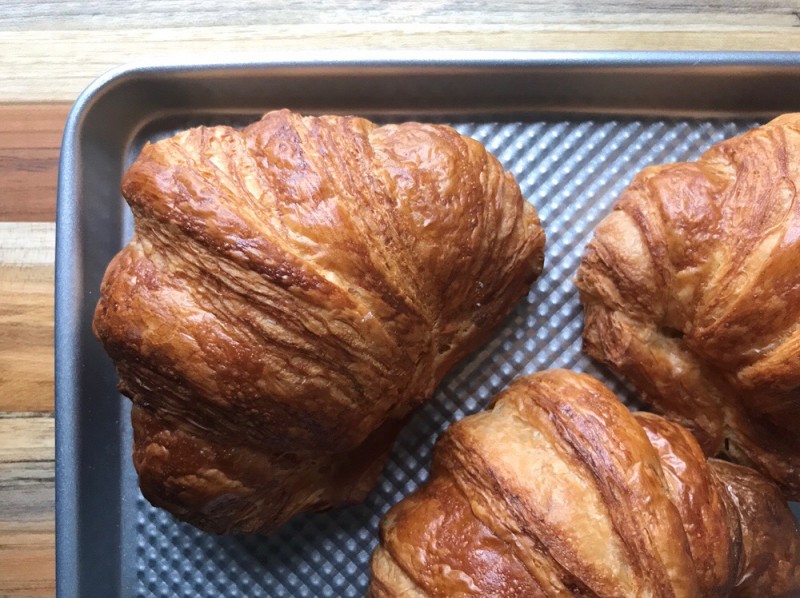
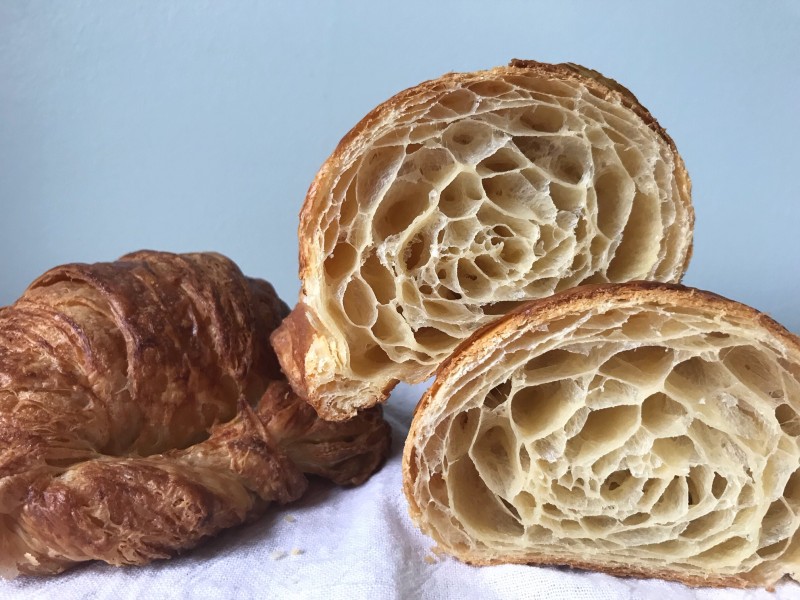
And it is this traditional French croissant we are dedicated to making here at the Bakehouse. Like bread and other baked goods in America, croissants can be made with shortcuts causing them to fall short of the intended texture and flavor. There are very few places in the world outside of France where you can get a truly great, flaky, buttery croissant—Zingerman’s Bakehouse is certainly one of those places. We pride ourselves on their rich flavor, tender honeycombed interior, and crispy exterior that shatters a little when you bite into it. It’s mostly about taking the time to do it right and not using fake ingredients or pre-made frozen doughs. And we think it’s well worth the time and effort to do so. Like we say, you really can taste the difference. Visit the Bakeshop to pick up our 4 variations on the French croissant: classic Butter, Juliette’s Almond, Chocolate, or Parmesan and Prosciutto.
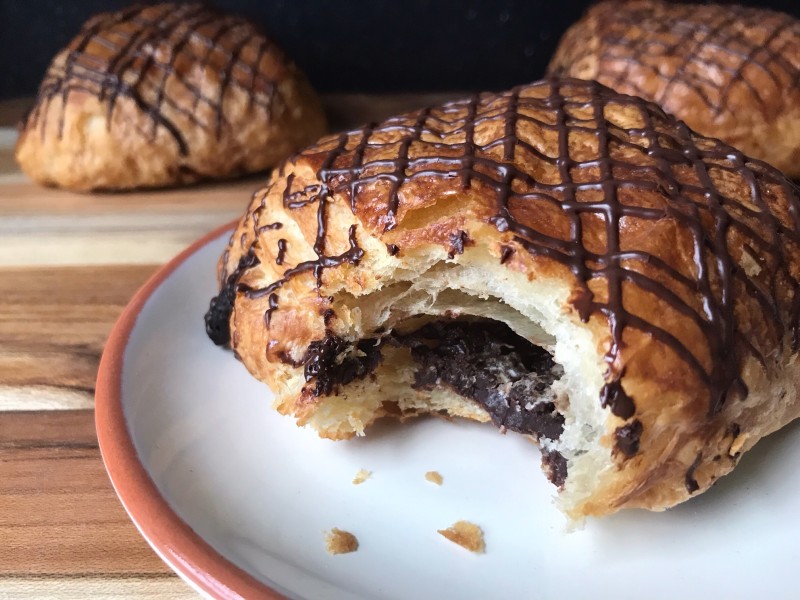
Or, learn to make croissants yourself in one of our most popular hands-on baking classes: Ooh La La Croissant: French Pastry Class. You’ll learn the key techniques for creating a butter-laminated dough (layering the dough with butter and folding it over), filling the croissants, proofing them properly to achieve the right texture, and finally, baking them to a rich golden brown. In class, you’ll make our butter croissant recipe, as well as fill them with both our rich almond frangipane (we’ll give you the recipe for that, too) and bars of intense dark chocolate imported to us in Ann Arbor from renowned French chocolatier Michel Cluizel. There are few more sublime things in our book than enjoying a freshly-baked croissant that is still a little warm. We can’t wait for you to try it. It’s going to be life-changing. Reserve your spot now.
By Lee Vedder
Bakehouse Historian
The post From Kipferl to Croissant appeared first on bake blog.
]]>The post Conversions with a Kitchen Scale appeared first on bake blog.
]]>Some things are forgiving—your favorite stretchy pants or an understanding friend, perhaps—but baking typically isn’t one of those things. It’s an exacting science that requires equal parts precision, artistry, and know-how. Today’s topic? Precision. If you’re not already baking by weight, we’re here to make the case for switching.
Here’s a situation that might sound familiar: You find a recipe that makes your heart go pitter-patter. You’re ecstatic to pull out your mixing bowl and whisk and give it a go. You follow the recipe in painstaking detail, pop it into the oven, and wait with bated breath for it to bake and cool. And then, when the time comes to taste test, something is just… off. Maybe it’s too dry, or it’s too oily, or the texture just isn’t right. Why have the baking gods forsaken me?, you ask, shaking your fists at the sky.
The answer may be sitting quietly in your drawer of kitchen tools. The humble measuring cup, the one you use to scoop and level your flour, is often the culprit behind disappointing bakes.
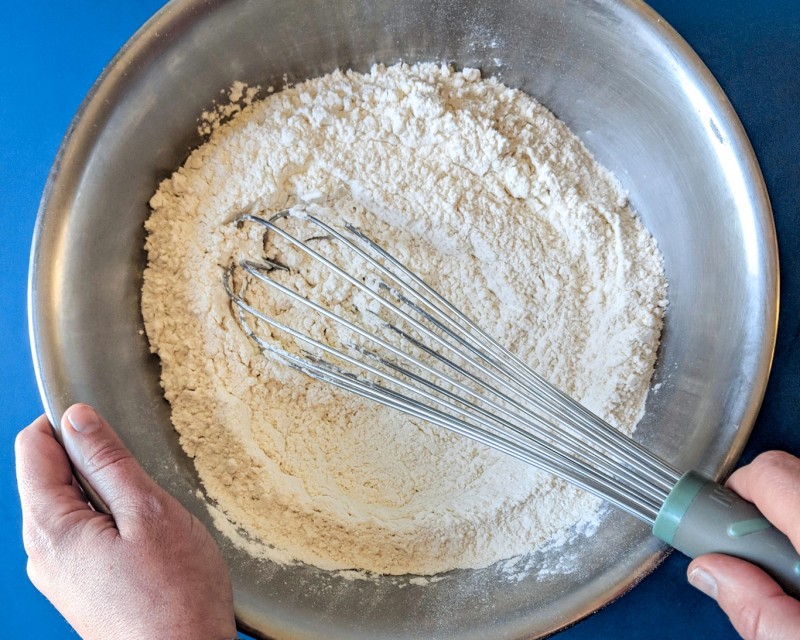
American bakers commonly use volume measurements. Many of us learned to measure by plunging a measuring cup into a crinkled bag of flour, leveling it off with a dusty finger, and dumping its contents into a mixing bowl. Here’s the problem, though: A cup of flour could weigh anywhere from 113 grams to 170 grams depending on the brand, the measuring cup you’re using, the method you used to scoop it… You can see how volume measurements open our bakes up to inconsistencies and imperfections. The best way to get consistent final products is to make the switch to weight measurements.
It can be unnerving to change your measuring method. Looking at a recipe listed in grams, ounces, or pounds, when all you’ve ever touched is an old plastic measuring cup, might be enough to send you running away from your oven. But fear not, dear baker! Weight measurements aren’t as frightening as they may seem. You can pick a weight unit that feels right for you, then head back into the kitchen to master the art of weighing.
How to succeed in weight measurements without really trying
Step one: Get your hot little hands on a kitchen scale. Choose for accuracy ratings; it’s important for your scale to get the numbers right every time. This doesn’t mean it has to be costly—you can purchase an effective scale for less than $20.
Step two: Learn the tare function. This lil’ button sets the scale back to zero, so you can measure ingredients directly in your mixing bowl without having to worry about, ya know, math. Forget about dirtying all those tiny measuring spoons, because those days are over! Just plunk a bowl on the scale, tare it, and add your ingredients one by one, taring in between. Or you can do one better and measure as we do at BAKE!, our very own baking school, for ultimate accuracy. Here, we measure each ingredient into its own container so we can easily double check weights and ensure that we’ve measured everything.
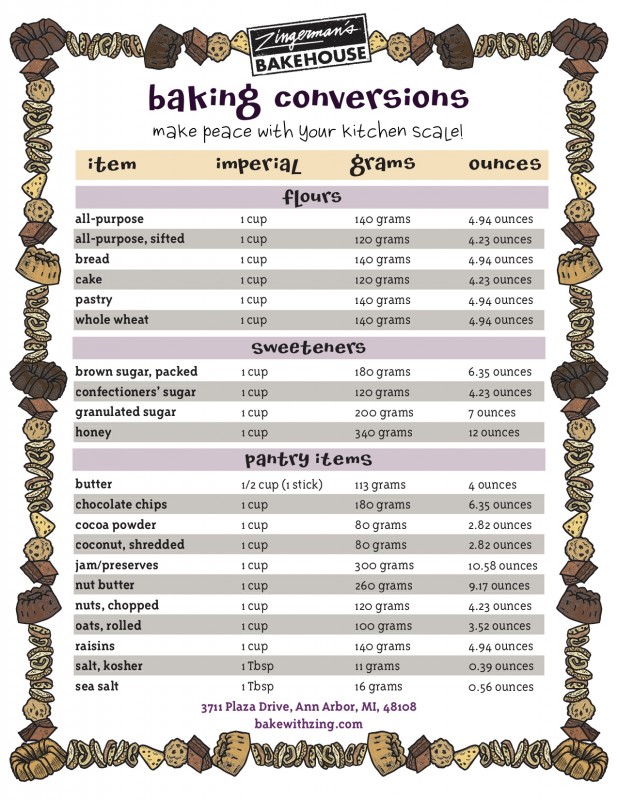
And the final step? Well, it’s more of an ongoing project. It’s helpful to familiarize yourself with some common conversions so you can comfortably replicate recipes regardless of their units of measurement. Luckily, we’ve already given you a head start.
Here’s a handy conversion guide for some common ingredients so you can conquer metric measurements with ease. Embrace your new scale with open arms, because it’s time to repair your relationship with the baking gods over a cup of coffee and a perfect scone. Your baked goods (and those who eat them!) will thank you.
So, how ‘bout it, folks?
Would you convert to a kitchen scale?
DOWNLOAD YOUR PRINTABLE CONVERSION GUIDE HERE!
The post Conversions with a Kitchen Scale appeared first on bake blog.
]]>The post Let Them Eat… Brioche? appeared first on bake blog.
]]>In case you’ve never had the pleasure of a soft, buttery slice of brioche, we’ll gladly fill you in. It’s really a small step away from being a pastry (hence the translation from “brioche” to “cake” in Miss Antoinette’s quote). It has a golden color and rich, soft texture from all the eggs and butter added to the flour, yeast, and salt. It’s great on its own, of course, but it makes rich bread pudding and French toast and takes sandwiches and burgers to another level.

In our Bring on the Brioche BAKE! class, the scent of butter will fill the room when you learn how to make brioche dough, shape it, and bake it to perfection. You’ll get plenty of hands-on practice in class with mixing, kneading, and proofing yeasted doughs—and you’ll be amazed by just how much butter you knead into the dough!
We’ll show you how versatile this dough is by making a variety of treats with brioche. You’ll learn how to make a traditional round shape, called brioche à tête — the brioche dough is baked in a round, fluted pan, and a small portion of the dough is placed on the top to form the head or tête. You’ll make stuffed brioche rolls, with both sweet (chocolate) and savory (sausage) fillings, and a sweet loaf called Craquelin. This national bread of Belgium is rolled up with a layer of fresh orange zest and sugar cubes soaked in Grand Marnier®. The additions form a sweet swirl inside each slice and their dark orange flavors seep into the surrounding dough. We’ll also demonstrate Bee Sting Cake (Bienenstich), a German dessert made with brioche, pastry cream, and a honey almond topping. We’ll also send you home with dough to make another batch of something you made in class—or something else entirely!

If you need more inspiration, you can find brioche at the Bakehouse in a couple of different forms. Frank and Amy, Bakehouse managing partners, tried bostock well over a decade ago and were still thinking about it, so we just had to start making this pastry creation and sharing them with you. Every day, our bakers begin with a thick slice of our buttery brioche bread, brush it with orange-flavored simple syrup, spread it with almond frangipane, sprinkle it with toasted almonds and bake it. It’s a breakfast pastry totally worth getting out of bed for (but it’s good for dessert too!). We also make small brioche rolls (with or without a sprinkling of sea salt on top) that make an irresistible addition to any dinner spread.
Ready to reserve your spot? You’ll leave BAKE! with two loaves, eight rolls, AND dough to bake later.
The post Let Them Eat… Brioche? appeared first on bake blog.
]]>The post Everybody Loves Cupcakes appeared first on bake blog.
]]>
These precious little pastries date back to a published recipe in 1796 calling for a light cake batter to be baked into small cups. Often times small clay pottery or ceramic ramekins were used, as the metal muffin tins and paper liners we use today were not yet available. Later recipes called for measuring all the ingredients in even cups to make cup cakes. Also known as 1234 cakes or quarter cakes, the cake recipe was comprised of 1 cup of butter, 2 cups of sugar, 3 cups of flour, and 4 eggs. A baker would call this a cup cake, whereas, for a pound cake the ingredients were weighed. Fascinating right?! (Can you tell that we really love this stuff?!)
And who doesn’t love a cupcake?! It seems everyone does, probably because they’re like a party in the palm of your hand. They can be passed around at parties, no knife required. Plus, one cupcake is the perfect gift to lift someone’s spirits. The English refer to them as fairy cakes. Pretty accurate and sweet, we think, and we love having fun with our food. And we know how people somehow get really excited at the sight of miniature food.

If you, too, can’t resist cupcakes, we invite you to join in our little cupcake-making party at BAKE! where you’ll learn from the baking pros and go home with our Zingerman’s Bakehouse cake, buttercream, and fondant recipes. Together we’ll do a little baking and a lot of decorating, as you create your own tasty and cute-as-a-button cakes. First, you’ll bake our moist and scrumptious recipe for vanilla buttermilk cake. Next, we’ll demonstrate how we make our fluffy vanilla Swiss buttercream with a whipped egg white and sugar meringue. Then, we’ll show you different ways to use both vanilla Swiss buttercream and dark chocolate French buttercream for piping on top to cover your freshly baked cupcakes.
And the fun really starts when you use our made-from-scratch fondant (ours is really delicious—we promise!) to decorate what you’ve made. This fondant melts in your mouth, tastes like sweet vanilla, and opens up a world of decorating possibilities. You’ll have plenty of time to let the creativity flow onto your cupcakes as you create your own designs and make your own shapes. We think you’ll be eager to show off your cake art to your friends, family, or coworkers when you’re done with class. Watch as everyone gobbles them up like kids in a candy store or a cupcake shop as it were. Like all our cakes at Zingerman’s Bakehouse, we believe in cupcakes that taste as good as they look. So be sure to enjoy your cakes responsibly, at room temperature for maximum flavor and ideal texture.

Ready to join us? Reserve your spot here! You’ll leave BAKE! with Zingerman’s Bakehouse cake, buttercream, and fondant recipes; the knowledge to recreate them at home; ONE DOZEN CUPCAKES(!) you made in class; and great coupons. See you soon!
By Sara Hudson, Marketing Coordinator for Zingerman’s Community of Businesses
The post Everybody Loves Cupcakes appeared first on bake blog.
]]>