The post A Beloved Bread, Updated to Be Even Better appeared first on bake blog.
]]>Our new and improved naturally leavened (no commercial yeast) Vollkornbrot (Vollk 2.0) still embraces the ideals of our original version—a dense, nutritious, lasting rye loaf, one that German expats may be especially delighted to find and become loyal to at our bakery. A handful of toasted sunflower seeds adds just the right amount of nuttiness to the complex flavors of rye. In every moist bite, you will find fruity, spicy, earthy, almost wine-like notes with a complimenting sour and a lingering smooth mouthfeel. One analogy that comes to my mind, if I may say so, is this—if Vollk 1.0 is the well-flavored grape, Vollk 2.0 is the wine (of course, the latter being more true when Vollk 2.0 is well-executed). How so?

With flavor, texture, and digestibility in mind, this new version uses freshly milled, organic, whole grain rye flour as well as freshly cracked organic rye chops from Breslin Farms in Illinois. Using the whole grain and freshly milling it in-house means that we are keeping the nutrition and the aromas and flavors of the grain as intact as possible in the flour by incorporating all of the components of the rye berry in the flour, including the bran and the germ. (The medium rye flour we were using in Vollk 1.0 had some of its components removed.)
For Vollk 1.0, we pre-soaked only some of the rye chops (and none of the sunflower seeds) that went into dough, and those that were soaked were not necessarily soaked in enough water to fully soften the chops. That resulted in some uncooked rye chops in the final bread (also visible to the eye as white starchy bits when sliced). Vollk 2.0 pre-soaks all of the rye chops as well as the sunflower seeds with plenty of boiling water for several hours. This results in rye chops that are fully softened and somewhat pre-digested by the action of enzymes during the soaking process, and yet still intact enough to add some texture to the final bread. The pre-soaked sunflower seeds also don’t steal moisture from the dough, as opposed to raw ones that soak up moisture as they sit and bake with the dough.
Vollk 1.0 used instant yeast and a small amount of rye sour for fermentation, which happens typically in about 2 hours. This resulted in a very mildly flavored, not as open-textured bread, with an aroma that is reminiscent of a field of grains on a hot summer day. Vollk 2.0 has a lot more flour in the mix and is all whole-grain, which means the chemistry of rye becomes more critical for proper fermentation. That is why Vollk 2.0 uses almost a 1 to 1 ratio of flour to a stiff rye sour for effective fermentation, coaxing as much flavor as possible from the grain while providing leavening and acidification to prevent the delicate starches of the rye from breaking down from too much enzyme activity. Using more rye flour in the mix results in a lighter texture, and using only natural leavening results in a deeper, more complex flavor profile with a pleasant amount of sourness that matches the flavor of the rye.
Vollk 2.0 gets baked in a “falling” oven, which means that it starts baking at 500°F, and we slowly turn the temperature to 375°F over the course of 1 hour and 15 minutes, as opposed to a 375°F bake for 1 hour and 10 minutes for Vollk 1.0. The higher temperature and slightly longer bake of Vollk 2.0 means a relatively more fully cooked loaf of bread without burning it, as well as fully releasing the flavor potential of the bread.
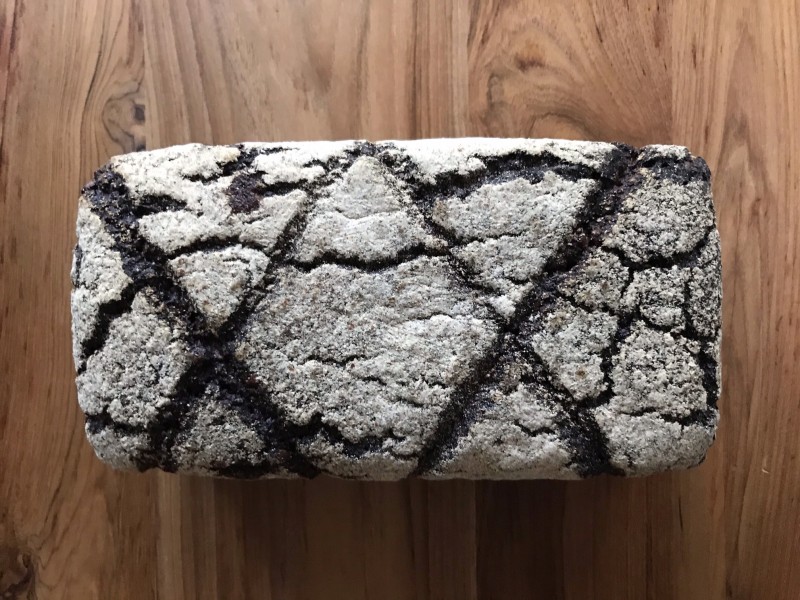
The result? With the freshly milled whole grains, fully softened rye chops and sunflower seeds, long and slow natural fermentation, and a fuller bake, Vollk 2.0 is intended to offer better digestibility together with an improved flavor profile and texture.
What does this mean for your enjoyment of the bread? The high moisture retention capacity of the rye grain and the high amount of natural rye sour that goes into the making of this bread gives it a long shelf-life. It easily lasts a week compared to a few days or so with Vollk 1.0—and it is easier to cut. We wait 24 hours after it is baked before slicing and eating it; this ‘curing’ period lets the crumb set and flavors develop. We suggest storing it differently than anything else we make! Wrap it well in plastic (this helps soften up the crust!) and keep on your countertop in a cool and dry environment, or refrigerate it for a shelf-life easily beyond one week.
This bread is flavorful and satisfying on its own. It would also be fantastic with Zingerman’s Creamery smoked salmon cream cheese and a little fresh dill, with some butter of your choice like Danish Lurpak, with a red fruit jam or a hardy mustard and a slice of smoked ham. Enjoy!
By Hazim Tugun, Bread Baker
Bakehouse Grain Commission
The post A Beloved Bread, Updated to Be Even Better appeared first on bake blog.
]]>The post Comfort Me With Bread appeared first on bake blog.
]]>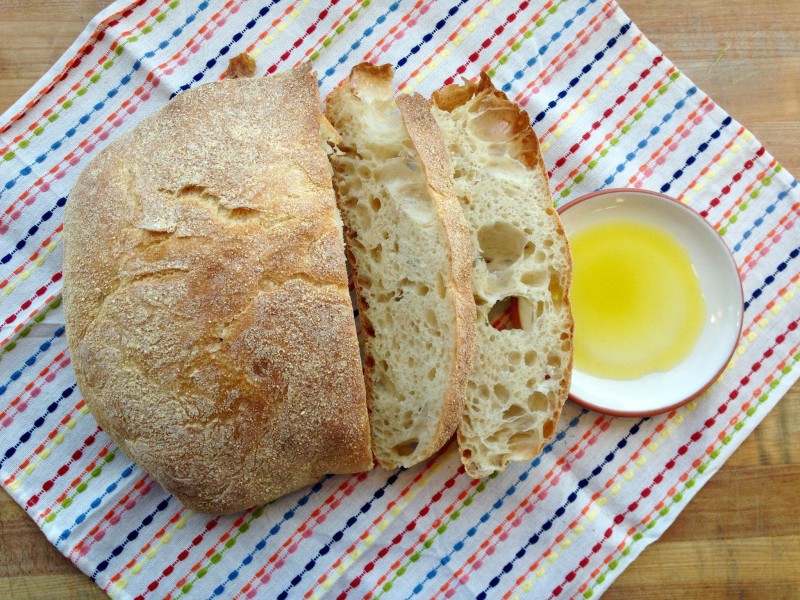
Now, our Roadhouse bread has already become a new bowl-of-warm-milk-and-bread memory for me. That distinct flavor excites my taste buds so much that, one day in the future, I can only hope – besides eating the bread itself – aromas and smells will come up in my life that will remind me of this bread.

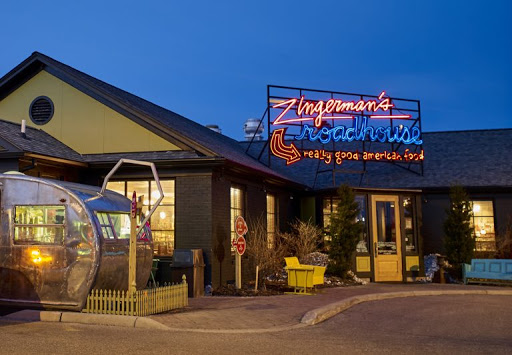
I love excellent food and I want my breads to be excellent too. When the flour or the grain is fully hydrated (just like you would cook your rice in the proper amount of water), naturally fermented long and slow, and finally fully-baked, you have a winner in my eyes. That is the Roadhouse Bread for me, which was created in 2003 when Zingerman’s was opening the beloved Roadhouse; the restaurant that makes some of the best traditional American food in the country. The managing partner of the restaurant at the time, Alex Young, needed a signature bread for the opening of the restaurant.
That’s when Frank Carollo (one of the Bakehouse managing partners) and Shelby Kibler (leader of the bread bakery at the time) came to the rescue with their skilled baking hands and research. A common bread recipe that popped up in their browsing of old American cookbooks was the “Injun bread” or “thirded bread.” It was called “thirded,” because the bread was made of roughly one-third cornmeal, one-third rye, and one-third wheat flour.
In the early 19th century, European settlers had a hard time growing wheat in the harsh soil conditions of New England; while on the other hand, grains such as rye, corn, and barley fared well. Being less available, wheat became an expensive ingredient. The settlers supplemented what little wheat they could afford with rye flour and cornmeal in their bread-making attempts; thus, the trio of rye, corn, and wheat had become the popular grain mixture of the time. With a bit of molasses also added in, the abundant sweetener of choice in that day, the delicious and filling “thirded bread” was born. It is this historic bread that formed the basis for Frank and Shelby’s attempts in developing the desired signature bread for the new Zingerman’s establishment. It was not an easy feat for the bakers, with a lot of stickiness and dough tearing (so I heard). According to Frank, soaking the cornmeal with boiling water to stabilize it, prior to adding it into the dough, was the gateway to success in creating the Roadhouse Bread.
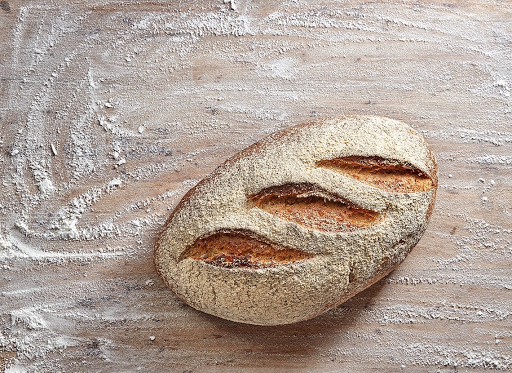
We make this bread every day at the Bakehouse. We take delicious organic cornmeal from New York’s Champlain Valley Milling and add boiling water to it in our giant mixers, letting it gently pre-cook into a ‘mush’ while emitting sweet, grassy aromas. Once it is cooled, we add that mush (a lot of it, almost equal to the total flour weight!) to a mixture of organic wheat and rye flours, bound together with molasses and water, all to be naturally leavened by our ripe, fruity and sour stiff levain. The pastel clay-colored, sticky dough bulk ferments at room temperature for about three hours to develop flavor and texture before we bench and divide it. The pre-shaped rounds of dough rest for about 45 minutes before each piece gets a final shape of a hefty sandwich loaf or a smaller batard. Shaped breads proof on cornmeal boards, free-standing and rising to their full potential, for about 2 – 2.5 hrs. Then we generously sprinkle more cornmeal on top, and skillfully score them before they hit the hot stones of our deck ovens for a dark bake.
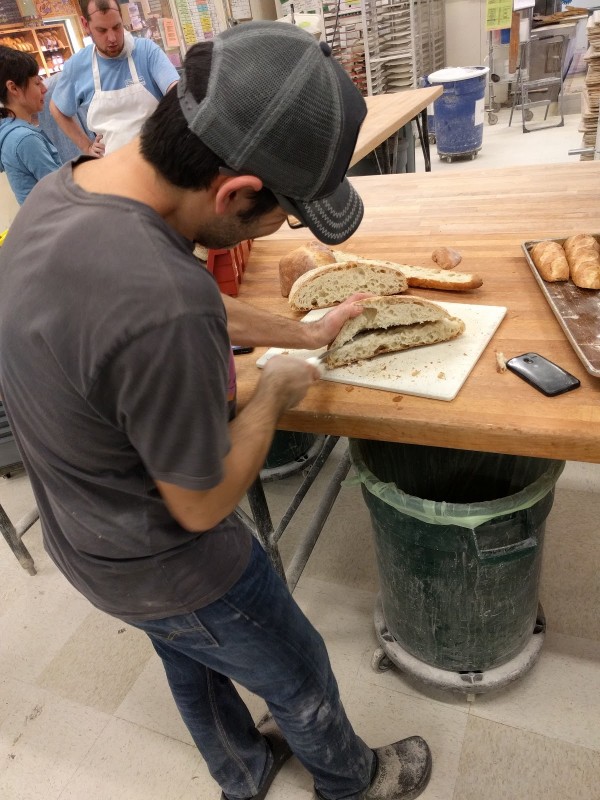
The result is a delicious bread, representing the foodways of the American past and the magic of naturally leavened bread baking. A bread for days, if it will last that long… comfort food to the nth degree with every bite. Our Roadhouse restaurant has wonderful, delicious staples as well as changing specials, energetically honoring the American food culture and what is in season. To me, the food is luscious, joyful, accessible and comforting, and the Roadhouse Bread symbolizes just that. As I write this, I can smell the dark, slightly crunchy crust, reminiscent of grilled corn, maybe a bit smokey, and feel its chew against the tender, sweet and somewhat grassy smelling crumb, slathered with butter. The balanced fruity sour comes in to play against the deep sweetness from the molasses and the dark crust; while the crumb, with added moisture from the mush, easily gives into your bites to reveal its pleasantly grainy texture from the cornmeal. The savory factor is full on. Period. You are salivating for more. It is a multi-dimensional experience, in the moment as I am eating it, and now, as I think about it. That is the effect of the Roadhouse Bread on me: that I can transport myself to the restaurant, I can imagine what it feels like eating it and try to put it into words. It is worth every bite, and I have a strong hunch, the early settlers felt the same when they ate this bread after a day’s hard work.
by Hazim Tugun, Bakehouse
The post Comfort Me With Bread appeared first on bake blog.
]]>