The post All Roads Lead to Megan Phillips Goldenberg appeared first on bake blog.
]]>Sourcing within the state of Michigan is uniquely advantaged because agriculture in our state is so richly diverse. In fact, as a state, we are second only to California in terms of the diversity of what we grow here. Of these myriad things we grow, a lot of them are apples. Our state’s noteworthy agricultural stats also include being third in the nation for volume of apple production. Given all them apples, it makes sense that, like our current whole grain rye source, Molly, I first bonded with our current oat source, Megan, over apples.
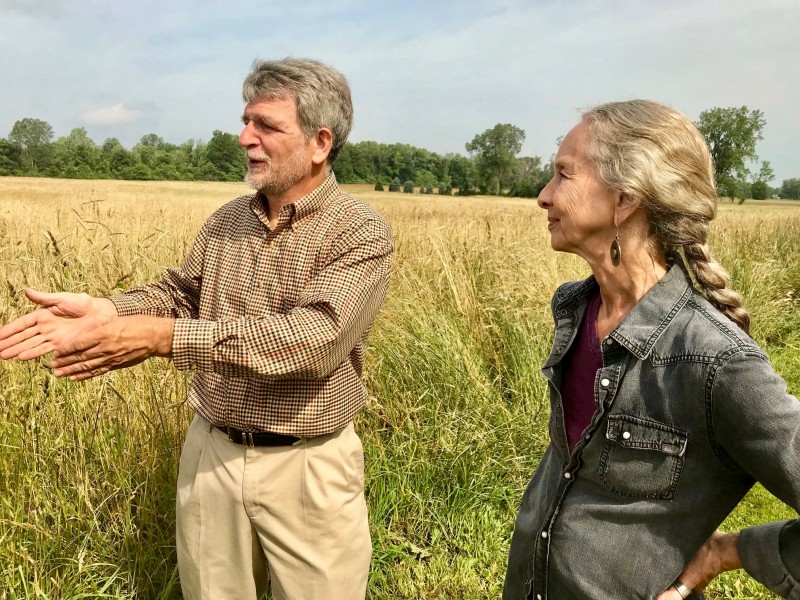
The Bakehouse had become acquainted with her several years earlier, in 2014, when she met founding partner, Frank Carollo. I personally was connected to her by Bakehouse baker and miller, Hazim Tugun, who met her in 2017 when he went to an oat field walk she was putting on that he had heard of via Instagram. This connection between Megan and the Bakehouse has been growing ever since then and serves as proof that sometimes scrolling bears fruit and serves its highest purpose as a tool that facilitates connection surrounding shared interests and goals. I tend to be a few steps behind Hazim; I just got my very own ‘gram a few weeks ago and didn’t meet Megan until the summer of 2018. As you now know was statistically likely, we met at an apple orchard and one that I had been to before as part of a project for an agroecology course. The orchard was Plymouth Orchards, owned by Mary Emmet and Mike Adsit, a gorgeous organic apple orchard, cider mill, and semi-experimental grain haven thanks to Megan’s vision and Mike and Mary’s service-oriented farming philosophy and insatiable curiosity.
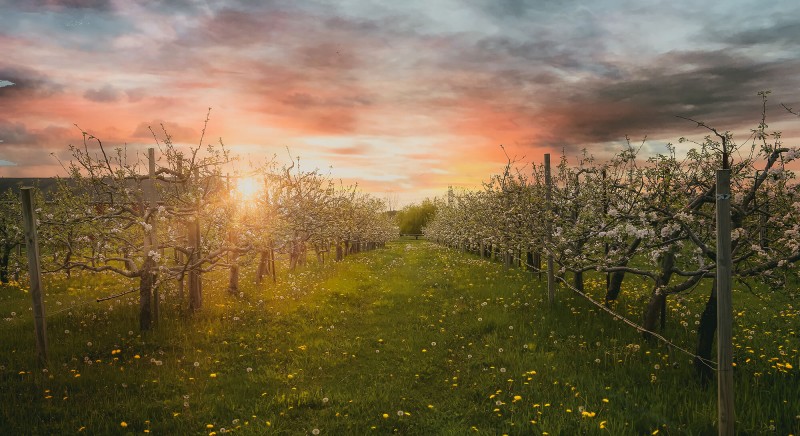
Just as many of my grain sourcing connections come back to apples, many an inquiry into Michigan grain will eventually lead back to Megan. When I began working to expand our regional, whole berry grain sourcing to feed our new stone mill last year, I reached out to many an extension agent and our conversations would all end the same way—you need to talk to Megan Goldenberg. Megan is the owner of multiple businesses, working in food systems advising for clients across the country, craft malting, grain cleaning and processing for direct to consumer markets, and grain brokering to feed these ventures and other businesses across the midwest.
In our recent blog posts and at our recent events, we’ve talked a lot about working to rebuild a less centralized, more regional grain economy both out of self interest—so that we can get the grains we want to work with grown in ways that meet our standards, needs, and values—and out of concern for our community who needs robust regional grain economy to achieve the kind of food sovereignty we ultimate hope all communities can experience. To do this we’ve been breaking away from our reliance on very centralized, industrialized flour sources. This process leaves a gap in our food supply chain that requires new connections to function. Megan has played an important role in filling that gap. Less like a link in a typical supply chain, Megan serves more like a hub, a driver of a more circular food system. To the Bakehouse, she is a source of ingredients that align with our values and a connection to ever-better grains, to the community as a whole she is this metaphorical hub that allows local businesses like ours to be part of a greater wheel. A wheel that is turning a regional food system, a simple but powerful machine transferring force and moving us all forward.

It is the depth and breadth of Megan’s academic past that both led her to this role and lent her a particular capacity to spot gaps in the food system and to strategically leverage our existing structures and tools to build new things. She  earned a Bachelor of Arts degree in Chemistry, and then went on to earn a Master in Agricultural and Resource Economics degree from Colorado State University. While working on her graduate degree, Megan began her first venture, The Growing Project. The Growing Project functioned as a non-profit seeking to support a just, localized food system in Northern Colorado through education and advocacy. In 2010, she expanded her food systems development work and began the consulting firm, New Growth Associates. While continuing her work in consulting, in 2015, she and her husband, Zach, founded Macon Creek Malt House with the goal of adding value to Michigan small grains. This business both aggregates and processes grains. Processing can be as simple as cleaning and selling raw, ready to use, oats and grain berries or as involved as malting barley for beer brewers.
Processors like Macon Creek play an important role in functional local grain economies that allow niche grains to be cleaned in custom ways and with a match of scale. Malting as a process more specifically is key to elevating the craft beverage industry that Michigan is so well known for. Without processors like Megan, it can be difficult for farmers that aren’t growing commodity wheat to find places to have their grains cleaned and local craft beers have to rely on more industrial malts that don’t align with the rest of their craft process and philosophy. Despite this need, it can take time for end users to adjust their business models to absorb higher priced, higher quality ingredients and this lag between demand and willingness to pay meant that the malting part of her business needed to pivot. Though it remains under the name Macon Creek Malt House, Megan’s business now functions more as an Upper Midwest grain hub / non-commodity grain brokerage firm.
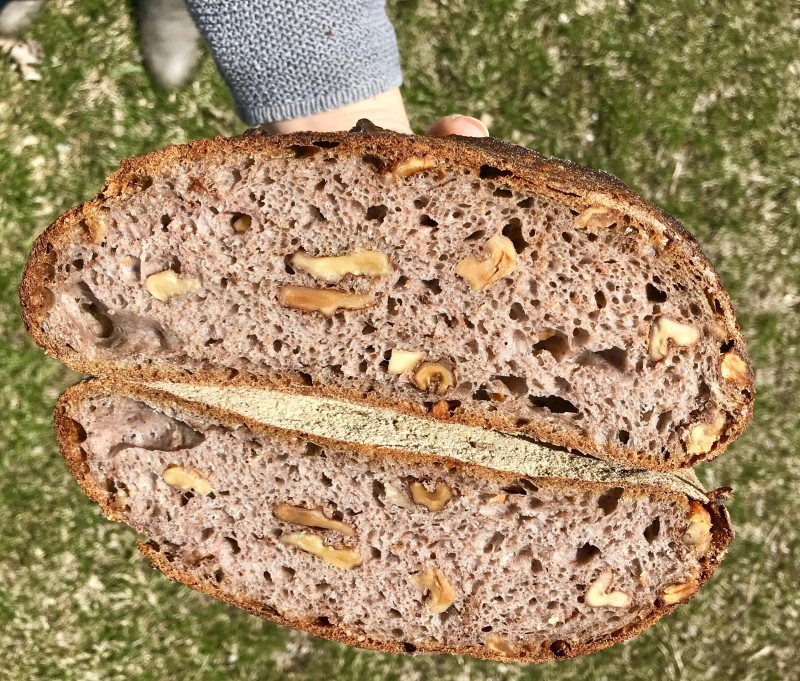
The various manifestations of Megan’s work impact us here at the Bakehouse both directly and indirectly. Directly, Megan provides us with ingredients we bake with and flours we retail in our Bakeshop. Indirectly, it supports growers that we work with and helps their farms to flourish, ensuring they’ll be around to supply us long term. Since last summer, we’ve been using her rolled oats in our baked oatmeal, and Country Scones. The oats are certified organic, raw rather than steamed, milled fresh to order, and grown here in-state by Roger Kiger in Elsie, Michigan. More recently, we’ve switched to using these same oats in our Big O cookies. Not only do we believe these oats to be the most sustainable available, with the elimination of high heat processing common in industrial rolled oats, but they are also more flavorful and nutritious, too.

Less directly, Megan has provided the Bakehouse with great ingredients by connecting us to other processors across the Midwest. Namely, we met Harold Wilken, owner of Janie’s Farm and The Mill at Janie’s Farm in Illinois, through Megan. Our warthog wheat, used in our new fougasse and our holiday demi-baguette wreath, also came to us from Harold. You can find delicious, certified organic bread, cake, and pastry flours blended by Harold in our Bakeshop. Megan’s grain-centered friendship with Harold has led to their newest business plan—expanding Harold’s local grainshed to a more regional scale that includes us. This essentially means supplying freshly milled flour from Harold’s mill to bakeries across southern Michigan and then back-hauling Michigan-grown grain berries to be milled by Harold at The Mill at Janie’s farm in Ashkum, Illinois. The plan is elegant in its efficacy, it means the truck is full both ways, allows Harold to more consistently feed his mill, and gives Michigan bakeries access to a less centralized, industrial flour source that is freshly milled, certified organic, and sourced regionally.
As we enter our third growing season working with Megan, we feel grateful for all she does. Trailblazing is more effective and fun when done with friends and we feel happy to be sharing a path with such a determined and pioneering fellow grain lover. Come try a cookie, a scone, or some fougasse to celebrate this collaboration and taste the sweet rewards of our partnership with Megan!
By Hailey Schurr
Bakehouse Sourcer-ess
Photo credits: Plymouth Orchards (1), Megan Phillips Goldenberg (2 & 3), Antonis Achilleos
The post All Roads Lead to Megan Phillips Goldenberg appeared first on bake blog.
]]>The post Supporting Great Grains with Dr. Stephen Jones appeared first on bake blog.
]]>
Jones is a plant geneticist at Washington State University, where his research focuses on wheat breeding. He also serves as a professor in the Department of Crop and Soil Sciences and as the director of The Bread Lab. Stephen is well known in academia and industry alike for being an expert in his field; is credentialed by degrees, professional experience, and the status of tenure; and is well funded by an endowed fellowship—he’s basically the textbook picture of success as a scientist. Stephen, though, is much more than a successful scientist. Particularly through his work at The Bread Lab, Stephen provides a model for food systems transformation, inspiration to scientists looking to serve their communities, and a technical framework for biological research that supports local economies. Perhaps most impressively, in his work Stephen tells a beautiful story that can help us move from industrial, commodity agriculture, which dominates our food systems today, to less centralized food webs that are refocused farming for just that, food.
When I picked him up, we bypassed small talk, did not pass go, and immediately began deconstructing the role of hubs like The Bread Lab in scaling out agroecological farming and the role of businesses, like Zingerman’s, in making these hubs as functional as possible.
A cool 15 minutes and a PhD thesis’ worth of theories to test later, we met up with Amy Emberling, managing partner of the Bakehouse, who toured Stephen around our facilities. We wound our way through the Bakehouse, from pastry scaling to the cake department and pastry production, ending up at our new mill, where we connected with baker and grain nerd, Hazim Tugun. You haven’t toured the Bakehouse until you’ve got the tell-tale flour on your nose from smelling our freshly milled flour. Stephen pulled each close to his face, hovering them right under his glasses. As part of this ceremonious meeting of our grains, Stephen was holding a handful of Molly Breslin’s rye and pointed out that the rye grains were relatively small, signaling to him that they were bred with cover cropping in mind, not food. Tiny rye kernels aren’t inherently a problem; they just mean there is room for improvement. With selective breeding, the farmer could get more out of her plants and we could get more out of the resulting grains of rye. This exemplifies Stephen’s overarching goal—arriving at improved grain lines by breeding for food, and breeding for farmers, rather than breeding for agriculture and for commodity traders.
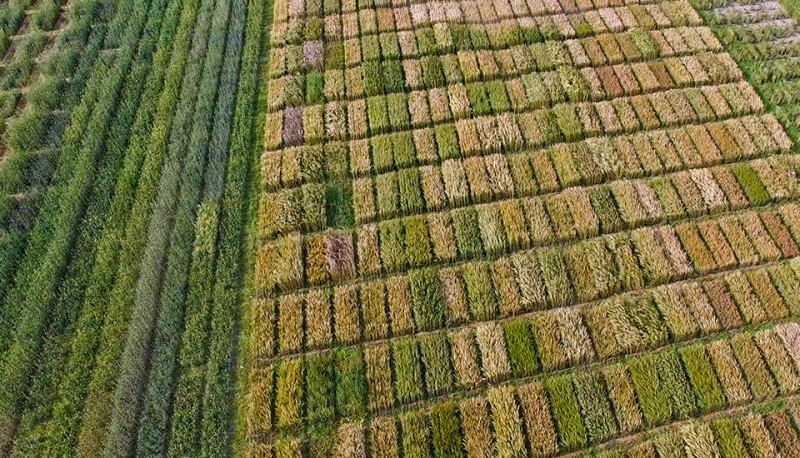
Stephen is so good at breeding for food precisely because he spent decades breeding for commodity systems. He saw what was being lost because of the commodity approach, which is characterized by yield at all costs, reliance on agrochemicals, loss of farmer agency over seed saving and grain price setting, and the bleeding of grains’ value from local and regional food systems. Stephen grew tired of supporting this system. So, he decided to take back grains as a food and to take back science as a means of supporting farmers instead of big business. This cost him his role as commodity wheat breeder and the six-figure salary that went with it. Washington State University is very invested in supporting agriculture that supports big business, as is the case with most land-grant schools.
Stephen describes himself as a terrible businessman because he does not patent any of his grain varieties and gives the seed away for free. Good for food justice, bad for profit. This approach is just one of the many things that distinguishes Stephen’s research from that conducted by companies like Monsanto (Bayer). Another point worth clarifying is that Stephen doesn’t engineer transgenic grains; he just uses human selection (much like natural selection) to breed for desired traits. Basically, he impacts the grains’ DNA like evolution would in the wild, not like Monsanto does via techniques like gene splicing in a laboratory; just good old fashioned plant reproduction.
Over fried chicken and mashed potatoes at the Roadhouse, Stephen recalled other noteworthy visitors he’s hosted and trips he’s been able to take as the Bread Lab has captured more attention internationally. He has been visited by Yvonne Chaunard and Bill Gates, and been a guest at the White House and in the home of the owner of Bruichladdich Scotch. The famous distillery requires its barley to be sourced exclusively from the little island of Islay, Scotland. The challenging nature of sufficient barley production on a tiny island is how an American geneticist ends up sipping Scotch from a CEO’s personal collection on the Hebridean isle—in order to consult on how to effectively grow Islay barley production in ways that don’t sacrifice quality or sustainability. This is one of the things I find most refreshing about Stephen’s approach: in a world full of incredibly polarized and polarizing discourse, he eschews the idea of all or nothing and breeds for yield, but never “yield at all costs.” Today’s media avoids dealing with complexity that accurately reflects reality, I believe, because they think dichotomies are more sensational and attention-grabbing. In turn, they’ve trained us to deal less in complexities in our work, our eating, and our decision making as well.
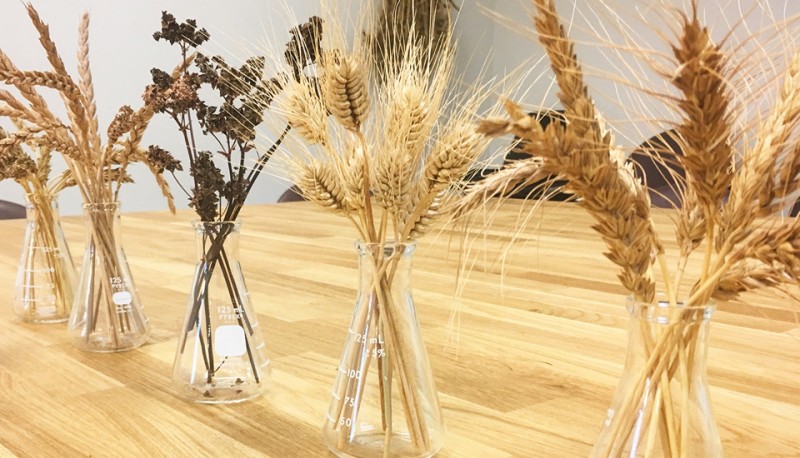
The way Stephen has captivated both some of the most powerful people, the companies and institutions they represent, and his rural community in Northwest Washington, betrays a global capacity and readiness to deal with complex co-goals and nuanced solutions. We see what is working, what centralization and agronomy and land grants have provided, and what they have taken that we want back. Stephen invites us to retrace our steps and stop at the peak of the optimization curve, not return all the way back to the starting point. Stephen uses his own archetypal hero’s journey to tell a story about wheat breeding that complicates the middle ground. In ecology, another way to think of complexity is diversity, and another way to conceptualize an ecosystem’s diversity is its richness, a richness that can support a whole movement from consuming globalized agriculture to eating regional food.
I left the Roadhouse, after lunch, toying with the idea that another favorite scientist of mine, Helda Morales, would probably term the storytelling that Stephen weaves his work together with a type of “mobilizing discourse.” Mobilization was exactly what I saw at our informal community coffee date later that afternoon at the Coffee Company. In attendance were bakers, farm owners and managers, maltsters, grain brokers, and grocery store owners, all from the Ann Arbor area. When asked by the group about his vision for change, Stephen emphasized his desire to spend his time and energy creating an alternative food system, rather than fighting the powerful players that perpetuate the broken one we find ourselves in. Early in his career, his strategy included more direct opposition to Monsanto, an approach he didn’t find effective, saying, “I stormed their gates with a torch in hand and when I turned around, no one was behind me.” Instead of fighting, he now focuses on providing an alternative breeding program and seed source and allows people to come to him. He explained to us that Monsanto and other large corporations are built to fight, and he just isn’t. He doesn’t care to fight for changes in corporations, or in government, or even to be heard. In an ultimate demonstration of the power of this philosophy, his current major funding sources have all approached him instead of him going to them. Stephen also emphasized his belief that each region should be well supported by public servants, like himself, that can link grain growers and grain end users with the resources and information these relationships need to be successful.
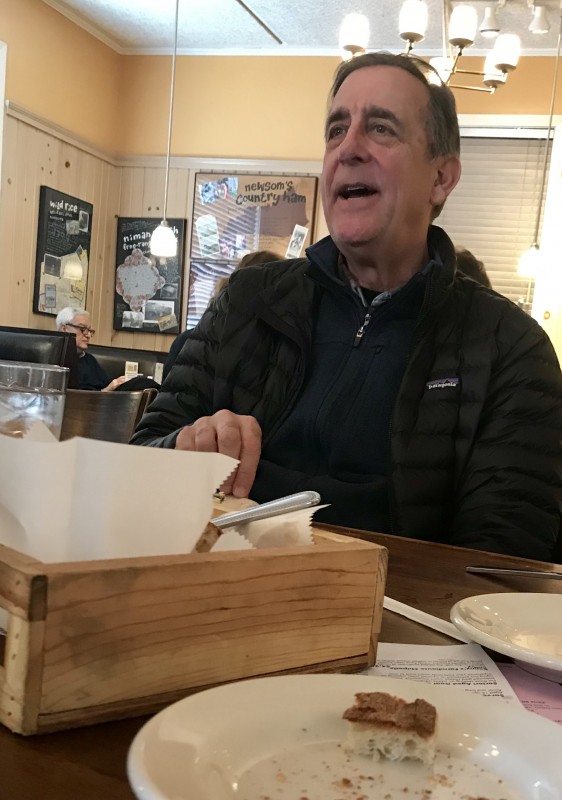
Environmental and socioeconomic conditions are different here in Michigan than in Washington, and though The Bread Lab provides great proof of principle, we need our own context-specific data and seed to be truly successful. To this end, the Bakehouse is partnering with master’s students at the University of Michigan and Nature Nurtures Farm to set up Bread Lab-inspired research that will help farmers and bakers better select grains that meet everyone’s goals.
After coffee came the main event: Stephen’s presentation on local grain economies. What struck me most about his talk was its focus on beauty. This was surprising to hear as was his reference to one of his PhD student’s thesis chapter called, “The Sound of Wheat,” and the fact that he ended the talk with an image of a Chagall painting. Maybe this kind of tenderness towards your work is what is possible when you spend your time building instead of fighting.
The night before his talk, over dinner at Miss Kim’s, Stephen divulged that his favorite grain was buckwheat. When asked why, he told us that he is fascinated by the perception of the plant globally—in some cultures it is stigmatized as a food for the lower classes while in others it is traditionally featured at royal weddings. He explained that it is often planted as an emergency crop and is beloved by starving bees in late summer. He names his wheat lines with the same careful, yet almost whimsical, consideration. His is a consideration that acknowledges the chance to add a layer of meaning, of poetry, and he does so with joyful reverence. The first wheat he ever named he called Xerpha, after a former botanist at WSU who cataloged plant species that would be lost by the flooding caused from building dams, loss caused by progress. Stephen came to know about her when a photo of her in her wedding dress fell out of a book he was referencing. A fitting woman to honor in his own quest to understand what we’ve lost in the name of progress at any cost.
Our visit with Stephen brought into focus, for us, what a more robust grain economy could look like here in southeast Michigan, the philosophical and scientific frameworks that might best guide how we get there, and who we still need to bring to the table to see real and lasting changes. This is a journey we’d already begun at the Bakehouse, long before my arrival, and that we are committed to continuing. In a kind of beautiful balance, this far-away friendship with Jones gives us the solidarity and modeling that allows us to take the next step in deepening the community right in our own Midwestern backyard, to move from sourcing that relies on big, globalized companies to big networks of cooperation and connection that unite us all.
By Hailey Schurr
Bakehouse Sourcer-ess
Photo credits: The Bread Lab (1-3), Sara Hudson (4)
The post Supporting Great Grains with Dr. Stephen Jones appeared first on bake blog.
]]>The post A Regional Grain Shed Being Transformed appeared first on bake blog.
]]>Food has close ties to geography, speaking magnitudes about the history and ecology of the land, as well as the personal and shared pasts and daily experiences of its people. These ties are an enriching part of travel and a grounding element of our lives at home. Unfortunately, this regionalism and seasonality have been greatly disrupted by the homogeneity of the industrial food system and the global economy. Luckily, the local food movement is regenerating these connections in ways that both honor tradition and history and reflect modern concepts of conservation and cultural globalism.

From craft beer to local wine to fruits and vegetables at the farmers market, much of Michigan’s local food economy is going strong. However, grains remain an underdeveloped aspect of the movement here. Grains that more closely and richly reflect the land and the society on it are a key, but often overlooked, part of robust local foodsheds. (Watersheds are used to describe where a region’s water will eventually terminate, and it is from this concept that the newer idea of foodsheds draws their name. A definition of foodsheds is “the geographical area between where food is produced and where the food is consumed.”) The area between you and where your grains grow is probably vast and in many cases untraceable due to the grains being mixed and combined during the cleaning, storage, and milling processes. Participating in the rebuilding of this rich topography is a foundational piece of our grain work at the Bakehouse.
Currently, most grain grown in Michigan is soft winter wheat used in pastry flour. Of the soft red and white wheats here, most are hybrids bred by Syngenta for very broadly regional yield performance, rather than locally adapted varieties. Most wheat is grown as part of a conventionally-managed corn-wheat-soy rotation where the harvest is taken to a grain elevator and mixed. This has worked well for many generations giving the public what we wanted—consistency and low cost due to high yields. Flavor lost rank as a key criterion many, many decades ago. It is just recently that people are looking for traceability and regional varieties with unique flavors.
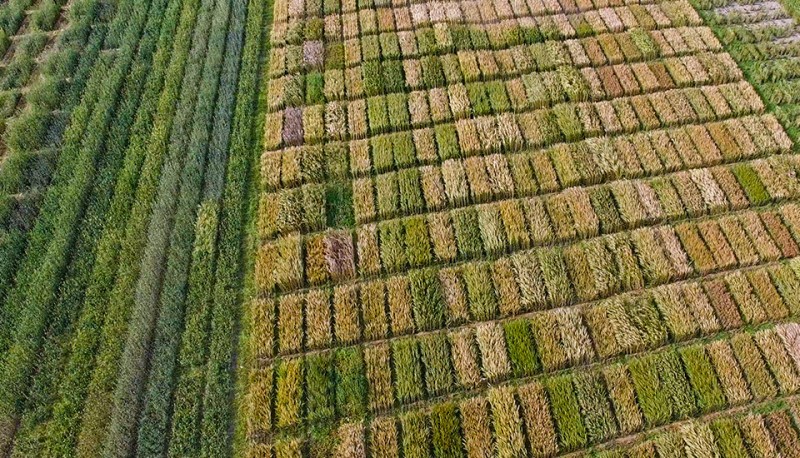
It wasn’t always like this. Historically, Michigan was a fertile grain growing region where many varieties of wheat, rye, and barley could all be found in abundance. Based on this history, we know it is possible to grow more varied grains here, but locally acclimated seeds are hard to come by and best practices for growing and baking with them need some serious updating.
Now that consumers are interested in named grains with unique qualities and traceability, the grain system and the players in it are adjusting. It’s a massive change on many levels which will take years to be fully realized because it reflects a complete paradigm shift from a commodity market to a more specialized market. New economic systems and infrastructure need to be developed and new skills need to be learned along the entire supply chain. This process of change will move more quickly if we, end consumers and food makers, can demonstrate a demand. If we do, markets full of diverse local grains could be just a few growing seasons away.
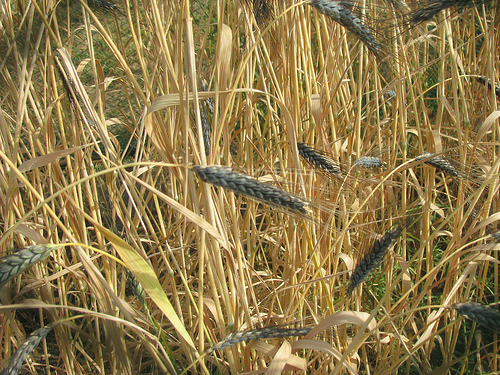
We are particularly inspired by the work being done to foster regional grain sheds in Washington and New York and the way these states are regaining and reimagining local food systems. Washington state is home to the Bread Lab, run out of Washington State University and directed by Dr. Stephen Jones, who will be visiting us and giving a “brown bag talk” at BAKE! on March 7th, 2019. This lab conducts genetic research and wheat breeding aimed to provide farmers, craft processors, and consumers with flavorful and nutritious wheat varieties that yield well for farmers and are suited to sustainable, organic growing methods. This type of work is foundational to building a new grain economy that works for everyone involved along the supply chain.
Crossing to the other side of the country, GrowNYC’s Greenmarket Regional Grains Project has been working for over a decade to bring regional grains to their farmers markets. The initiative began by requiring bakers participating at Greenmarket farmers markets to use at least 15% local grain in their products and has evolved into more broad grain supply and distribution work and partnerships with Cornell’s Small Grains Breeding and Genetics program.
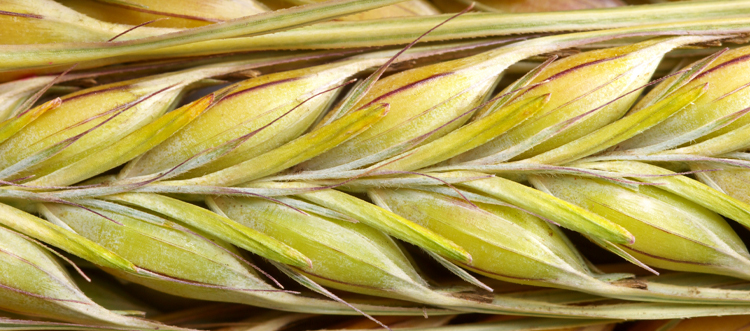
The work at the Bread Lab and GrowNYC offer frameworks for us to use in our own unique community. The exact trajectory this will take for us and others in our area remains an exciting mystery. By their very definition, food systems are context dependent and it leaves us daydreaming about their manifestation here. We are currently working towards partnerships with institutions like Michigan State University and the University of Michigan to test grain varieties’ growing capacity and baking performance in our unique area. We are also working with the many other farmers and millers in our community who are engaged with this project. A transformation of this size takes many individuals and institutions approaching the challenge from different perspectives and with different skills and resources.
What would a grain shed that tells the stories of the midwest and of Michigan look like? Right now at the Bakehouse, it looks like our True North bread with wheat grown on the Leelanau Peninsula and milled by Bill Koucky in Traverse City. It looks like cookies and scones made with freshly milled, whole grains grown in Eaton Rapids by the Ferris family and in Caro, Michigan by the Vollmars. It looks like rye breads made with grain from Molly Breslin of Breslin Farm in Illinois, Celebration Wreaths made with warthog wheat grown by Harold at Janie’s Farm, and baked oatmeal from Michigan oats from Megan Phillips Goldenberg of Macon Creek Malthouse. The list is ever evolving and growing.
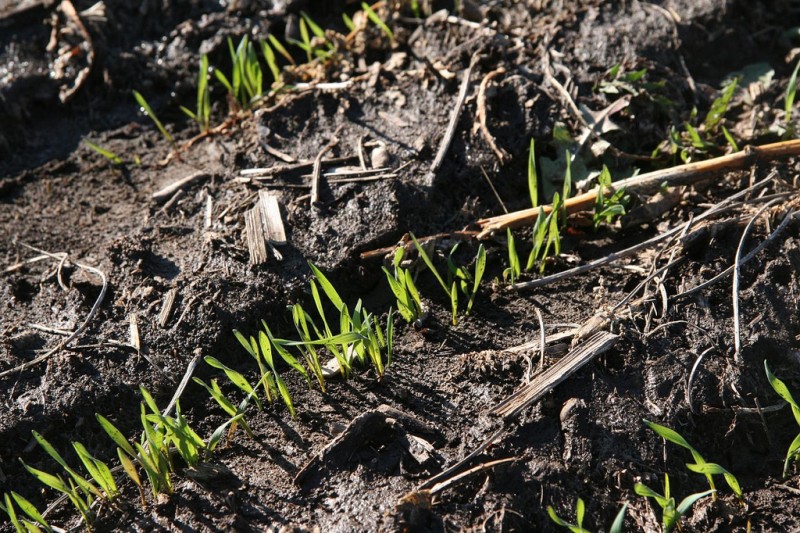
It also looks like our latest farmer collaborators, the Luckhardt family’s January wheat fields in Saline, which to be honest, mostly look like dirt. But if you look closer, crouch down a bit, the field is full of row after row of tiny green shoots that have been up since this fall. They look like brave little blades of grass and we have plans to make you bread with their grain come next summer. If you squat down closer still, maybe you can even hear some of that storytelling food has been known to do. Maybe you can hear the story of us.
By Hailey Schurr, Bakehouse Sourcer-ess
Photos by the Bread Lab (1st & 2nd), GrowNYC (3rd), Macon Creek Malthouse (4th), and Molly Breslin (5th)
The post A Regional Grain Shed Being Transformed appeared first on bake blog.
]]>The post Molly’s Rye appeared first on bake blog.
]]>
Across the local food discourse, from the ecological and sociological literature to foodie memoirs, 100 miles is often used as the boundary that divides local food from everything else. Here at the Bakehouse, we are some 300 miles from where Molly grew our rye berries. This rye might not meet the somewhat polarizing textbook definition of “local,” but we believe other metrics measure local, too. For us, the most compelling aspect of “local food” is the ability to know more about the way something is grown and the farmers that grow it and to be in a real relationship with those important and too often undervalued people. This component of localness knows no exact geographical boundaries and can be engendered in surprising ways. The midwest growing region spans much more than 100 miles but is its own small world. After talking to Molly, we almost immediately discovered that the apple orchard, Earth First Farms, where she worked for 5 years, was also one of the study sites in my master’s thesis. Talking on the phone with Molly, I immediately felt a closeness to her and, even without a shared professional past, I think you would, too. After all, three hundred miles are nothing when we find someone with a commitment to sustainability, mastery of craft, and love of baking that are so closely aligned with our own.
In fact, when I asked Molly if she liked to bake, she informed me that it was actually her lifelong love of baking that inspired her to become a grain farmer in the first place. Much of her family folklore is centered around baking, and she vividly recounted for me the legend of her father’s grandma baking German sourdough in a big roasting pan, carving the huge loaf right at the table, and then using the knife to stab and fling the slices to the awaiting family, piece by piece. Foreshadowing her eventual career, Molly’s dad, John Breslin, returned to these baking roots by crafting his own sourdough starter shortly after she was born. Molly grew up to love baking and had long been committed to buying local and organic fruits and vegetables but was unable to find similarly sourced grains. So, like the start of so many entrepreneurial adventures and heroines’ quests, she decided to do it for herself.
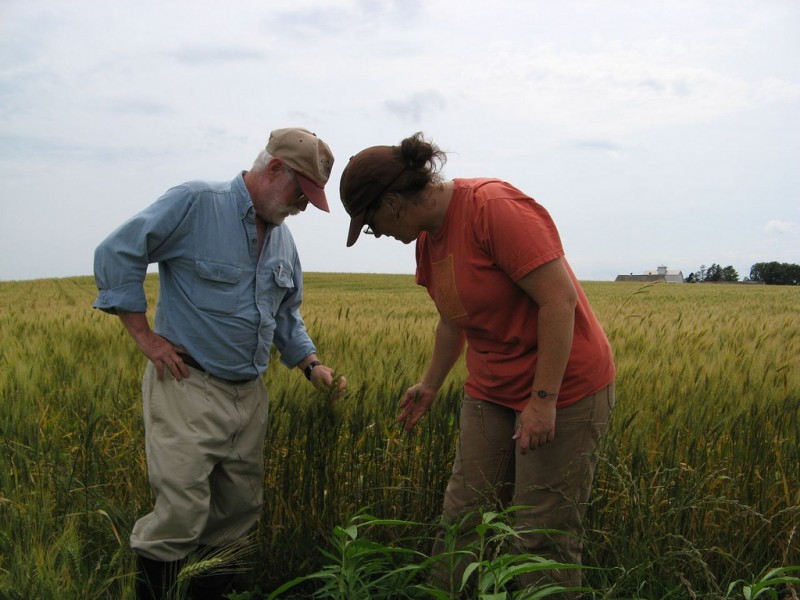
This self-reliant spirit serves her well in a male-dominated field, no pun intended. As destiny would have it, the land she now farms belonged first to her mother’s family and is a matrilineal legacy over which Molly presides. Though the 100 acres of land came from her mother, Peg, she has worked closely to farm it with her father, John, since 2010. Molly admits this aspect of their father-daughter relationship has not been without its challenges. She attributes some of the initial friction to very different leadership styles—she gained many of her interpersonal skills from housing co-operatives in college, while he learned how to navigate teamwork while serving in the U.S. Army. Nine years later, these differences have been resolved and John is known for deferring to Molly with a good-natured “it’s your farm, I just work on it.”
Beyond navigating this father-daughter dynamic, being a woman in a typically male role, at least in recent history, comes with some additional challenges. For example, there are no bathrooms out in the field and no maternity leave when you’re self-employed, which can put a lady into some literally and figuratively uncomfortable positions. Oh the glamor of womanhood! To any new farmer moms out there, Molly recommends a hand pump because, and I quote, “I started using a hand-pump to pump breast milk because it was more versatile—I could pump with one hand while checking the oil, scouting for bugs, or operating the combine.” In other words, Molly is an intrepid pioneer. Though requiring some multitasking, Molly believes the very distinctiveness of being a woman who farms actually allows her to more easily deviate from farming norms and do as she pleases. With no preconceived notions or expectations about how a woman farmer does business, she feels her traditional community is less shocked or bothered by her organic methodology and commitment to somewhat unconventional agricultural priorities than if she were a man. While the freedom to do her own thing is appreciated, she does question whether it hampers her ability to lead by example and convert her neighbors to organic farming.
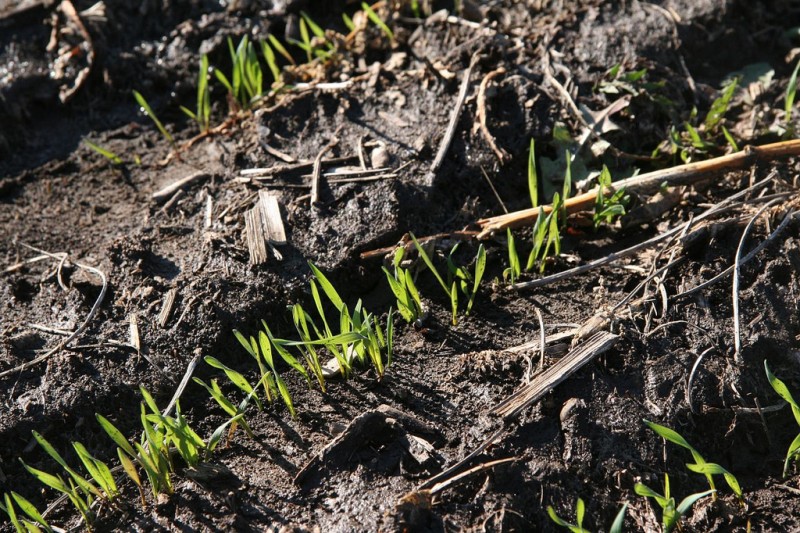
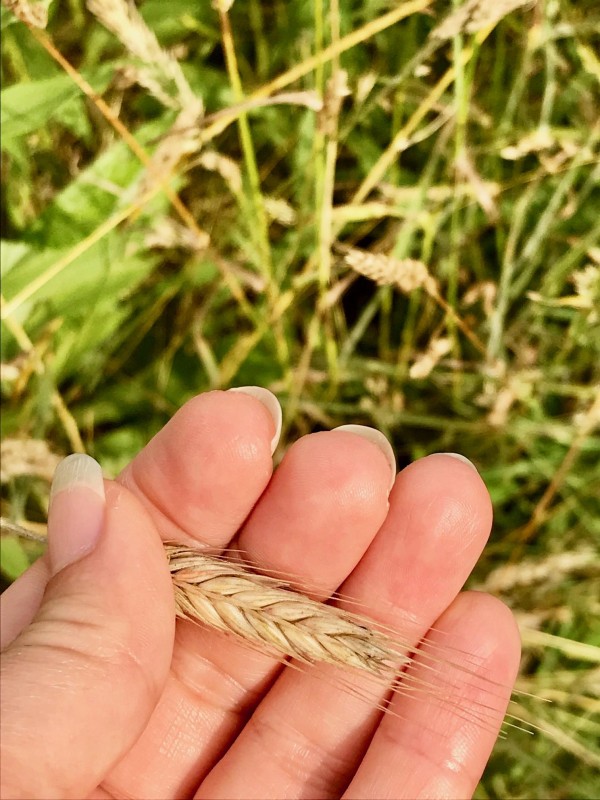
As an organic farmer who has never considered farming conventionally, something we especially appreciate about Molly is that soil regeneration is central to her agricultural philosophy and game plan. Everything she does starts from the proverbial ground up and when asked about her management strategy, she responds immediately with a firm and elegant motto: “soil health is plant health is people health.” To this end, her first crop year was black beans to prep the soil for wheat, build organic matter, and fix nutrients. Ever since then, the entirety of her management strategy is truly predicated on this assertion, with her hands-off pest management made possible by plants that are healthy enough to fight pests for themselves. Rather than spending time, energy, and money defending plants from insects and fungus, Molly focuses her resources on achieving healthy soil. She does this primarily by maintaining a 3-year crop rotation, cover cropping, and frequent soil testing paired with very small and targeted nutrient additions. Of the crops in this 3-year rotation, rye is usually the most reliable and low maintenance. The type of rye we received from Molly is VNS, an acronym that stands for “variety not stated.” Using VNS rye allows seed to be saved each year without any legal issues. This is important for many reasons, not least of which is that it means they’ve grown their seed stock up over several years so it’s biologically acclimated to Ottawa, Illinois, and represents a flavor unique to their location and management. Seed saving and grain terroir go hand in hand.
Because of this terroir, this particular rye’s flavor tells a story. It represents the taste of years of seed going straight into the northern Illinois ground without tilling, coming up in the fall through richly built organic matter that it will hold onto through the winter, flowering in the spring with heads that Molly says look like shiny purple fish scales, and will be pollinated via the wind, and spending the summer drying down in the field. This rye is the taste of Illinois, of organic methods, of diversity in farming, of a baker who got her hands dirty, of local food. We think it is a tale as delicious as it is intrepid and savoring of kismet, we are proud to use it for our freshly milled, whole grain rye flour. If you haven’t tried it yet snag some Roadhouse bread; Jewish, Onion, or Caraway Rye; Pumpernickel; Country Miche; or Vollkornbrot. Check our baking schedule for availability.
By Hailey Schurr
Bakehouse Sourcer-ess
Photos by Molly Breslin
The post Molly’s Rye appeared first on bake blog.
]]>The post Flour, Water, Salt & Sweating the Small Stuff appeared first on bake blog.
]]>• Organic wheat flour
• Water
• Whole wheat flour
• Sea salt
Farm bread? Organic wheat flour, water, whole wheat flour, sea salt. Rustic Italian? Organic wheat flour, water, sea salt, and yeast. Sensing a pattern? With ingredient lists this short, how do we make our breads so exceptionally good, you ask? So unique? So different from each other? Largely, our process. The secret to our bread is in the way Amanda mixes, the way Isaac feeds the starter, the way Makha shapes the dough, the way Ellie steams the bread in the ovens. Our breads are also set apart by our focus on the ingredients themselves. By volume, this primarily means focusing on quality flour.
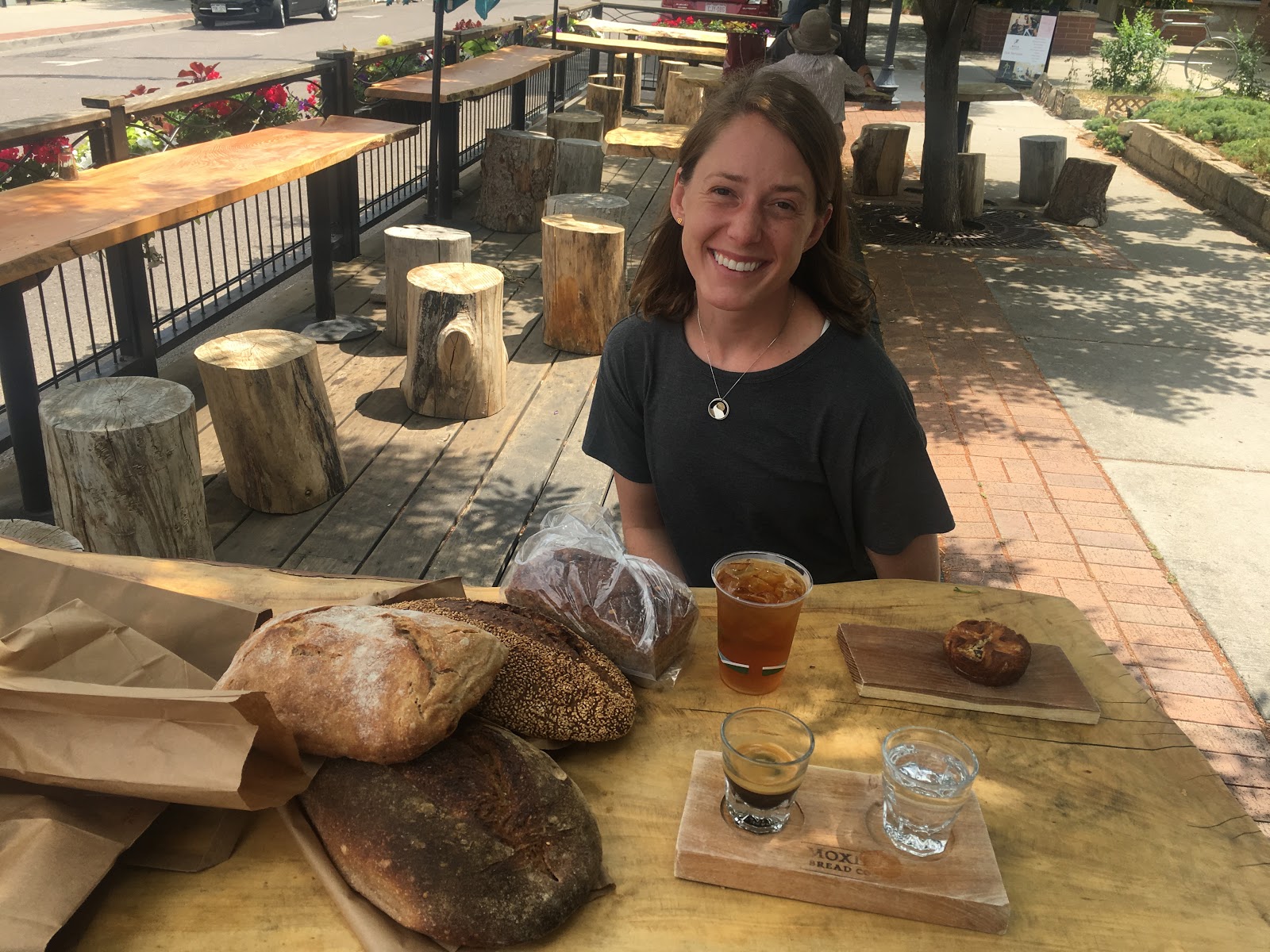
On a weekly basis, we use roughly 20,000 pounds of flour—and we’re open every week of the year. Our most important metric of quality is taste. Elements of taste and texture come first, but we prefer that they don’t come alone. Finding flour that brings more to the literal and proverbial table is a constant quest at the Bakehouse. These million pounds of flour annually provide an opportunity to address many of our goals and values at once, in a way that is far more impactful and efficient than if we addressed them each separately. In ecology, we call this “optimizing synergies.” By switching to organic all purpose flour in 2017, we decided we wanted our bread to be delicious and better for your health and better for the health of our planet. Since then, the organic bread flour we have been using is great. It is also produced by the world’s top revenue-generating food company and the largest private company in the US. This isn’t necessarily bad, but we thought our flour could align with our values even more closely. Though not a highly encouraged trait in the personal development sphere, sweating the small stuff is part of our vision and I believe that, when it comes to your craft, it can lead to awesome things. Awesome things like exploring the high desert, looking to switch from great bread flour to something even better.
More specifically, this July, Bakehouse founder Frank Carollo and I journeyed west to spend a few days in Colorado with Bay State Milling to get to know them better before we switched to using their flour. My only other trip to Colorado involved both a slightly terrifying moose encounter and throwing myself down mountains strapped into torture devices a.k.a. skis. (I’m from flat Northwest Ohio and I do best on well-glaciated land.) Luckily, the high deserts of Colorado in midsummer are much more my speed and are also pretty conducive to organic wheat farming. Unlike wet and humid Michigan, weeds are much less problematic in drier places and herbicides and fungicides are less of an agricultural necessity.
When we arrived in Loveland, we met up with Jeremy. He is from Wichita and used wonderful turns of phrase like “anything trip your trigger?” while we drove around searching for a restaurant for dinner. Jeremy is a sales rep for Bay State Milling and told us over burgers about their biggest customer, Little Caesars, the relatively small nature of their business compared to the larger mills in the country, his bowl-a-day ice cream habit, and his past role managing a facility that made pancake mixes. The distinctly mid-sized nature of Bay State Milling makes it a perfect fit because it can offer us the consistency of supply and “specs” we are used to, while providing a more intimate relationship to farmers, millers, end buyers, and the national food system in general.
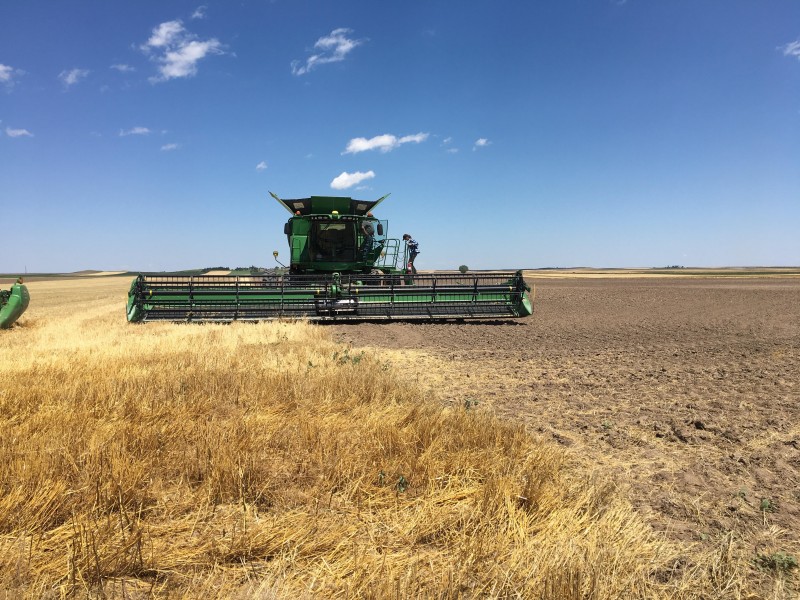
This relationship to farmers is central to my excitement about working with Bay State Milling (BSM). Most of the wheat used in our bread flour will now come from one farm. Flours are typically not single origin, they’re blended in order to hit a list of “specs,” short for specifications, that make the flour’s performance very predictable and consistent. We pay close enough attention as we bake that we can make adjustments for a range of flour attributes, but you can imagine that Little Caesars’ crust making systems, for example, have less wiggle room. Our new flour from Bay State Milling is a blend of various wheats , but it comes primarily from wheat grown on Ray Freeburg’s farm in Pine Bluffs, Wyoming. We headed there on Wednesday morning to see for ourselves, driving north a couple hours while looking for antelope and getting to know Shawn, the wheat buyer for Bay State Milling. He used to work as a grain trader and then in the beef industry. Shawn found both of these lines of work a little beyond what he wanted to stomach every day and seems to truly love serving as the link between BSM and farmers.
We arrived at Pine Bluffs to find it very aptly named. There was nothing in sight but the treed bluff in the distance and the Freeburg’s agricultural kingdom, all 60,000 acres of it. This acreage is mostly seas of grain with some islands of rangeland and a wide barn at its heart. The barn is filled and surrounded by rows of combines, tractors, pickup trucks, semis, and silos. Ray Freeburg’s family came to Wyoming as homesteaders two generations ago and literally weathered the dust bowl there. The event left its signature on the land and in the Freeburg family’s sensibilities. All along the fence lines are mounded hills from where the whipping dirt was trapped and piled high and Ray pays them tribute with his particular sensitivity to soil management, regularly adding manure from his cattle operation to his grain fields, and tilling as little as possible. These are important components of regenerative agriculture that can be ignored in typical organic systems.
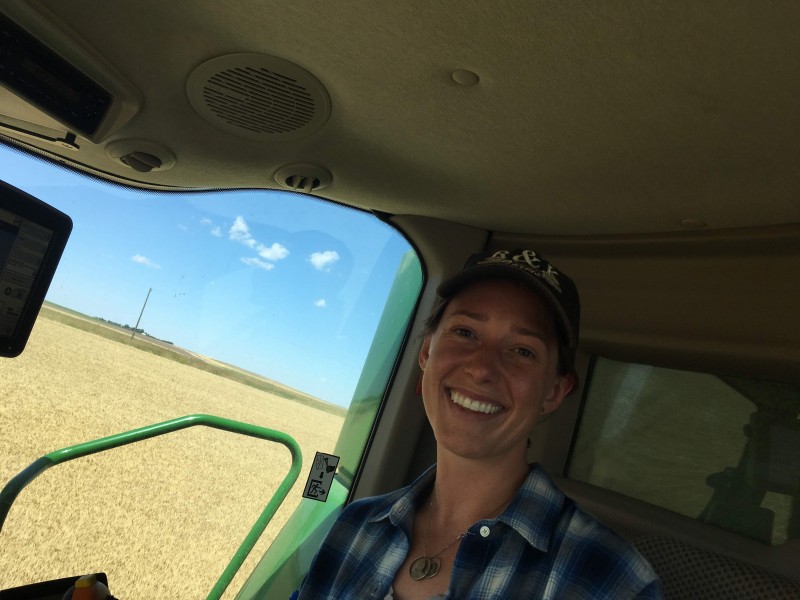
Ray’s sense of history and responsibility to the land is juxtaposed with his wholehearted embracing of technologically advanced farming. It is thanks to this embrace that when I get to drive the combine, I find myself mostly operating its computer. It is nothing like driving a car, but instead what I imagine piloting a spaceship might be like. While we spent the morning harvesting wheat in our big green and yellow space combine, I asked Ray’s son about his family’s success. As family farming declines in our country, I wonder how have they managed to grow and thrive? He attributes their success to their ongoing vertical integration, willingness to embrace both technology and risk, obsessive quality standards and record keeping, and their relentless pursuit of better even when things are good. The Freeburg approach sounded incredibly similar to ours. We also talked about the type of precision agriculture that technology allows and how this eliminates waste of various kinds. This kind of precision is important when profit margins are slim, as they are in farming, and can use land and resources more efficiently and sustainably. The Freeburg’s success has also served as proof that organic farming can be profitable and has inspired a general movement towards organic farming in the area.
Still, the size and intensive nature of the operation also present challenges ecologically. This points to systemic issues in agriculture that are outside of the Freeburg’s control. Successful, family-owned farms are increasingly rare and in order to thrive this family has relied on economies of scale and a focus on yield that precludes more sustainable and resilient, but less economically viable, methods of farming. Diversity at the landscape level is low. Cover cropping is not a priority. The list goes on—it is the subject of whole books, many research articles, and great debate. It is complicated. What isn’t complicated is Ray’s commitment to his team and Bay State’s commitment to supporting him in turn. During our quality combine time, Ray’s son also told me that what sets them apart is their skilled and experienced team of employees and the low turn over of this group. The Freeburg’s employ about 20 people and provide them with health care, retirement funds, housing and full time, year-round employment that pays a living wage. This is pretty unprecedented in an industry that is characterized by exploiting its labor force. In turn, Ray has a low tolerance for being exploited by grain handlers. He has refused to work with larger companies because of how impersonal the buying is. He spoke to me openly and often about the trust, transparency, and support he receives from Bay State Milling. Socially and environmentally, there is a lot to applaud here.
After our combine ride-a-long and lunch in the field, Frank, Jeremy, Shawn, and I headed back south to Platteville. On the way, we passed the JBS slaughterhouse in Greely and I’m reminded of an article I read in which JBS was quoted claiming that they can’t embrace the transparency becoming more common, at the demand of consumers, in the food system because people find their business gruesome. There might not be any blood and guts involved in the wheat business, but there can still be a lot at stake, unappetizing sacrifices made, and potentially grisly externalities. This is why it matters that Bay State Milling was proud to take us to Ray’s farm that Wednesday. And this is why it matters that we are excited to tell you about it now.
At the mill in Platteville, we don hardhats, safety goggles, and earplugs and stepped into what I can best describe as an above ground, landlocked submarine. It was hot and whirring and full of tubes. So many tubes! The miller studied milling at Kansas State and knows an incredible amount about the infrared sorting devices, the endless maze of sifting and re-sifting, and is impressively immune to being driven crazy by all the devices gyrating violently around him. Our new mill (coming soon!) will be much more like the romantic set up you were probably initially picturing. It is a relatively small stone mill that will evoke no submarine comparisons and allow us to use the freshest flour possible in many of our breads and pastries. We embrace both. Flour milled for us and flour milled by us, small farms and big farms, Michigan wheat and Colorado wheat, ancient grains and new varieties. The impending arrival of our mill and the concurrent switch to a new all-purpose flour are symbolic of our recognition that our bread making world needs them all. A coworker recently told me that his wife was reminding him that things don’t have to be black and white, either/or. Embracing the idea of “both/and” is not just good advice for our personal lives but a useful lens for understanding how a business navigates the modern food system. This modern food system changes what we do. It places constraints on how we do it. But in turn, we change that system and shape its future.
On Thursday we head back to Denver for our flight home, having gotten what we came for and more. Even in my Dramamine induced fog, I spend the flight thinking about how I’m more excited than ever about our switch to Bay State Mills’ flour. That and watching Lord of the Rings. I believe changes like these are just as much a part of our new grain vision as the other great new things we’re doing. Our freshly-milled einkorn scones, newly available at Zingerman’s businesses this month, are guaranteed to make you feel passionate about morning pastries but we are also excited to make less “sexy” changes. Like switching from delicious, organic bread flour to delicious, organic bread flour from a company that invites us to hang out with them and their farmer partners. The path narrows. Sweating the small stuff doesn’t have to look like shouting in traffic, scrubbing grout with a toothbrush, or telling your spouse that they unloaded the dishwasher “wrong”—it can be your undivided attention to rewriting the fine print, to the beauty in the details of your work. And our work starts with flour.
by Hailey Schurr, Bakehouse Source-ress
The post Flour, Water, Salt & Sweating the Small Stuff appeared first on bake blog.
]]>The post The Sourcer-ess & the Rye Farmers appeared first on bake blog.
]]>

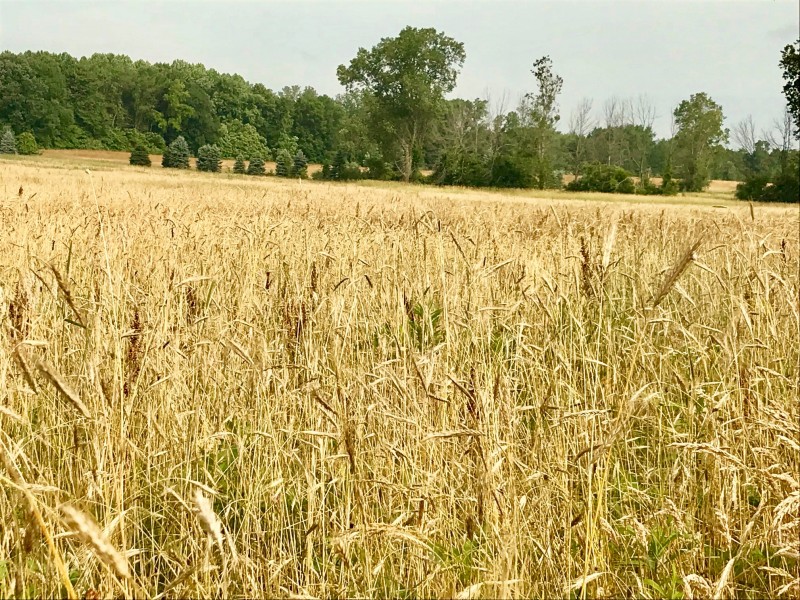
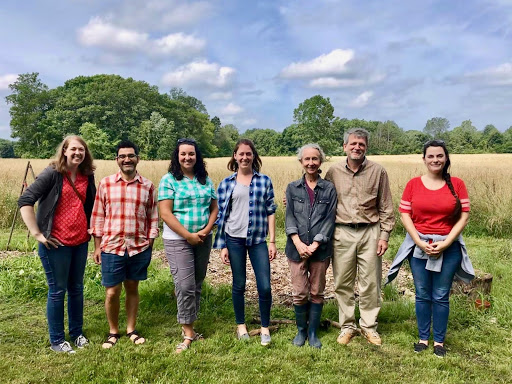
Sourcing our ingredients locally has many benefits, not least of which is literal field trips to visit our future ingredients as they grow. To this end, one June morning a contingent of the bakehouse grain commission headed west to Living Earth Farm in Sawyer, Michigan where rye is being grown for us this season. I think rye is delicious and I know our customers agree, many using our rye breads as staples in their diet each week and famously enjoying it on sandwiches at Zingerman’s Delicatessen. However, this ancient grain took a major back seat to wheat in the 1900’s when very fluffy and sweet breads became more popular. Now, though relatively easy to grow, particularly good for the soil, and hearty under a variety of weather conditions, rye is used primarily as a cover crop to improve the soil in between main crop seasons and is typically not harvested for food in the United States. Because it is no longer widespread in our state, it is necessary to work directly with farmers to access these grains whole, fresh, and from Michigan. The rye growing at Living Earth Farm is a special departure from today’s typical baking and farming and I’ve been looking forward to seeing its progress for months.
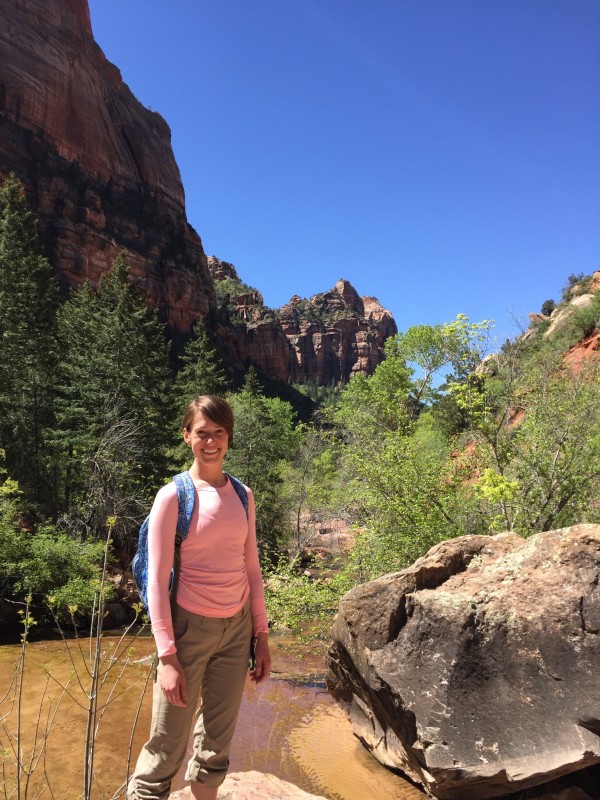
Despite my excitement, during the car ride my main focus was on not getting sick. Even car chase scenes in movies make me carsick and so this required a lot of concentration. I’m Hailey, delicate traveller extraordinare and resident ecologist and source-ress at the bakehouse. The Sourcer-ess is a title that simultaneously describes my work sourcing ingredients, fulfills my childhood dream of being a witch, and allows for other amazing bread puns such as “she’ll put a spelt on you”. I’ll take it.

After zero carsickness close calls, a few hours and a couple pit stops later (who knew we were such a well-hydrated team?!), we arrived at our future ingredient in the making. One step out of the car and I’d never felt better and was feeling relieved that I wouldn’t have to worry about the trip home because I was definitely never leaving this gorgeous place. The rye was nearly ready to be harvested and the feeling of standing next to all that hard work and life and potential swaying in the breeze is hard to put into words. Just take it from me, I am a source-ress after all, it was magical.

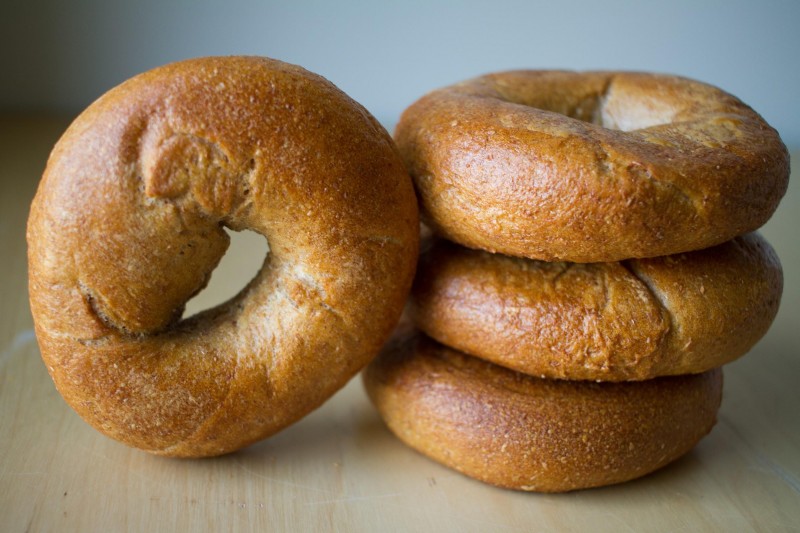
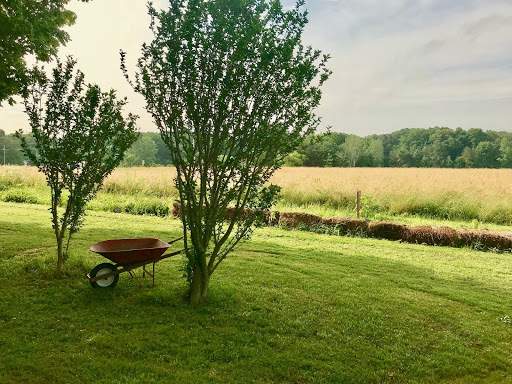
Nancy and Charles, the farm’s owners, thought the same thing when they arrived years ago, looking to move from Chicago to the retirement-worthy west coast of Michigan. They were food lovers who had owned a bagel shop in Evanston, IL, but at the time they were mostly interested in the farmhouse itself. It needed fixing up and was a project they made their first priority after purchasing the property. Soon though, they felt a growing responsibility to the 20 tillable acres that came with the house. I imagine it was that same feeling we had when we made the switch to organic all-purpose bread flour – unsure of the exact outcome but ready to follow our gut nonetheless. First, 8 years ago, they asked the farmer renting their acreage to use organic practices to grow his corn and soy. This led to interesting innovations including the use of lemon oil instead of roundup. Five years later they made the investment to become certified organic. Charles happily told us about the way, on summer nights, he watches his field glow with fireflies while his neighbors’ conventional farmland remains dark. This is an excellent metric of success because functional, diverse ecosystems are not just beautiful to watch, but benefit us all and are a happy ending I can really get behind.

This fairy tale, like all good ones do, has some plot-twists and some dragons. Charles also told us about his desire for his farm to not just be ecologically sustainable but to be financially sustainable as well. The first year the couple planted rye its moisture levels were too high and the entire crop was un-harvestable. In general, the unpredictability of the environment can be merciless and makes farming an incredibly risky profession. This year, the rye has grown well and required very little management. The main challenge now is the lack of post-harvest systems for farmers at their scale, growing an atypical grain. The obstacles between harvesting and selling grain include laboratory testing, cleaning, proper storage, and marketing. For Charles and Nancy these challenges have been great enough that they’ve decided to rent out the land next year rather than farm it themselves. They are tired. We will share this final rye crop with Journeyman Distillery, in Three Oaks, MI. Bittersweet but delicious, this dreamy field will go out in a blaze of bread and whiskey.

The post-harvest headache is part of the reason most farmers sell their grains to an elevator where they become an untraceable commodity processed and distributed by just a few major corporations. Rather than storing and marketing their grains, working with a distributor allows farmers to sell all their grain at once. This conventional system makes it difficult to find farmers growing diverse types of grain and willing to sell to smaller, niche markets like us. Some of the challenges of my job include finding farmers willing to work with us to do something different, understanding how we can be good partners in these somewhat unprecedented relationships, and making sure this all leads to better grains for even better bread.

While Nancy and Charles are ready to move on, I’m grateful for this growing season we shared and we’re excited to celebrate by doing what we do best, baking. A celebration that I like to think acknowledges that yes, there will be obstacles but there will also be some fireflies to light the way and some pretty magical bread waiting at the end. Don’t take my word for it though – our mill is on its way, the rye will be harvested in late July, and you’ll be able to taste it for yourself soon enough. Stay tuned!


An Update
We have some sad news. Between our June visit and the upcoming late July harvest, the rye crop was negatively affected by weather, so it will not be making its way to us at the bakery. Here’s part of the note we received from Nancy “I am so sorry to tell you some bad news. The rye is mostly on the ground and we do not think there is enough rye standing to combine. We had a couple of heavy rains about a month ago—your visit came between those rains– and it really beat it down and it did not recover. I cannot tell you how disappointed I am.” We want to thank Nancy and Charles for their hard work, passion and perseverance.
To honor the work of Living Earth Farms we decided to share this story anyway, even though we won’t be able to bake with this rye. It illustrates the struggles of farming when you’re at the mercy of mother nature and the risks involved in being a trailblazer. Losing a crop has happened to us before in our quest for local grains and it will happen again. We’re not giving up.

By Hailey Schurr
The post The Sourcer-ess & the Rye Farmers appeared first on bake blog.
]]>